
ASCP Technologist in Immunology (I) Practice Exam
$69.00
- Buy to unlock unlimited access to all Quiz questions.
- After purchase you can print a PDF of the whole quiz at any point. The PDF will contain the questions and the correct answers.
About this Exam
The ASCP Technologist in Immunology (I) certification is a prestigious credential for medical laboratory professionals who specialize in the complex and vital field of immunology. This exam is designed for individuals with a strong foundation in laboratory science and a specific focus on the human immune system. It validates your expertise in performing and interpreting serological tests and diagnosing immune-mediated disorders. Earning this certification marks you as a true specialist, opening doors to advanced career opportunities and higher professional standing within the clinical laboratory.
Ready to test your knowledge?
Buy Now to Access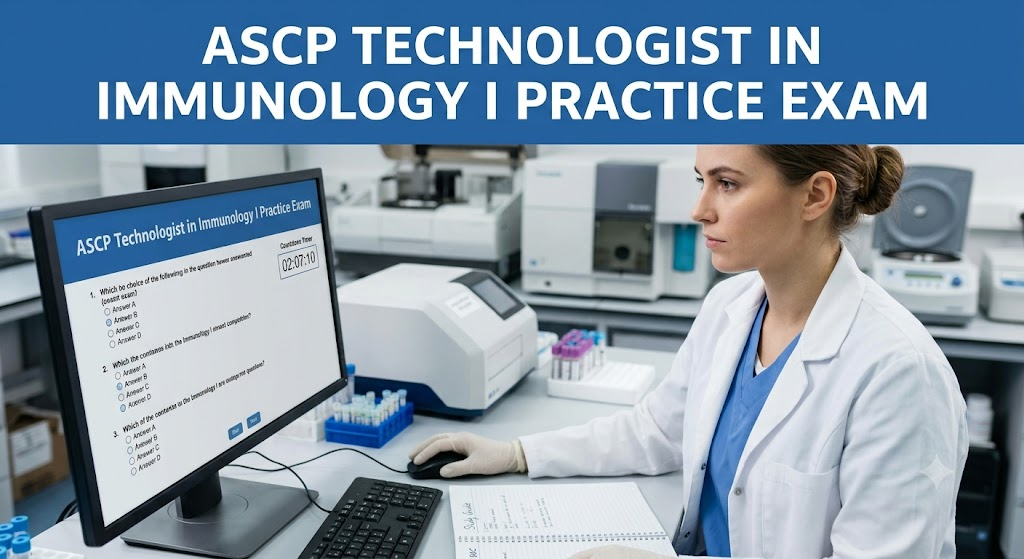
Additional Information
What the Course Entails and Exam Details
While not a single "course," preparing for the ASCP Technologist in Immunology (I) exam involves mastering a comprehensive curriculum of immunological concepts and laboratory techniques. The content is rigorously outlined by the ASCP Board of Certification (BOC) guidelines. The body of knowledge you must command includes principles of both innate and adaptive immunity. You will cover a wide array of diseases of the immune system, such as hypersensitivities, autoimmune disorders, and immunodeficiencies. Specific areas include transplantation immunology, detailing the human leukocyte antigen (HLA) system and crossmatching. A major portion of the syllabus is dedicated to infectious disease serology, including the diagnosis of viral, bacterial, fungal, and parasitic infections. Finally, you must be proficient in a variety of serologic procedures, from fundamental principles of agglutination and precipitation to sophisticated methods like ELISA, flow cytometry, and molecular diagnostics, as well as the critical interpretation of test results.
What to Expect in the Final Exam
The final ASCP Technologist in Immunology (I) exam is a comprehensive assessment of your specialized knowledge. It utilizes a sophisticated format known as a Computerized Adaptive Test (CAT). In a CAT exam, the difficulty of each question is dynamically adjusted based on your performance on previous questions. If you answer a question correctly, the next one will be slightly harder; if you answer incorrectly, the next one will be slightly easier. The primary benefit of this format is that it can precisely measure your ability level using fewer questions than a traditional fixed-length exam. The test consists of approximately 100 multiple-choice questions, and you will have a 2-hour and 30-minute time limit to complete it. All questions have one best answer from four options. To successfully pass, you must achieve a minimum scaled score of 400 on a range from 100 to 999. An onscreen calculator is provided for any necessary calculations. It is important to know that you must answer each question before moving to the next and cannot skip or return to previous questions.
How to Study and Exam Centers
Effective preparation for the ASCP Technologist in Immunology (I) exam requires a structured study plan. Your first and most crucial step should be to download the official ASCP BOC Content Guidelines and Reading List. These documents provide the definitive blueprint of the topics covered and suggested textbooks. Relying on recognized comprehensive review books is highly recommended by successful candidates. Pair these with computer-adaptive practice testing from reputable sources, which can simulate the real exam experience and help you gauge your readiness. Many find that flashcards are an efficient way to solidify facts and laboratory procedures. When you are ready to test, the examination is administered exclusively at authorized Pearson VUE testing centers. These highly secure centers are located worldwide, ensuring standard testing conditions for all candidates. You will schedule your specific date and time through the Pearson VUE portal after your eligibility has been confirmed by the ASCP Board of Certification.
Job Opportunities from the Course
Earning your Technologist in Immunology certification unlocks distinct and rewarding career paths. This credential makes you highly desirable for a variety of roles in clinical and research environments, including:
Technologist in Immunology
Immunology Laboratory Specialist
Medical Laboratory Scientist (Specializing in Immunology)
Clinical Laboratory Scientist
HLA (Transplantation) Lab Technologist
Flow Cytometry Technologist
Serology Lab Supervisor
Quality Assurance Specialist in a specialty lab
Research Associate in Immunology and Infectious Diseases
This certification is more than just a title; it is a testament to your focus and expertise in a field that directly impacts patient care every day.
Frequently Asked Questions
Reviews
5.0
Based on 0 reviews
Leave a Review
No reviews yet. Be the first to review!