
ASCA Ethical Standards for School Counselors Practice Test
$69.00
- Buy to unlock unlimited access to all Quiz questions.
- After purchase you can print a PDF of the whole quiz at any point. The PDF will contain the questions and the correct answers.
About this Exam
The ASCA Ethical Standards for School Counselors Practice Test is designed for current and aspiring school counselors seeking to demonstrate mastery of the complex ethical landscape in their field. This exam validates an individual's understanding of the American School Counselor Association's fundamental ethical guidelines. These standards ensure responsible practice, student safety, and professionalism within educational settings. Taking this practice test is a critical step in assessing one's readiness to handle difficult ethical dilemmas that frequently arise in schools. It is ideal for graduate students preparing for licensure or veteran counselors looking to maintain the highest standards of care and compliance.
Ready to test your knowledge?
Buy Now to Access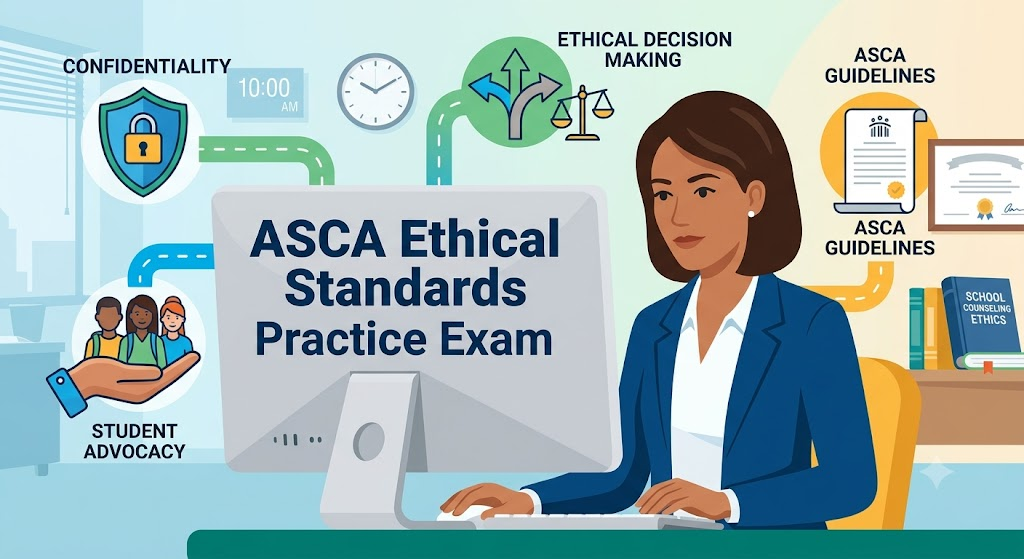
Additional Information
What the Course Entails and Exam Details
The content of this practice test revolves around the core principles outlined in the official ASCA Ethical Standards for School Counselors document. Key focus areas include the school counselor's ethical responsibilities to students, parents/guardians, colleagues, and the wider community. Candidates must show proficiency in understanding issues like confidentiality and its exceptions, such as the duty to report child abuse or neglect. The exam also covers appropriate professional boundaries, cultural competence, technology use in counseling, and ethical leadership in the educational environment. Detailed scenarios require applying these standards to realistic school situations, ensuring practical application rather than just rote memorization.
What to Expect in the Final Exam
This practice exam typically mirrors the format of professional licensure tests, often featuring a set number of multiple-choice questions or case-study scenarios. While specific practice tests from different providers may vary, they generally aim to simulate the pressure and content mix of real certification evaluations. Expect to have a specified time limit, requiring quick and accurate ethical decision-making based purely on ASCA guidelines and relevant laws. A passing score (often around 70-80%, though set by the test administrator) demonstrates a solid understanding of ethical best practices. The final practice exam results provide a detailed score breakdown, identifying strengths and weaknesses across different ethical domains.
How to Study and Exam Centers
Effective preparation starts with a thorough study of the official ASCA Ethical Standards for School Counselors document. Read every section carefully, taking notes on key requirements and definitions. Engage with supplementary materials, such as ethical case study books specifically for school counselors, or relevant legal codes. Utilize practice quizzes and flashcards focused on scenarios to build application skills. Since this is a practice test, it is typically taken online through authorized learning platforms or test prep providers. Official state licensure exams are often administered through secure third-party testing centers such as Pearson VUE or Prometric.
Job Opportunities from the Course
Successfully demonstrating knowledge of ethical standards opens doors to various essential roles in education and youth development.
School Counselor (Elementary, Middle, or High School)
Career Counselor
Student Services Administrator
Academic Advisor
Higher Education Counselor or Admissions Officer
Youth Advocate or Case Manager
Child and Family Counselor in clinical settings (with licensure)
District-level Student Support Director
Frequently Asked Questions
Reviews
5.0
Based on 0 reviews
Leave a Review
No reviews yet. Be the first to review!