
ASBOG Practice Exam
$69.00
- Buy to unlock unlimited access to all Quiz questions.
- After purchase you can print a PDF of the whole quiz at any point. The PDF will contain the questions and the correct answers.
About this Exam
The National Association of State Boards of Geology (ASBOG) exams are a critical milestone for geologists in many U.S. states seeking professional licensure.
Successfully passing these rigorous assessments – the Fundamentals of Geology (FG) and the Practice of Geology (PG) – demonstrates a candidate's competence and knowledge required to protect public safety and practice as a professional geologist.
This comprehensive ASBOG Practice Exam Study Guide is designed specifically to help aspiring and working geologists effectively prepare for, simulate, and master these demanding tests, providing essential practice resources, strategic insights, and a path to licensure success.
Ready to test your knowledge?
Buy Now to Access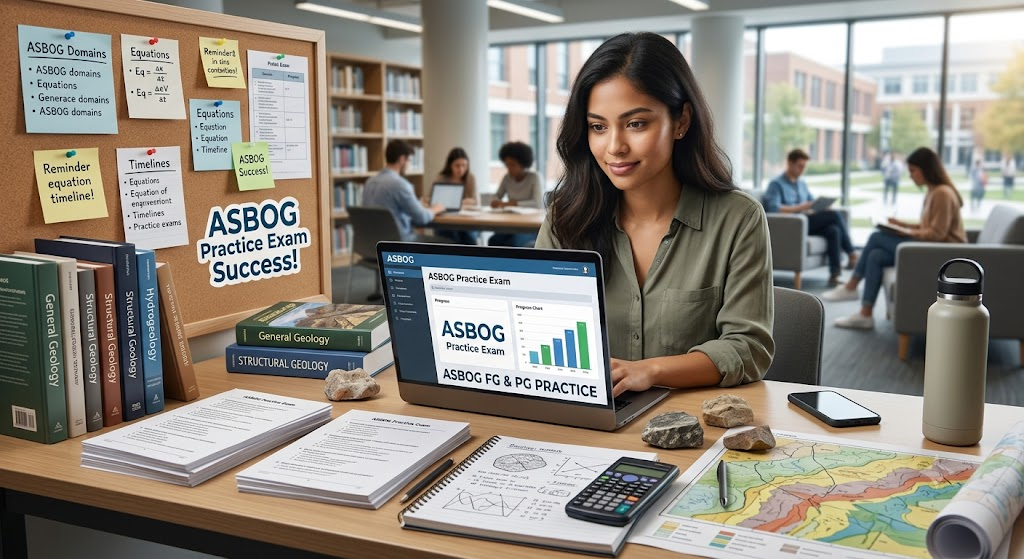
Additional Information
What the Course Entails and Exam Details
A proper ASBOG practice program is more than just a set of questions; it's a simulated learning experience that mirrors the content and conditions of the actual examinations.
This guide and associated practice resources encompass key study materials, including hundreds of practice questions, detailed answer explanations, flashcards, and full-length timed mock exams.
The practice materials diligently cover the fundamental and practical topics delineated in the ASBOG blueprints, encompassing core geological domains such as General Geology, Field Methods, Mineralogy, Petrology, Sedimentology, Stratigraphy, Geomorphology, Structural Geology, Hydrogeology, Engineering Geology, Economic Geology, and Energy Resources.
While a practice program offers invaluable preparation tools, the ultimate goal is to equip candidates with the deep understanding and critical thinking skills required by the official licensing exams themselves.
What to Expect in the Final Exam
It is essential to distinguish between a practice environment and the formal, officially administered ASBOG FG and PG licensing examinations.
The actual final exams are standardized, computer-based multiple-choice tests administered under secure conditions.
The Fundamentals of Geology (FG) exam primarily assesses essential knowledge typically acquired through an undergraduate degree program and generally consists of around 140 multiple-choice questions administered in a four-hour time slot.
The Practice of Geology (PG) exam emphasizes scenario-based and decision-making skills that come from real-world work experience, featuring approximately 110 multiple-choice questions over a four-hour period.
Passing scores for both exams are determined through careful scaling and setting standards, not a fixed percentage, and are established for each administration to ensure fairness and consistency across the country. Candidates must check with their specific state licensing board for application procedures, eligibility, and passing requirements.
How to Study and Exam Centers
Preparation is paramount for ASBOG exam success.
Begin by downloading and thoroughly reviewing the ASBOG Candidate Handbook and official exam blueprints to understand the exact scope of topics covered in both the FG and PG.
Create a realistic study schedule, allocating sufficient time to review core geology concepts, work through practice problems, and reinforce key areas, especially those identified as weaknesses through your practice testing.
Actively utilize reputable third-party prep materials, textbooks, and extensive practice exams to simulate the test experience, build stamina, and refine time management skills. Simulating full, timed exams is highly beneficial for acclimating to the format and identifying focus areas.
When you are ready to take the actual licensing exams, understand that these are officially proctored and usually delivered through established testing networks like Pearson VUE or Prometric at designated physical test centers across the participating states. Candidates must apply for approval to test through their state's geologic licensing board, after which they will receive instructions for scheduling and paying for their exams directly with the national testing provider or state board system.
Job Opportunities from the Course
Earning the status of a Geologist-in-Training (GIT) after passing the FG and becoming a fully licensed Professional Geologist (PG) after passing both exams and gaining experience significantly enhances career prospects. Licensed professional geologists are highly sought after and qualify for diverse and rewarding roles, including:
Environmental Geologist / Hydrogeologist
Engineering Geologist
Mining & Economic Geologist
Resource Manager
Government Geologist (State/Federal Agencies like USGS, EPA, DNR)
Geological Consultant
Geotechnician / Field Geologist
Research Geologist / Scientist
A PG license is often the key that unlocks senior roles, higher salary potential, the ability to sign off on formal documents, and greater career flexibility within the vast field of geology. Start your journey today with effective ASBOG Practice and pave the way to professional licensure!
Frequently Asked Questions
Reviews
5.0
Based on 0 reviews
Leave a Review
No reviews yet. Be the first to review!