
Arkansas CDL Tanker Practice Test
$69.00
- Buy to unlock unlimited access to all Quiz questions.
- After purchase you can print a PDF of the whole quiz at any point. The PDF will contain the questions and the correct answers.
About this Exam
The Arkansas CDL Tanker Endorsement (N) is a necessary certification for commercial drivers who intend to operate vehicles designed to transport liquids or gases in bulk.
This endorsement is designed for both existing CDL holders looking to upgrade their qualifications and new CDL applicants aiming for specialized driving roles.
The primary goal of obtaining this endorsement is to demonstrate the specialized knowledge required to safely manage the unique handling characteristics of tanker vehicles, specifically liquid surge.
By successfully passing the tanker knowledge test, drivers earn the authorization needed to pull tank trailers, expanding their career potential in the transportation sector.
Ready to test your knowledge?
Buy Now to Access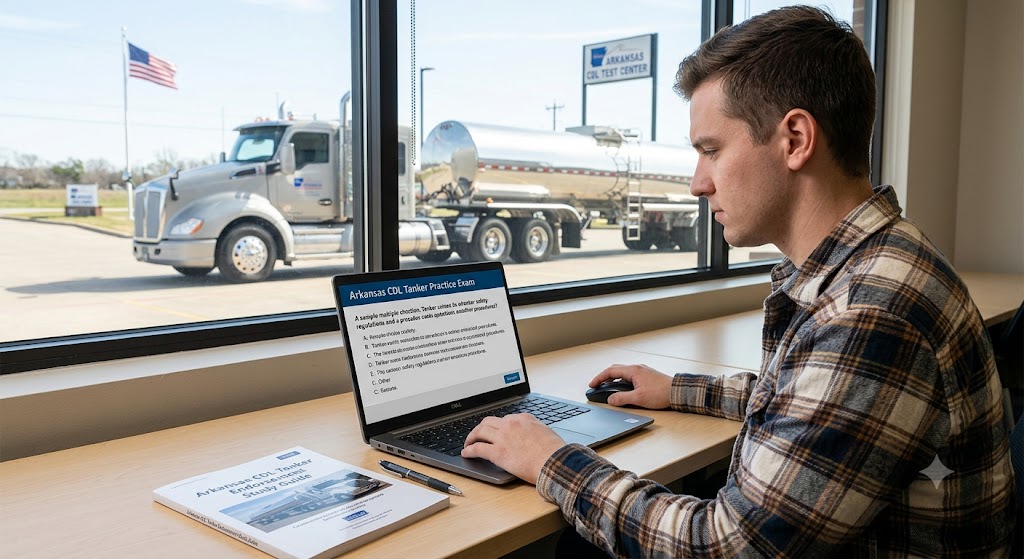
Additional Information
What the Course Entails and Exam Details
The material covered for the Tanker Endorsement knowledge test focuses heavily on the specific safety regulations and operational procedures unique to driving liquid or gas tankers.
Key topics you must master include:
Vehicle Inspection: Performing comprehensive inspections on tankers, including checking for leaks, ensuring valves are secure, and verifying the integrity of the tank itself.
Driving Rules: Understanding how to safely drive a vehicle transporting liquids, particularly managing the effects of "surge"—the movement of liquid inside the tank when stopping, starting, or turning.
Safe Handling: Recognizing and mitigating the risks associated with the high center of gravity typical of tankers, preventing rollovers, and maintaining stability on curves.
Emergency Procedures: Knowing the correct response in emergencies, such as leaks, spills, or equipment malfunctions.
Our comprehensive practice tests mirror the structure and content of the official Arkansas CDL manual, focusing specifically on Section 8 (Tank Vehicles).
What to Expect in the Final Exam
When you arrive for the official tanker endorsement test at an Arkansas DFA office, you will take a computer-based knowledge exam.
Here is what to expect during the official testing process:
Format: The exam consists of multiple-choice questions designed to assess your understanding of tanker vehicle safety and operation.
Number of Questions: The tanker knowledge test typically contains 20 questions.
Passing Score: You must achieve a score of at least 80%, meaning you need to answer 16 out of 20 questions correctly to pass.
Time Limit: While usually not explicitly timed, drivers generally finish the endorsement knowledge test within 20-30 minutes.
It is important to remember that this is only a knowledge test; there is no specific skills test required solely for adding the tanker endorsement if you already hold the appropriate class of CDL.
How to Study and Exam Centers
Preparation is crucial for success on any CDL endorsement test.
Start by thoroughly reading and studying the Arkansas Commercial Driver License Manual. Pay close attention to Section 8, which is dedicated to Tank Vehicles.
Once you have reviewed the manual, take reliable practice tests repeatedly. Practice tests are highly effective because they familiarize you with the question format, identify areas where you need further study, and build your confidence.
Ensure you are consistently scoring above 80% on practice exams before scheduling your official test.
When you are ready, you must take the knowledge test in person at an Arkansas Department of Finance and Administration (DFA) Revenue Office that offers CDL testing services. Some locations may require appointments, so it is advisable to check with your local office beforehand.
Job Opportunities from the Course
Obtaining your CDL Tanker Endorsement unlocks specialized and often higher-paying opportunities within the trucking industry.
By earning this endorsement, you become qualified for positions such as:
Fuel Delivery Driver: Transporting gasoline and diesel fuel to retail gas stations.
Chemical Transporter: Hauling industrial chemicals in specialized tankers.
Food Grade Tanker Driver: Moving liquid food products, such as milk, juice, or vegetable oil.
Agricultural Liquid Transport: Delivering fertilizers or other liquid agricultural supplies.
Water Haul Driver: Transporting potable water or water for industrial uses (e.g., in construction or oil fields).
These roles often offer competitive compensation and steady employment due to the specialized skill set required.
Frequently Asked Questions
Reviews
5.0
Based on 0 reviews
Leave a Review
No reviews yet. Be the first to review!