
ARFF Driver Operator Practice Test
$69.00
- Buy to unlock unlimited access to all Quiz questions.
- After purchase you can print a PDF of the whole quiz at any point. The PDF will contain the questions and the correct answers.
About this Exam
The ARFF (Aircraft Rescue and Firefighting) Driver Operator certification is a specialized qualification designed for fire service professionals who operate and maintain the complex vehicles and equipment used for combating fires and conducting rescue operations at airports. This critical role demands a unique combination of firefighting skills, specialized vehicle proficiency, and a deep understanding of airport environments.
This certification is essential for individuals aspiring to work as firefighters or apparatus operators specifically within an airport environment. It validates their ability to handle large, sophisticated ARFF vehicles and effectively deploy extinguishing agents in the challenging scenarios presented by aircraft emergencies.
Ready to test your knowledge?
Buy Now to Access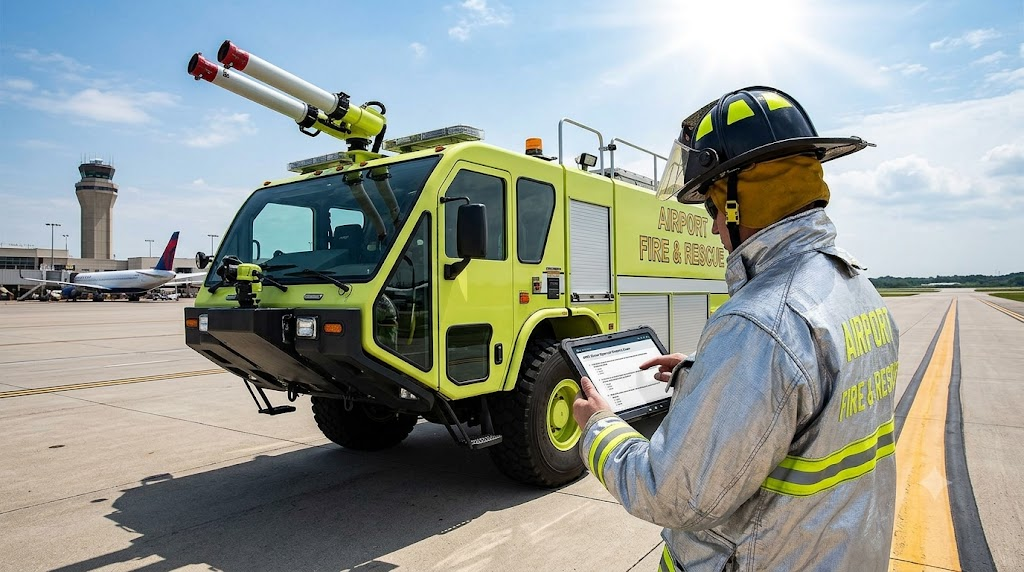
Additional Information
What the Course Entails and Exam Details
This comprehensive training typically involves a rigorous course, which is often a prerequisite to sitting for the final exam. The course covers a wide array of vital topics, as outlined by standards like the NFPA (National Fire Protection Association) standards for Fire Apparatus Driver/Operator and Airport Firefighter. Students must first meet general firefighter and airport firefighter requirements before progressing to this specialized role. The driver operator course then focuses heavily on the mechanics, operation, and practical deployment of ARFF vehicles and systems.
Key areas of focus within the underlying course often include:
Airport Familiarization: A thorough understanding of airport layouts, terminology, navigational markings, and emergency procedures specific to the airfield.
ARFF Apparatus Fundamentals: In-depth knowledge of the design, features, mechanics, maintenance, and safe operational parameters of specialized ARFF vehicles.
Driving and Vehicle Operations: Mastering the control of these large vehicles under various conditions, including off-road maneuvering and high-speed emergency response.
Pumping and Extinguishing Systems: Understanding and skillfully operating the complex water pumps, foam proportioning systems, and dual agent delivery capabilities.
Safety Procedures: Rigorous training on personal protective equipment (PPE), hazard recognition, safety protocols, and emergency vehicle safety.
Communications: Techniques for effective communication with air traffic control, emergency dispatch, and on-scene personnel during a crisis.
Tactics and Strategies: Applying specific firefighting strategies for different types of aircraft emergencies, including external and internal fires.
The certification exam is typically structured in two distinct but equally important parts: a written test (which this practice guide helps prepare for) and a practical skills evaluation. Candidates must pass both to achieve certification.
What to Expect in the Final Exam
The final exam for ARFF Driver Operator certification is a comprehensive test of both knowledge and practical proficiency, structured to ensure candidates are fully prepared for the demands of the job.
The overall certification exam process typically consists of:
Written Examination
Format: The written portion of the exam is typically a multiple-choice test. The questions are designed to assess your understanding of the core concepts, safety regulations, vehicle mechanics, and operational procedures covered in the course and the corresponding study materials. This practice test is an invaluable tool for mastering the content of this part of the exam.
Focus Areas: Expect questions on airport protocols, hazardous materials awareness, fire chemistry, vehicle systems, and maintenance requirements.
Passing Score: Requirements can vary by jurisdiction, but a passing score of 70% or higher is a common benchmark for certification bodies.
Time Limits: There are typically time limits for completing the written portion, designed to reflect the speed and decision-making required in emergency situations.
Practical Skills Test (Evaluation)
Format: The practical exam involves demonstrating hands-on mastery of the critical skills required to operate ARFF vehicles and equipment effectively. An evaluator or proctor observes and scores the candidate as they perform a series of standard tasks.
Demonstration Areas: Candidates are typically required to demonstrate proficiency in:
Pre-use Vehicle Inspections: Systematically checking critical components of the ARFF apparatus.
Driving Maneuvers: Negotiating obstacle courses, performing tight turns, backing vehicles, and demonstrating defensive driving techniques.
Pump and Roll Operations: Simulating the application of extinguishing agents while the vehicle is in motion.
Extinguishing Agent Application: Demonstrating proper use of roof and bumper turrets and hand lines to deploy water and foam.
Passing Criteria: Scoring is typically based on correctly performing each step and meeting required time limits or accuracy standards. Failure in a critical skill may result in failing the entire practical evaluation.
Specific Rules: Specific rules will apply, including the use of appropriate PPE, strict adherence to safety protocols during field exercises, and the requirement for successful and safe completion of all demonstrated tasks.
How to Study and Exam Centers
Preparing effectively for the ARFF Driver Operator certification requires a strategic blend of knowledge acquisition and practical practice.
Proven Study Strategies
In-Depth Textbook Review: Thoroughly study the recommended textbooks and reference materials. Pay close attention to definitions, vehicle systems, and standard procedures.
Utilize Practice Exams: Practice tests like this one are vital for reinforcing your knowledge, identifying areas where you need more study, and becoming familiar with the types of questions and formatting you will encounter on the written exam. Regularly taking these practice questions can significantly boost your confidence.
Hands-on Training: Seek every opportunity to practice operating the actual vehicles and equipment. Familiarity with the controls, handling characteristics, and pumping operations of an ARFF vehicle is indispensable for the practical exam.
Review Skill Sheets: Study the practical evaluation skill sheets. These documents detail the specific steps and scoring criteria for each task. Understanding what is expected and practicing each step precisely will enhance your performance.
Form Study Groups: Collaborating with fellow students can provide different perspectives, encourage accountability, and offer mutual support during the rigorous preparation process.
Stay Physically Fit: While not a direct part of the written exam, the practical skills test can be physically demanding, requiring agility, strength, and stamina. A good level of fitness is crucial.
Locating Exam Centers
The written and practical examinations for ARFF Driver Operator certification are typically administered by accredited fire service training academies, state fire service commissions, or specific certified entities within major airports.
You can often find exam schedules and information about specific test locations through:
Airport Fire Department Training Divisions: If you are already affiliated with an airport fire department, inquire with their training or certification personnel.
State or Regional Fire Academies: Contact your state or provincial fire service office for a list of accredited training centers and exam dates.
Pro Board or IFSAC Certification Portals: The National Board on Fire Service Professional Qualifications (Pro Board) or the International Fire Service Accreditation Congress (IFSAC) often maintain directories of accredited agencies and programs where you can search for authorized testing locations.
Specific Physical Testing Centers: Some written exams may be proctored at approved testing centers (like Pearson VUE or specialized facilities), though the practical evaluation must occur in a suitable training environment with appropriate vehicles and props.
Job Opportunities from the Course
Successfully achieving your ARFF Driver Operator certification opens the door to specialized and rewarding career paths within airport fire services. This credential is often highly regarded, validating both generalized firefighting skills and the unique proficiency required for the airport environment.
Graduates with this certification are typically eligible for positions with civilian airports (municipal, regional, or international), as well as within specific military and Department of Defense (DoD) fire services that operate on or near airfields. The job market for this role can be competitive, reflecting the critical nature and high level of specialization involved.
Common job titles and career paths this certification unlocks include:
ARFF Firefighter
ARFF Driver Operator
Airport Firefighter
Apparatus Driver/Operator
Federal Firefighter
Military Firefighter
Fire Apparatus Operator
Prepare diligently, practice with dedicated resources, and you will be well-equipped to achieve success on both parts of your final certification exam and build a successful career as an ARFF Driver Operator!
Frequently Asked Questions
Reviews
5.0
Based on 0 reviews
Leave a Review
No reviews yet. Be the first to review!