
Archer Child Health Cardio/Respiratory Practice Test
$69.00
- Buy to unlock unlimited access to all Quiz questions.
- After purchase you can print a PDF of the whole quiz at any point. The PDF will contain the questions and the correct answers.
About this Exam
The Archer Child Health Cardio/Respiratory Practice Test is a comprehensive examination designed for healthcare professionals seeking to specialize in pediatric cardiology and pulmonology care. This rigorous practice test evaluates understanding of critical heart and lung conditions in children, from infants to adolescents, emphasizing assessment, diagnosis, and evidence-based interventions. It is tailored for Registered Nurses (RNs), Respiratory Therapists (RTs), Pediatric Nurse Practitioners (PNPs), and other clinicians aiming to achieve advanced certification, such as the Pediatric CCRN or specific child health specialty credentials. Successfully mastering this content demonstrates clinical proficiency and a dedication to improving outcomes for young patients with complex cardio-respiratory needs.
Ready to test your knowledge?
Buy Now to Access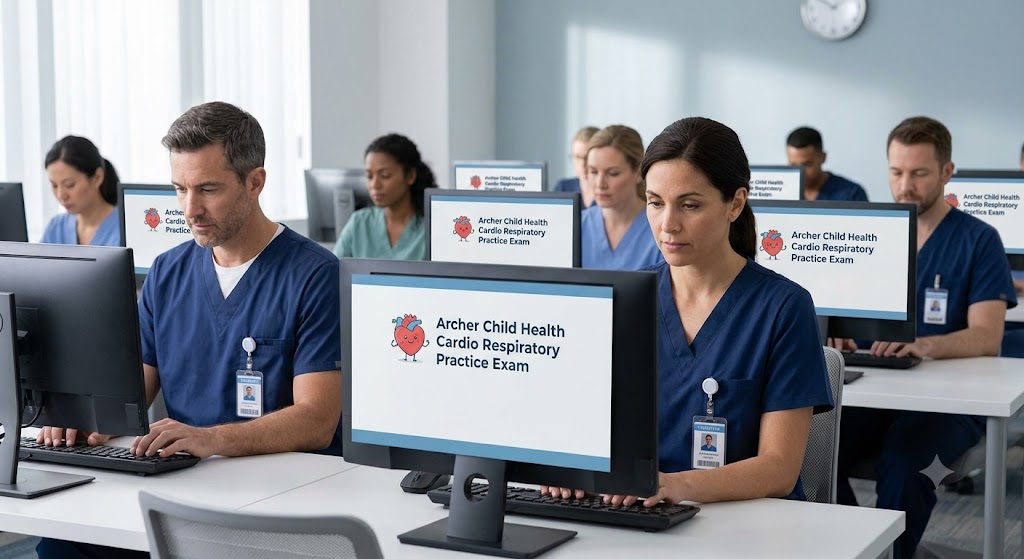
Additional Information
What the Course Entails and Exam Details The
associated course and study materials cover a wide spectrum of essential
pediatric cardiovascular and respiratory topics. Expect comprehensive modules
detailing common congenital heart defects (CHDs), acquired heart diseases like
Kawasaki disease, heart failure management, dysrhythmias, and post-operative
cardiac care in children. The respiratory component explores childhood asthma,
cystic fibrosis, pneumonia, bronchiolitis, neonatal respiratory distress
syndrome, mechanical ventilation strategies, and pulmonary hypertension. Key
focus areas include advanced physical assessment techniques, interpreting
diagnostic tests (e.g., ECGs, echocardiograms, arterial blood gases, chest
X-rays), pharmacological management specific to pediatric patients, and
implementing specialized care plans. The practice exam itself mirrors this
structure to assess application and critical thinking.
What to Expect in the Final Exam The final, official
examination for this type of specialty certification generally follows a
standardized professional format. Candidates can typically expect a
multiple-choice question exam, potentially including multi-select or innovative
case-based questions that test practical application of knowledge. While the
exact passing score varies by the specific credentialing body, it is often set
around 70-80%. A standard time limit of 2 to 3 hours is common, requiring
efficient time management. The exam is usually proctored, with strict rules
such as no outside resources or electronic devices. Candidates must be prepared
to synthesize and apply clinical information to solve real-world patient care
scenarios under time pressure.
<!--[if !supportLineBreakNewLine]-->
<!--[endif]-->
How to Study and
Exam Centers To optimize study efforts, leverage dynamic resources
including up-to-date pediatric critical care textbooks, professional guidelines
(like those from the AAP or AHA), flashcards for key terms and conditions, and
of course, dedicated practice question banks. Creating focused study sessions
with peers or joining online discussion groups can enhance understanding
through collaboration. Regular, timed practice using simulations is essential
to build test-taking stamina and recall speed. The final exam can typically be
taken at authorized, secure testing centers such as Pearson VUE, which have
locations globally, or sometimes via remote online proctoring services
depending on the certifying body's options. Be sure to register and schedule
the exam well in advance once preparation is complete.
<!--[if !supportLineBreakNewLine]-->
<!--[endif]-->
Job Opportunities
from the Course Earning a specialty certification in Child Health with a
focus on Cardio/Respiratory opens significant career pathways in acute and
critical pediatric care. Specific roles include:
- Pediatric
Intensive Care Unit (PICU) Registered Nurse
- Pediatric
Respiratory Therapist (RRT-NPS or similar specialty)
- Neonatal
Intensive Care Unit (NICU) Nurse or Respiratory Therapist
- Pediatric
Cardiac Intensive Care Unit (PCICU) Nurse
- Acute
Care Pediatric Nurse Practitioner (ACPNP)
- Cardiovascular
Operating Room (CVOR) Pediatric Nurse
- Pediatric
Transport Nurse (Flight or Ground)
- Clinical
Nurse Specialist in Pediatric Critical Care
- Nurse
Educator specializing in Pediatrics or Cardiopulmonary Care
Frequently Asked Questions
Reviews
5.0
Based on 0 reviews
Leave a Review
No reviews yet. Be the first to review!