
AP Gov UNIT 5 Political Participation Practice Test
$69.00
- Buy to unlock unlimited access to all Quiz questions.
- After purchase you can print a PDF of the whole quiz at any point. The PDF will contain the questions and the correct answers.
About this Exam
The AP US Government and Politics Unit 5 Practice Exam focuses on the diverse ways citizens engage with and influence the democratic process in the United States. This unit is foundational for students preparing for the full AP US Government and Politics course. It helps them master the complicated relationships between individuals, groups, the media, and the government that shape political outcomes. This guide is specifically designed for high school students aiming for a 5 on their AP exam. It helps students understand how the will of the people is translated into public policy.
Ready to test your knowledge?
Buy Now to Access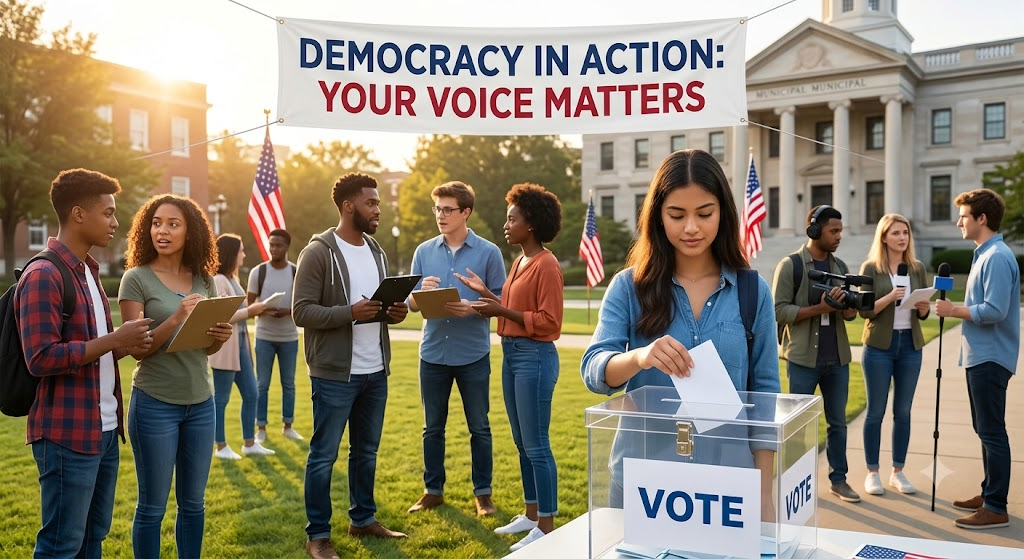
Additional Information
What the Course Entails and Exam Details
The Unit 5 curriculum explores the diverse avenues through which Americans express their political will and contribute to governance. The syllabus covers several critical areas. It starts with Voting and Voter Behavior, analyzing patterns of participation, demographics, and laws influencing voter turnout. Students then examine Political Parties, detailing their function, organization, and the shifting dynamics of the two-party system. Next, the focus shifts to Interest Groups, exploring lobbying, political action committees (PACs), and strategies to influence policy. The course then covers Elections and Campaigns, including the nomination process, campaign finance, and the mechanics of the Electoral College. Finally, students analyze the role of the Media as a linkage institution, agenda-setter, and watchdog.
What to Expect in the Final Exam
While this practice material targets Unit 5, the full AP US Government and Politics final exam is a two-section test designed to measure comprehensive understanding. Section I consists of 55 Multiple Choice Questions (MCQs) which students must answer in 1 hour and 20 minutes; this section accounts for 50% of the final score. Section II is the Free-Response Section, comprising four questions in 1 hour and 40 minutes, also accounting for 50%. These four FRQs include a concept application question, a quantitative analysis question, a SCOTUS comparison essay, and an argumentative essay. The overall score is reported on a scale of 1 (lowest) to 5 (highest), with a 3 generally considered a qualifying score by most colleges.
How to Study and Exam Centers
Effective studying for Unit 5 requires focusing on both core vocabulary and thematic analysis. Instead of just memorizing definitions of linkage institutions, analyze how political parties and interest groups apply them differently. Use flashcards for key terms, Supreme Court cases relevant to suffrage (like Baker v. Carr), and major legislation (like the Voting Rights Act of 1965). Create flowcharts illustrating the campaign finance system and the Electoral College process. When taking the AP Gov Unit 5 Political Participation Practice Test, treat it as a diagnostic tool. Analyze your incorrect answers to find conceptual gaps. The official AP Exam is not administered via public testing centers like Pearson VUE; it is administered by authorized high schools. Home-schooled students must coordinate with a local AP-participating high school well in advance of the early spring registration deadline to secure a testing spot.
Job Opportunities from the Course
A strong understanding of American political participation unlocks numerous career paths focused on communication, analysis, and strategy. This knowledge applies directly to Political Campaign Management, leveraging strategies learned in the course. Success in this area can lead to roles as a Policy Analyst for think tanks or government agencies. Legislative Assistant positions rely heavily on understanding linkage institutions and the legislative process. The knowledge applies well to Public Opinion Pollster and market research roles within political contexts. Non-Profit Advocacy Coordinator roles focus on organizing interest groups and mobilizing voters. Additionally, political journalism at any level depends on a comprehensive grasp of these core concepts.
Frequently Asked Questions
Reviews
5.0
Based on 0 reviews
Leave a Review
No reviews yet. Be the first to review!