
AP English Literature and Composition – Literary Terms Practice Test
$69.00
- Buy to unlock unlimited access to all Quiz questions.
- After purchase you can print a PDF of the whole quiz at any point. The PDF will contain the questions and the correct answers.
About this Exam
The AP English Literature and Composition exam is a rigorous assessment designed for high school students who wish to engage deeply with classic and contemporary literature and potentially earn college credit. This specialized practice test focuses specifically on one of the most crucial elements of the full exam: literary terms. By mastering these devices, students equip themselves with the essential analytical tools needed to deconstruct complex prose and poetry, demonstrating the critical thinking skills valued by universities. Whether you are aiming for a top score on the AP exam or simply looking to enhance your interpretive abilities, this practice test is a vital component of your preparation.
Ready to test your knowledge?
Buy Now to Access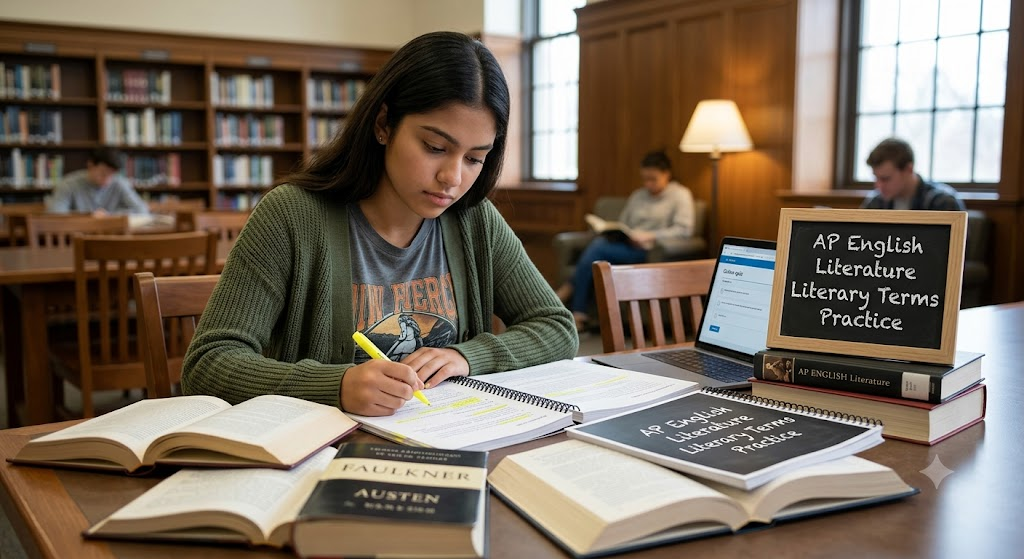
Additional Information
What the Course Entails and Exam Details
The AP English Literature and Composition course involves the careful reading and critical analysis of imaginative literature. Students examine texts from a variety of time periods and genres, looking closely at language, structure, and style. The exam itself assesses your ability to apply analytical skills through close reading of selected passages of prose and poetry.
A significant portion of the entire AP exam requires you to use, identify, and understand a vast array of literary terms and rhetorical devices. This practice test focuses specifically on these concepts. You must demonstrate proficiency in:
Recognizing definitions of hundreds of devices (e.g., alliteration, metaphor, syntax, dramatic irony, foil, catharsis).
Correctly identifying specific examples of these devices within the context of a short prose or poetry excerpt.
Understanding the function and rhetorical effect of a specific device in a given passage.
This targeted practice is designed to sharpen your recall and application, making these terms instinctive during the actual, full-length AP exam.
What to Expect in the Final Exam
While this study guide focuses on a targeted literary terms practice test, understanding the final AP English Literature and Composition exam structure is crucial:
The full AP English Literature and Composition exam is divided into two main sections and takes approximately 3 hours to complete:
Section I: Multiple-Choice (55 questions | 1 hour | 45% of total score) This section includes excerpts from both poetry and prose. You must answer multiple-choice questions that require you to analyze the structure, style, and meaning of the provided passages. A significant percentage of these questions will directly or indirectly test your knowledge of literary terms as they apply to the text.
Section II: Free-Response (3 essays | 2 hours | 55% of total score) This section requires you to write three sophisticated essays analyzing literary works. Success in these essays depends heavily on your ability to deploy literary terminology effectively to support your analysis:
Essay 1: Poetry Analysis (Analyses a poem, focusing on the writer’s use of techniques).
Essay 2: Prose Fiction Analysis (Analyses a passage of prose, exploring literary elements).
Essay 3: Literary Argument (Builds an argument about a complex literary concept, citing evidence from your own wide reading of sophisticated works).
Passing Score and Details: The AP exam is scored on a scale of 1 to 5. Scores of 3, 4, or 5 are generally considered passing and may qualify you for college credit or advanced placement, depending on the specific policy of the college or university you attend.
How to Study and Exam Centers
Effectively preparing for the literary terms portion of the AP English Literature exam requires strategic, sustained practice:
Create or Use Flashcards: Traditional or digital flashcards (like Quizlet or Anki) are essential for rapid recall of definitions. Organize terms by category (e.g., sound devices, figurative language, dramatic structures).
Active Close Reading: Don’t just memorize definitions. Practice "finding" these devices in any literature you read. Highlight them and, more importantly, annotate why the author used that specific term and its effect on the text.
Take This Practice Test Repeatedly: Utilize this specific practice test multiple times. Review all answers, understanding not just which definition is correct, but why the other options (distractors) are incorrect in that context.
Contextual Application: Combine flashcards with textual analysis. Look up unfamiliar words and devices as you read novels for the class.
Where to Take the Exam:
High Schools: The standard method for taking an AP exam is through your high school. Schools administer the tests on specific dates designated by the College Board (usually during two weeks in May). Talk to your AP coordinator, counselor, or teacher to register.
Online and Home Testing: While standard in-person testing is the rule, the College Board sometimes offers online testing options under certain conditions or for certain exams. This is less common for the AP English Literature exam than for other subjects, but always check official updates during registration season.
Approved Testing Sites: For students whose schools do not offer AP exams, it may be possible to arrange testing at an approved nearby high school or an official AP exam site.
Academic and Future Career Path Benefits
Succeeding on the AP English Literature and Composition exam does not grant a specific professional certification like a vocational course might. However, achieving a high score and mastering these analytical skills unlocks significant opportunities and builds a foundation for diverse careers:
College Credit and Advanced Placement: Many colleges and universities award credit or exempt students from introductory composition or literature courses.
Stronger Communication Skills: Advanced analytical reading and critical writing abilities are transferable skills valuable in countless professions.
Academic Discipline: Demonstrating mastery in a rigorous AP course highlights intellectual curiosity and dedication to learning, which is valued by university admissions.
Potential for Advanced Studies: A strong score often provides a solid base for majoring in English, Journalism, Law, Creative Writing, Education, Publishing, Public Relations, or any field requiring superior communication and critical thinking skills.
Frequently Asked Questions
Reviews
5.0
Based on 0 reviews
Leave a Review
No reviews yet. Be the first to review!