
AP CSP Practice Test – Unit 10 Review Questions
$69.00
- Buy to unlock unlimited access to all Quiz questions.
- After purchase you can print a PDF of the whole quiz at any point. The PDF will contain the questions and the correct answers.
About this Exam
The Advanced Placement (AP) Computer Science Principles (AP CSP) course is designed to introduce high school students to the foundational concepts of computer science and its impact on the world. It’s an accessible course for students of all backgrounds, offering a broad perspective on topics ranging from programming to cybersecurity. Taking an AP CSP practice test, particularly one focused on Unit 10, is essential preparation for the final exam. This practice test helps students assess their understanding of key concepts and build confidence in applying their knowledge.
Ready to test your knowledge?
Buy Now to Access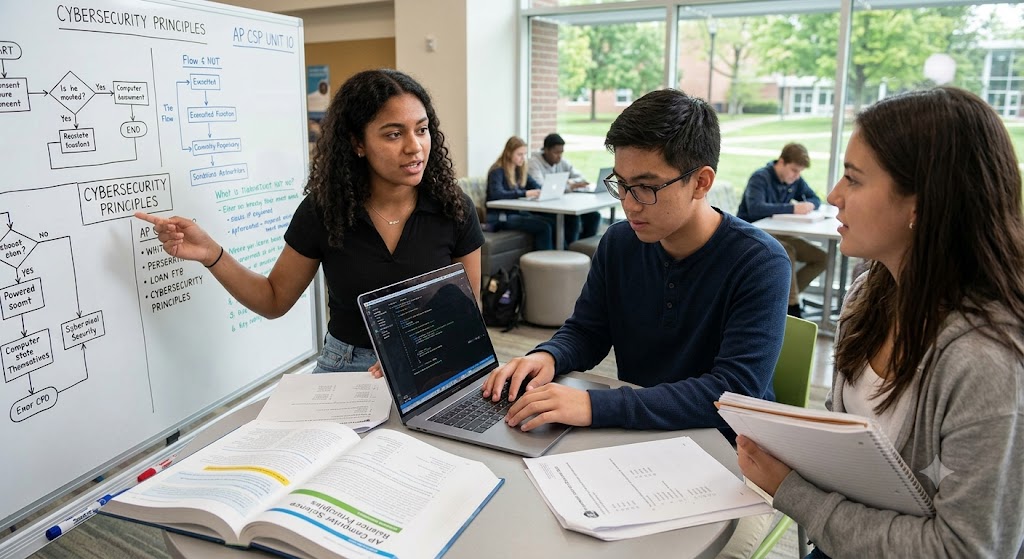
Additional Information
What the Course Entails and Exam Details
The AP CSP course covers a wide range of computational principles. Unit 10 typically delves into crucial topics regarding data and information security, as well as the ethical and societal impacts of computing.
Students will explore how data is represented, stored, and transmitted, alongside critical concepts in cybersecurity, such as encryption types, public key cryptography, and common threats. The course also addresses data privacy, the implications of data collection, and the responsibility of developers and users regarding technology. Mastery of these concepts is essential for scoring well on the final exam.
What to Expect in the Final Exam
The official AP CSP Exam has a unique format. It consists of two main parts:
Create Performance Task (30% of total score): This is an in-class project where students develop their own computer program and submit a digital portfolio, including code, video, and written responses explaining their process.
Multiple-Choice Exam (70% of total score): Taken in May, this section consists of 70 questions and lasts 2 hours. These questions cover all seven computational thinking practices, including the concepts covered in Unit 10 (data analysis and privacy).
While a passing score on the AP exam can earn college credit (usually a 3 or higher on the 1-5 scale), specific requirements vary by institution. It’s important to understand the exam's weighting and allocate study time accordingly.
How to Study and Exam Centers
To prepare effectively for the AP CSP Exam and specifically Unit 10 topics:
Review Course Materials: Revisit notes, textbooks, and resources provided by your AP teacher.
Utilize AP Classroom: Leverage the practice questions, progress checks, and instructional videos available through the College Board's AP Classroom portal.
Take Practice Tests: Regularly complete full-length multiple-choice practice sections to improve timing and familiarize yourself with question formats.
Focus on Unit 10 Concepts: Dedicate specific study sessions to understanding cybersecurity, data representation, and ethical computing principles.
The multiple-choice portion of the AP CSP Exam is administered at high schools worldwide during the annual AP testing window in May. Your high school's AP coordinator will handle registration and logistics for taking the exam.
Job Opportunities from the Course
Earning college credit and demonstrating proficiency in computer science principles through AP CSP can open doors to various educational and career paths. Strong computational thinking skills are in high demand across numerous industries.
Potential career opportunities and fields of study include:
Cybersecurity Analyst
Software Developer
Data Scientist or Analyst
Database Administrator
Network Engineer
Systems Analyst
Information Security Specialist
Web Developer
Further academic studies in Computer Science, Information Technology, or Data Science
Frequently Asked Questions
Reviews
5.0
Based on 0 reviews
Leave a Review
No reviews yet. Be the first to review!