
AORN Perioperative Training Practice Exam
$69.00
- Buy to unlock unlimited access to all Quiz questions.
- After purchase you can print a PDF of the whole quiz at any point. The PDF will contain the questions and the correct answers.
About this Exam
Unlock your potential and validate your expertise with the AORN Perioperative Training Practice Exam. Designed specifically for healthcare professionals aiming for a successful career in surgical services, this comprehensive guide is an invaluable resource. Our meticulously curated materials ensure you are thoroughly prepared, empowering you to approach the exam with confidence and precision.
Perioperative nursing demands unique dedication and knowledge, and mastering this area can lead to a fulfilling professional journey. Whether you are a newcomer to the operating room or an experienced nurse looking to advance, this practice exam is your catalyst for success in one of nursing’s most critical specialties. By bridging the gap between theoretical knowledge and practical application, it paves the way for a prosperous future in perioperative care.
For registered nurses looking to solidify their foundatinal understanding or experienced staff members refreshing their knowledge, the Perioperative Training Practice Exam serves as an essential stepping stone. Embrace this opportunity to refine your skills and achieve certification, reflecting the high standards set by the Association of periOperative Registered Nurses.
Ready to test your knowledge?
Buy Now to Access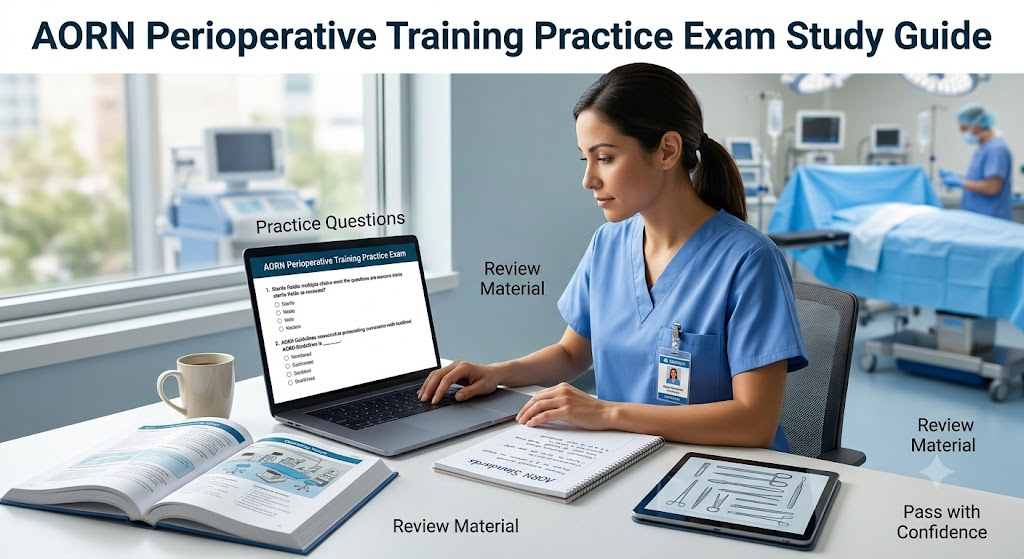
Additional Information
What the Course Entails and Exam Details
The AORN Perioperative Training Practice Exam mirrors the comprehensive curriculum developed by the Association of periOperative Registered Nurses (AORN). It covers a wide range of critical topics essential for effective perioperative nursing. Participants will delve deep into the core principles that govern the preoperative, intraoperative, and postoperative phases of surgical patient care, reflecting the comprehensive nature of modern surgical environments.
Key areas of focus include the fundamental practices of patient safety, maintaining a sterile field, and implementing infection prevention protocols. The syllabus is meticulously structured to ensure understanding of complex perioperative nursing assessments and efficient management of surgical technology.
Furthermore, this practice exam covers essential components of effective team communication and risk reduction strategies in high-stakes environments. It is structured to replicate the actual exam environment, giving you a competitive edge by fostering familiarity with question formats and content. By identifying your strengths and areas needing improvement, it allows for highly targeted and effective study.
What to Expect in the Final Exam
The final exam typically adopts a comprehensive multiple-choice format to evaluate a wide range of essential perioperative competencies, from patient identification and consent to instrument tracking and aseptic processing. Expect questions that demand critical thinking and the direct application of AORN Guidelines for Perioperative Practice.
While specific passing scores may vary, most examinations in this field require a strong understanding, with scores often set around 80% to demonstrate proficiency. Time limits are standard, and they require you to manage your time effectively, moving through the questions at a steady pace that reflects the realities of clinical practice.
The exam often emphasizes high-reliability principles, highlighting the nurse's critical role in ensuring optimal patient outcomes across all three phases of perioperative care. This focus on practical application in diverse surgical settings is a hallmark of comprehensive training, so a strong grasp of AORN standards and guidelines is vital for success in this challenging examination environment.
How to Study and Exam Centers
To maximize your chances of success, it is strongly recommended that you approach your preparation with a multi-faceted study strategy. First, invest in reputable official study guides, as these materials offer extensive practice questions, detailed explanations for every correct answer, and strategies that have been proven to enhance performance on perioperative exams.
Combining this structured preparation with hands-on clinical experience is crucial. Ensure you are familiar with the actual layout of the OR, the proper functioning of equipment, and the subtleties of patient interaction, as many questions require drawing upon this real-world knowledge. Consider working with a mentor or joining study groups to share insights and build essential critical-thinking skills.
Taking the practice exam itself under simulated testing conditions is perhaps the most effective way to identify your strengths and weaknesses. It will help you manage exam anxiety and build the necessary endurance for the actual test, while giving you critical feedback on areas for further study. Finally, for the final certification exam, explore online proctoring options or seek information about authorized physical testing centers via official portals, as many reputable testing organizations maintain specific partnerships for professional nursing certifications.
Job Opportunities from the Course
Achieving certification following successful completion of the AORN Perioperative Training Practice Exam unlocks a wealth of career opportunities in diverse surgical settings. This valuable certification demonstrates a commitment to the highest standards of perioperative care, making you a highly desirable candidate.
Potential job titles and career paths available to certified professionals include:
Perioperative Staff Nurse
Operating Room Nurse
Post-Anesthesia Care Unit (PACU) Nurse
Surgical Services Educator
Clinical Nurse Specialist, Surgical Services
Nurse Manager or Director of Surgical Services
By validating your foundational knowledge, this certification sets the stage for rapid career advancement and a significant professional contribution to the field of surgical nursing.
Frequently Asked Questions
Reviews
5.0
Based on 0 reviews
Leave a Review
No reviews yet. Be the first to review!