
Anesthesia Technology Practice Exam
$69.00
- Buy to unlock unlimited access to all Quiz questions.
- After purchase you can print a PDF of the whole quiz at any point. The PDF will contain the questions and the correct answers.
About this Exam
The Anesthesia Technology Practice Exam is an essential tool designed for students and healthcare professionals pursuing certification or licensure in the field of anesthesia technology. This exam is a comprehensive resource to test knowledge, identify areas for improvement, and ultimately prepare for the final certification required to practice as an Anesthesia Technologist (Cer.A.T.T.) or Anesthesia Technician (Cer.A.T.), depending on the certifying body. This guide is tailored for those dedicated to ensuring patient safety, precision, and efficiency during surgical and medical procedures requiring anesthesia. Whether you are a student completing your education or an experienced professional looking to certify, this practice exam is your first major step toward a successful career in this critical medical field.
Ready to test your knowledge?
Buy Now to Access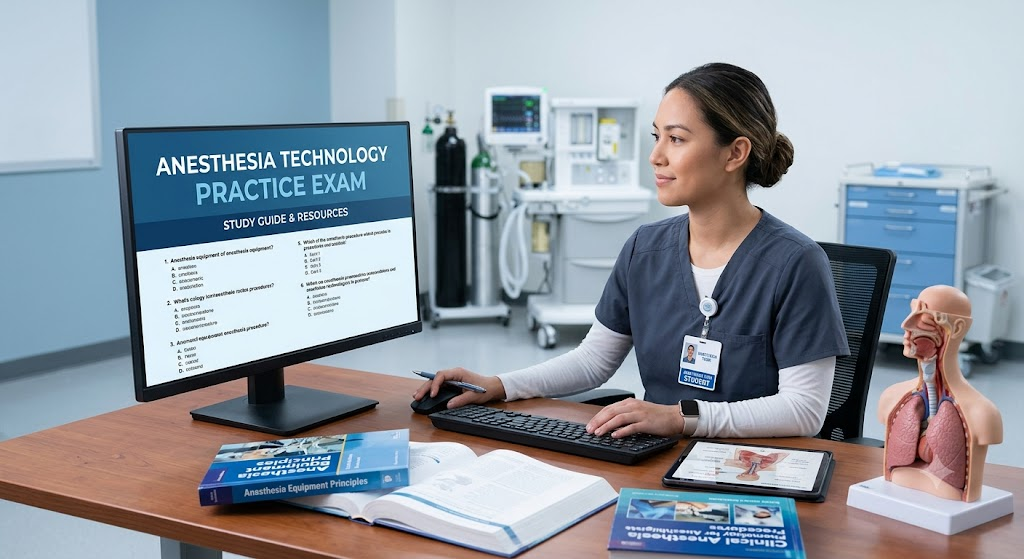
Additional Information
What the Course Entails and Exam Details
The course of study for the Anesthesia Technology Practice Exam encompasses a wide range of academic and practical knowledge. Key domains covered typically include detailed human anatomy and physiology, pharmacology related to anesthetics and adjunct medications, and the principles of anesthesia equipment (including vaporizers, breathing circuits, and ventilators). Additionally, students must master hemodynamic monitoring, airway management techniques, and a thorough understanding of infection control protocols. The exam structure usually breaks down content into specific categories, including clinical science, technical application, ethical considerations, and emergency preparedness. Practice questions simulate real-world scenarios to test your understanding of each critical topic area.
What to Expect in the Final Exam
The official final exam for anesthesia technology certification (such as the Certified Anesthesia Technologist exam) is a rigorous assessment typically administered in a computer-based testing (CBT) format. It generally consists of multiple-choice questions, which may include matching and scenario-based inquiries. Candidates are usually allocated a specific time limit, often around 3 hours, to complete the examination. The passing score is determined by the certifying organization and is based on a scaled score that accounts for the complexity of the questions presented. In addition to knowing the clinical material, examinees must follow strict test center rules, including showing valid government-issued identification and adhering to prohibited items policies.
How to Study and Exam Centers
Effective preparation for the Anesthesia Technology Exam requires a structured study plan that includes textbook review, detailed study guides, group study sessions, and, crucially, repeated practice exams. Utilizing this practice exam allows you to simulate the testing environment, improve time management, and identify weak knowledge areas. It is vital to review the rationale behind both correct and incorrect answers during your practice sessions. Once prepared, the actual final certification exam is taken at authorized, independent testing centers (such as Pearson VUE, Prometric, or organization-specific centers) located globally. In some cases, educational programs may offer on-campus testing through an approved testing protocol, but this is less common for national certifications.
Job Opportunities from the Course
Successfully preparing for and passing the Anesthesia Technology Practice Exam leads to certification, which unlocks various compelling career opportunities within the surgical and medical environment. Common job titles include:
Certified Anesthesia Technologist (Cer.A.T.T.)
Anesthesia Technician (Cer.A.T.)
Anesthesia Support Specialist
Lead Anesthesia Technician
Clinical Educator for Anesthesia Tech Programs
Anesthesia Equipment Sales Representative
Medical Device Trainer for Anesthesia Technology
By dedicating time to study and succeed in this practice exam, you are building the foundation for a rewarding and impactful career in healthcare, contributing directly to safe patient care in operating rooms, emergency departments, and labor and delivery suites.
Frequently Asked Questions
Reviews
5.0
Based on 0 reviews
Leave a Review
No reviews yet. Be the first to review!