
Anesthesia Machine (P1) Practice Tet
$69.00
- Buy to unlock unlimited access to all Quiz questions.
- After purchase you can print a PDF of the whole quiz at any point. The PDF will contain the questions and the correct answers.
About this Exam
The Anesthesia Machine (P1) Practice Test is an essential preparatory tool designed for aspiring anesthesia technicians, technologists, and biomedical equipment technicians (BMETs). This comprehensive practice exam simulates the challenges of official certification, focusing specifically on the fundamental physics, components, and safety protocols governing modern anesthesia delivery systems. It is an ideal resource for students finishing their coursework and working professionals seeking to validate their equipment troubleshooting skills.
Ready to test your knowledge?
Buy Now to Access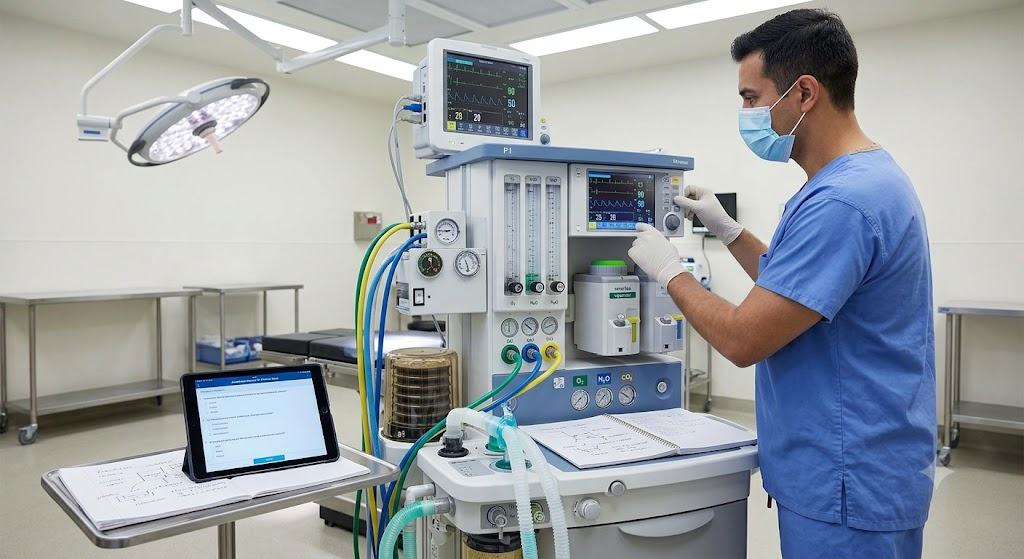
Additional Information
What the Course Entails and Exam Details
This study guide and practice test cover the core technical knowledge required to operate, check, and troubleshoot anesthesia machines. The syllabus is focused on critical areas including gas supply and pipeline systems, the physics of flowmeters, and the design and safety features of vaporizers. Candidates will review the mechanics of breathing circuits (such as Circle Systems), ventilator modes, and scavenging systems. A significant portion of the material emphasizes required daily safety checks, leak testing, and emergency procedures for machine failure.
What to Expect in the Final Exam
The actual P1 level examination is usually a computerized, closed-book test consisting of 50 to 100 multiple-choice questions. These questions evaluate both theoretical knowledge and situational troubleshooting abilities. Candidates are generally allotted 90 to 120 minutes to complete the exam. While passing scores can vary slightly by certifying body, a score of 70% to 75% is typically required to pass. The exam strictly prohibits outside reference materials, calculators, or mobile devices during the testing session.
How to Study and Exam Centers
An effective study strategy must combine theoretical review with practical experience. We highly recommend first studying the manufacturer manuals for major anesthesia machine models (e.g., Dräger, GE Healthcare) to understand specific component layouts and check-out procedures. Use this P1 practice test multiple times to familiarize yourself with the question format and identify knowledge gaps. Formulating flashcards for definitions, gas cylinder colors, and pressure conversions is also helpful.
For the final certification, the official exam is typically administered through secure, proctored environments. Most candidates will take their exam at authorized physical testing centers, such as Pearson VUE, or on-site at accredited medical technology schools. Some certifying organizations may also offer secure, live-proctored online exams that you can take from a suitable home location, provided it meets strict security requirements.
Job Opportunities from the Course
Successfully mastering the content within this P1 guide and passing the relevant certification opens doors to several crucial roles within the surgical environment, including:
Anesthesia Technician (AT): A fundamental role assisting anesthesiologists and CRNAs by setting up, maintaining, and troubleshooting anesthesia equipment before and during surgery.
Certified Anesthesia Technologist (Cer.A.T.): A more advanced role typically requiring certification, involving higher-level equipment management and patient care support.
Biomedical Equipment Technician (BMET): Technicians specializing in the repair, calibration, and safety testing of hospital equipment, including complex anesthesia delivery systems.
Anesthesia Equipment Specialist: A focused career path concentrating on the inventory, procurement, maintenance, and training for all anesthesia-related technology within a healthcare facility.
Medical Equipment Sales Representative (Anesthesia): Leveraging technical expertise to sell and provide training on new anesthesia machines to hospitals and surgical centers.
Frequently Asked Questions
Reviews
5.0
Based on 0 reviews
Leave a Review
No reviews yet. Be the first to review!