
Anesthesia 2 – Anesthetic Problems and Emergencies Practice Test
$69.00
- Buy to unlock unlimited access to all Quiz questions.
- After purchase you can print a PDF of the whole quiz at any point. The PDF will contain the questions and the correct answers.
About this Exam
The Anesthesia 2 – Anesthetic Problems and Emergencies Practice Test is a critical resource for healthcare professionals and veterinary technicians aiming to enhance their readiness for advanced certification. This assessment focuses on the real-world application of anesthetic knowledge during challenging scenarios. It is designed for individuals who need to demonstrate competence in managing critical events and complications before, during, and after anesthesia.
Ready to test your knowledge?
Buy Now to Access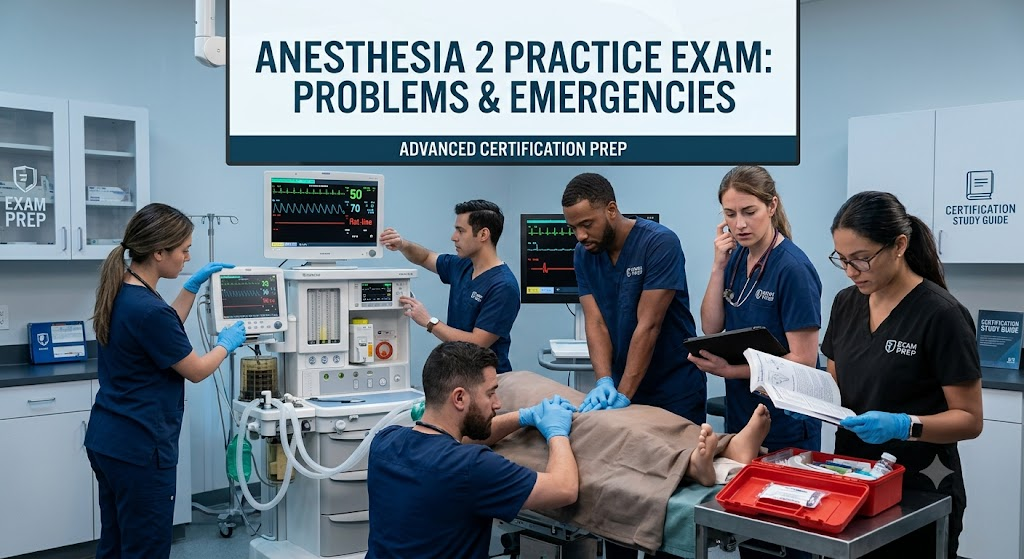
Additional Information
What the Course Entails and Exam Details
The course covers a broad range of topics crucial for patient safety. It delves into specialized areas such as:
Recognizing and managing respiratory emergencies (e.g., laryngospasm, aspiration).
Handling cardiovascular complications like arrhythmias and severe hypotension.
Identifying and treating equipment failures or troubleshooting malfunctions.
Advanced monitoring techniques and data interpretation under pressure.
Protocols for malignant hyperthermia and anaphylaxis.
What to Expect in the Final Exam
While the actual final certification exam may vary slightly depending on the accredited body, candidates generally take a proctored, multi-hour examination. The format is typically multiple-choice, which evaluates both conceptual knowledge and case-based decision-making. Passing scores vary by organization but usually range around 70-75%. You must often provide evidence of relevant clinical hours as a prerequisite.
How to Study and Exam Centers
A successful approach requires both theoretical knowledge and practical familiarity. We recommend a structured study plan:
Review Textbooks and Guidelines: Revisit core anesthesiology materials and the latest emergency protocols.
Utilize Practice Tests: This "Anesthesia 2" practice exam is an essential tool to simulate the test environment and identify knowledge gaps.
Case Study Groups: Analyzing past emergency cases in study groups can improve diagnostic speed and decision-making.
For the final certification, exams are often administered through authorized professional schools or large, secure testing networks such as Pearson VUE. Online proctoring options may also be available.
Job Opportunities from the Course
Obtaining a specialized certification in anesthetic problems and emergencies significantly enhances your career trajectory and value within a medical team. Key opportunities unlocked include:
Certified Registered Nurse Anesthetist (CRNA)
Veterinary Technician Specialist (VTS-Anesthesia)
Lead Anesthesia Technician
Cardiac Anesthesia Specialist
Critical Care/ICU Manager
Frequently Asked Questions
Reviews
5.0
Based on 0 reviews
Leave a Review
No reviews yet. Be the first to review!