
ANAC Aircraft Maintenance Practice Test & Exam Prep | Brazil
$69.00
- Buy to unlock unlimited access to all Quiz questions.
- After purchase you can print a PDF of the whole quiz at any point. The PDF will contain the questions and the correct answers.
About this Exam
The ANAC (Agência Nacional de Aviação Civil) Aircraft Maintenance Mechanic certification is Brazil’s essential credential for individuals wishing to work professionally maintaining, repairing, and overhauling aircraft. It is the crucial qualification that authorizes mechanics to sign off on maintenance and approve aircraft for return to service, ensuring flight safety across the nation's aviation industry. This certification is designed for aspiring aircraft technicians who have completed authorized training courses or possess equivalent documented practical experience in aviation maintenance. It validates that the candidate possesses the comprehensive knowledge and regulatory understanding necessary to maintain aircraft according to stringent safety standards.
Ready to test your knowledge?
Buy Now to Access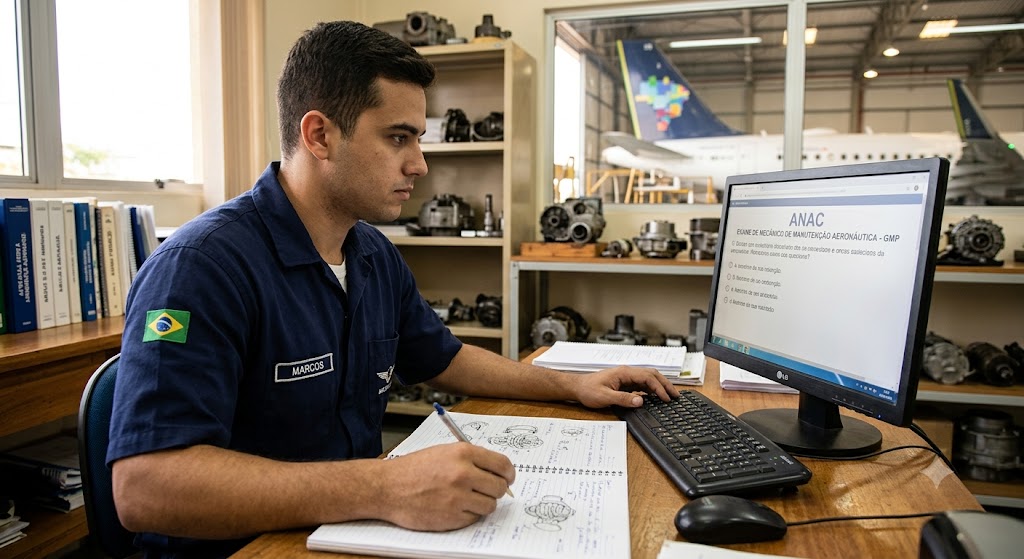
Additional Information
What the Course Entails and Exam Details
Preparing for the ANAC Aircraft Maintenance exams involves mastering several distinct modules or categories of knowledge, depending on the desired specialization. Candidates typically focus on one or more of the following:
GMP (Grupo Motopropulsor): Focuses on aircraft engines (piston and turbine), including all associated systems, powerplants, and accessories.
CEL (Célula): Covers the aircraft structure, including the fuselage, wings, flight control systems, and associated non-propulsion systems (such as hydraulics and pneumatics).
AVI (Aviônicos): Focuses on electronic systems, including communication, navigation, and instrument systems within the aircraft.
Course content and study materials cover a vast array of topics, including technical mathematics, physics, aerodynamics, aviation materials, safety procedures, and a deep dive into the specific systems relevant to the chosen module. Crucially, a significant portion of the syllabus is dedicated to Brazilian civil aviation regulations (RBACs) and international aviation standards.
What to Expect in the Final Exam
The final ANAC evaluation for the theoretical component is a rigorous exam designed to test the candidate’s comprehension of the syllabus material.
Format: The exam typically consists of multiple-choice questions.
Content: Questions will cover the foundational aviation knowledge (Basic module) and specific technical areas relevant to the chosen specialization (GMP, CEL, or AVI).
Passing Score: Candidates generally need to achieve a score of at least 70% to pass the theoretical examination.
Location: The theoretical exams are conducted electronically at ANAC-authorized test centers (such as Fundatec) across major cities in Brazil.
How to Study and Exam Centers
Successfully passing the ANAC theoretical exam requires diligent preparation and a strategic study approach.
Utilize Official Materials: Candidates should thoroughly study the ANAC-provided supplementary materials and the specific Brazilian Civil Aviation Regulations (RBACs) relevant to maintenance (such as RBAC 43 and RBAC 65).
Enroll in Authorized Training: Most candidates benefit from completing a comprehensive aircraft maintenance course at an ANAC-certified Civil Aviation Instruction Center (CIAC). These courses combine theoretical instruction with practical hands-on training.
Practice with Practice Tests: Taking simulated practice tests, like the ones discussed here, is vital. These tests help candidates familiarize themselves with the question format, manage their time effectively, and identify areas that need further study.
Exam Scheduling: Once candidates have completed their training and feel prepared, they must register for the theoretical exam through the ANAC portal and schedule a time and location at an authorized examination center (Fundatec or similar).
Job Opportunities from the Course
Earning the ANAC Aircraft Maintenance license opens doors to a stable and rewarding career path in Brazil’s active aviation sector. Licensed mechanics are in demand by various organizations, including:
Commercial Airlines (Line Maintenance and Base Maintenance)
Executive Aviation Companies
Cargo Carriers
Aircraft Manufacturing Companies (MRO facilities)
Specialized Aircraft Repair Stations
Government Agencies (Military and Civil)
Specific job titles and career paths this certification unlocks include:
Licensed Aircraft Maintenance Mechanic (A&P Mechanic)
Aircraft Maintenance Technician
Avionics Technician
Hangar Supervisor
Maintenance Quality Inspector
Aircraft Maintenance Planner
This certification provides a clear path for professional advancement and the opportunity to specialize in specific types of aircraft or systems.
Frequently Asked Questions
Reviews
5.0
Based on 0 reviews
Leave a Review
No reviews yet. Be the first to review!