
AMT Airframe Oral and Practical (O&P) Practice Test
$69.00
- Buy to unlock unlimited access to all Quiz questions.
- After purchase you can print a PDF of the whole quiz at any point. The PDF will contain the questions and the correct answers.
About this Exam
The Aviation Maintenance Technician (AMT) Airframe certification is a crucial milestone for aspiring aircraft mechanics. It signifies a significant level of knowledge and skill in inspecting, repairing, and maintaining the structural components of an aircraft. This includes everything from the fuselage and wings to the landing gear and flight control systems.
The Airframe Oral and Practical (O&P) examination is the final hurdle in achieving this prestigious certification. Designed for individuals who have already completed their Airframe written exam and possess a solid foundation in aviation maintenance, the O&P rigorously tests your ability to apply that knowledge in a real-world, hands-on environment.
Ready to test your knowledge?
Buy Now to Access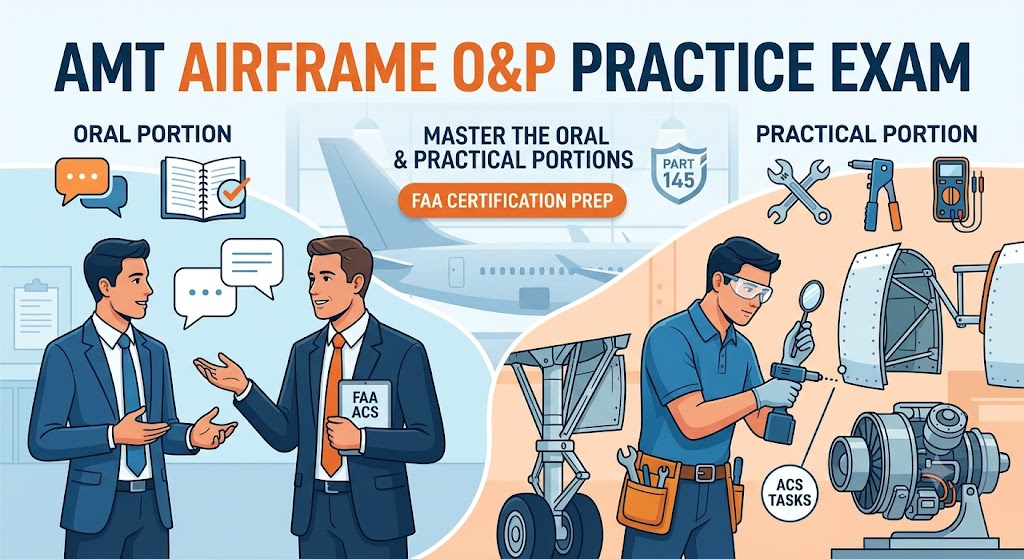
Additional Information
What the Course Entails and Exam Details
This examination evaluates your practical abilities across a comprehensive range of topics critical to aircraft airframe maintenance. Candidates must demonstrate proficiency in various essential areas, including:
Wood Structures: Inspecting, repairing, and fabricating aircraft components made from wood.
Aircraft Covering: Installing, repairing, and inspecting fabric coverings on aircraft structures.
Finishes: Applying, inspecting, and repairing paint and other protective finishes.
Sheet Metal and Non-Metallic Structures: Fabricating, repairing, and inspecting aircraft structures made from aluminum and other metals, as well as composite materials.
Welding: Applying appropriate welding techniques for repairing and fabricating metal aircraft parts.
Assembly and Rigging: Proper assembly and adjustment of aircraft flight control surfaces and systems.
Airframe Inspection: Performing comprehensive inspections of aircraft structures to ensure airworthiness.
Landing Gear Systems: Inspecting, maintaining, and repairing landing gear, brakes, and related systems.
Hydraulic and Pneumatic Power Systems: Understanding and servicing aircraft hydraulic and pneumatic systems.
Cabin Atmosphere Control Systems: Inspecting and maintaining systems responsible for cabin pressurization and air conditioning.
Aircraft Instrument Systems: Checking, installing, and maintaining various flight and engine instruments.
Communication and Navigation Systems: Understanding and basic troubleshooting of aircraft radio and navigation equipment.
Aircraft Fuel Systems: Inspecting, servicing, and repairing fuel tanks, pumps, and delivery systems.
Aircraft Electrical Systems: Installing, troubleshooting, and maintaining electrical wiring and components.
Position and Warning Systems: Understanding systems related to landing gear position, engine warning lights, etc.
Ice and Rain Control Systems: Servicing systems that prevent ice buildup on wings and other critical surfaces.
Fire Protection Systems: Understanding and inspecting aircraft fire detection and extinguishing systems.
The examination consists of two main components:
Oral Examination: The oral part involves a designated mechanic examiner (DME) asking you questions on the various airframe subjects. These questions are often tied to the practical tasks you'll perform, and you must clearly demonstrate your understanding of the underlying principles.
Practical Examination: The practical part is a series of hands-on tasks that you must complete under the watchful eye of the DME. You will be required to perform maintenance operations, inspections, and repairs using the appropriate tools and techniques, adhering to all safety protocols and approved data.
You must achieve a minimum score of 70% in each subject area for both the oral and practical sections to pass. The duration of the entire O&P can vary, but it generally takes several hours, often a full day.
What to Expect in the Final Exam
On the day of your examination, you can expect a demanding but fair assessment. The O&P is designed to be a practical, "real-world" experience, and the DME will be looking for not only your technical skills but also your problem-solving abilities and commitment to safety.
Key expectations include:
Adherence to Procedures: All tasks must be performed following approved technical data, such as manufacturer's maintenance manuals (MM) or FAA Advisory Circulars (AC). Failing to follow procedures is a common reason for failure.
Safety First: Demonstrating safe work practices is paramount. Proper use of personal protective equipment (PPE) and maintaining a clean and orderly work area are crucial.
Effective Communication: In the oral section, clearly and concisely communicate your understanding. Be prepared to explain "why" you are doing something, not just "what" you are doing.
Problem-Solving Skills: You may be presented with unexpected situations during the practical exam. Your ability to calmly analyze the problem and find a solution based on your knowledge will be key.
Time Management: While there's no strict time limit for individual tasks, you should work efficiently and demonstrate good time management skills throughout the day.
Professional Conduct: Treat the DME with respect and professionalism. Maintain a positive and confident attitude, even under pressure.
Remember, the O&P is not just about what you know, but how you apply that knowledge in a practical and safe manner. Thorough preparation is essential.
How to Study and Exam Centers
Preparation for the Airframe O&P requires a multi-faceted approach, combining theoretical study with extensive hands-on practice.
Effective Study Strategies:
Master the Airframe Written Exam Materials: Start by reviewing the core subjects you learned for your written exam. Use FAA study guides, textbooks, and practice tests to reinforce your knowledge.
Review Practical Handbooks: The FAA offers practical test standards for aviation mechanic applicants (FAA-S-8081-26). Study this document thoroughly as it outlines exactly what the examiner will be looking for.
Focus on Core Subject Areas: Pay close attention to the list of topics covered in Section 2. Ensure you have a deep understanding of each subject and can confidently discuss it.
Practice with Real Aircraft Components: This is perhaps the most important study method. Spend as much time as possible in a workshop or on actual aircraft. Practice riveting, sheet metal fabrication, wiring, and other common airframe maintenance tasks.
Form Study Groups: Collaborating with other students can be incredibly helpful. Quiz each other on various subjects and practice explaining concepts clearly.
Utilize Online Resources: There are numerous websites, forums, and online communities dedicated to aviation maintenance. These can be valuable sources of study tips, practical advice, and support.
Seek Mentorship: If possible, find an experienced AMT who is willing to mentor you. Their real-world knowledge can be invaluable.
Where and How to Take the Exam:
The Airframe O&P must be administered by a Designated Mechanic Examiner (DME) authorized by the Federal Aviation Administration (FAA). You cannot take this exam at standard computer-based testing centers.
Authorized Schools: If you are attending an FAA-approved Part 147 aviation maintenance technician school, they will likely have DMEs associated with their program or will facilitate scheduling your exam.
Private Examiners: If you are obtaining your certificate through work experience (the "experience route"), you can find a list of authorized DMEs on the FAA's website. You will need to contact a DME directly to schedule your examination.
It is important to select a DME who is professional, fair, and has a good reputation. Be prepared to provide proof of your eligibility, including a passing score on the Airframe written exam.
Job Opportunities from the Course
Earning your AMT Airframe certification opens the door to a wide range of exciting and stable career opportunities in the aviation industry.
Aircraft Maintenance Technician (AMT): The primary role, responsible for performing scheduled maintenance, repairs, and inspections on aircraft.
Line Maintenance Technician: Specializes in performing routine inspections and repairs on aircraft between flights.
Hangar Maintenance Technician: Works on larger maintenance projects, such as major overhauls and structural repairs, within an aircraft hangar.
Component Overhaul Technician: Repairs and overhauls specific aircraft components, such as engines, landing gear, or flight control systems.
Aircraft Inspector: Performs detailed inspections of aircraft structures and systems to ensure compliance with FAA regulations.
Quality Control (QC) Inspector: Ensures that all maintenance work is performed according to approved standards and procedures.
Field Service Representative (FSR): Provides technical support and assistance to aircraft operators on behalf of aircraft manufacturers.
Technical Instructor: Teaches aviation maintenance subjects at vocational schools or community colleges.
The demand for qualified AMTs is consistently high, making this a rewarding and stable career choice.
Congratulations on taking the first step towards earning your Airframe certification! With dedication, hard work, and the proper preparation, you can achieve your goal and build a successful career in the dynamic world of aviation maintenance. Good luck on your Airframe O&P!
Frequently Asked Questions
Reviews
5.0
Based on 0 reviews
Leave a Review
No reviews yet. Be the first to review!