
Amphibious Embarkation Practice Test
$69.00
- Buy to unlock unlimited access to all Quiz questions.
- After purchase you can print a PDF of the whole quiz at any point. The PDF will contain the questions and the correct answers.
About this Exam
The Amphibious Embarkation certification is a vital credential for military personnel and logistics professionals specializing in sea-to-shore operations. This exam is designed to validate an individual's knowledge and practical understanding of the complex procedures required to load, transport, and deploy troops, vehicles, and equipment from naval vessels. It is primarily intended for Logistics Officers, Embarkation Specialists, and NCOs within amphibious ready groups who are responsible for the planning and execution of combat and humanitarian loading. Mastering this content ensures operational readiness and the safe, efficient movement of critical assets in expeditionary environments.
Ready to test your knowledge?
Buy Now to Access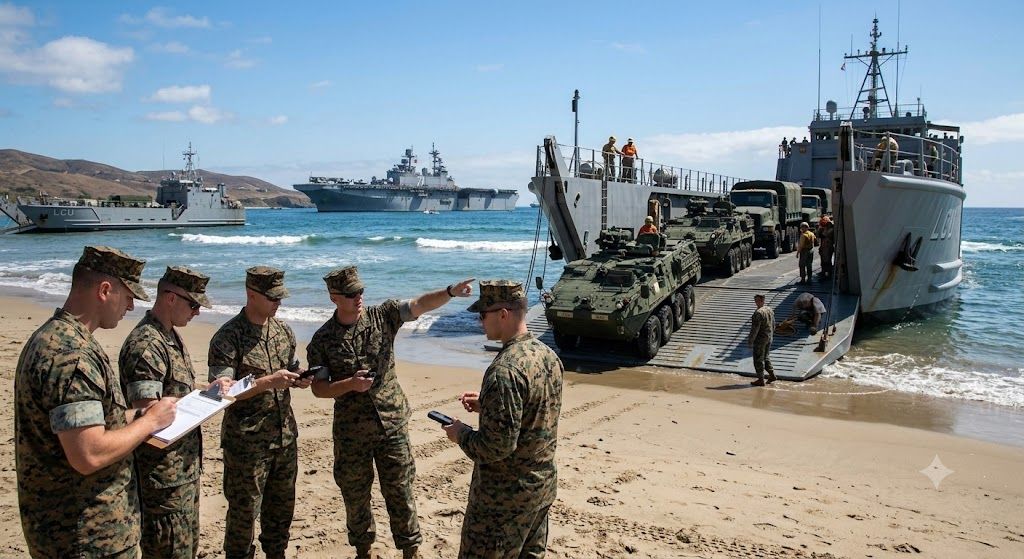
Additional Information
What the Course Entails and Exam Details
The material covered in the lead-up to this exam delves deeply into the doctrine and technical specifics of amphibious warfare logistics. Students must master the principles of combat loading, where equipment is stowed in a manner that allows for rapid unloading in reverse order of operational priority. The curriculum covers the characteristics and capacities of various amphibious ships (LHDs, LPDs, LSDs) and landing craft (LCACs, LCUs). Key topics include detailed stowage planning, weight and balance calculations, hazardous material handling at sea, the roles of the Combat Cargo Officer (CCO), and coordination with the ship’s crew for ballasting and well-deck operations.
What to Expect in the Final Exam
The final exam typically adopts a hybrid format, combining theoretical knowledge assessment with practical application scenarios. Candidates should expect a significant multiple-choice section that tests their understanding of embarkation terminology, regulatory compliance, and doctrinal principles. The most critical component of the exam is the practical application, where students are required to create a detailed stowage plan for a specific embarking unit using standard manifest software or manual charting. This includes prioritizing equipment, calculating square footage, and ensuring the ship remains within acceptable trim and stability limits. A passing score, often 80% or higher, demonstrates operational competence.
How to Study and Exam Centers
Effective preparation requires a balance of study and hands-on practice. We recommend starting with a thorough review of joint and service-specific publications regarding amphibious operations (such as MCWP 3-31.5 or the relevant Naval Warfare Publications). Utilizing flashcards for vehicle specifications and vessel capacities is highly effective. The best study method is conducting practical planning exercises, ideally with the specific load planning software used by your service branch. Practice tests, like the one this guide supports, are essential for identifying knowledge gaps. The actual certification exam is administered through authorized military testing centers, often located on major marine corps and naval bases, or via official service portals during designated advanced logistics courses.
Job Opportunities from the Course
A certification in Amphibious Embarkation demonstrates a highly specialized and vital logistics skillset that is in high demand. Successful candidates can pursue various rewarding career paths, including:
Embarkation Officer/Specialist (NCO)
Combat Cargo Officer (CCO)
Logistics Combat Element Planner
Expeditionary Logistics Specialist
Strategic Sealift Planner
Defense Logistics Agency (DLA) Maritime Operations Manager
Defense Contractor specializing in Military Logistics and Supply Chain
Port Operations Manager (in civilian maritime and defense sectors)
Frequently Asked Questions
Reviews
5.0
Based on 0 reviews
Leave a Review
No reviews yet. Be the first to review!