
American Red Cross Lifeguard Instructor Certification Practice Test
$69.00
- Buy to unlock unlimited access to all Quiz questions.
- After purchase you can print a PDF of the whole quiz at any point. The PDF will contain the questions and the correct answers.
About this Exam
The American Red Cross Lifeguard Instructor certification is an advanced program designed to train experienced lifeguards to become instructors for the basic Lifeguarding, First Aid, CPR, and AED courses. This certification is ideal for individuals who demonstrate leadership potential, strong communication skills, and a commitment to water safety education. By earning this credential, individuals can train new lifeguards, helping to ensure the safety of patrons at aquatic facilities and contributing to the overall mission of the American Red Cross.
Ready to test your knowledge?
Buy Now to Access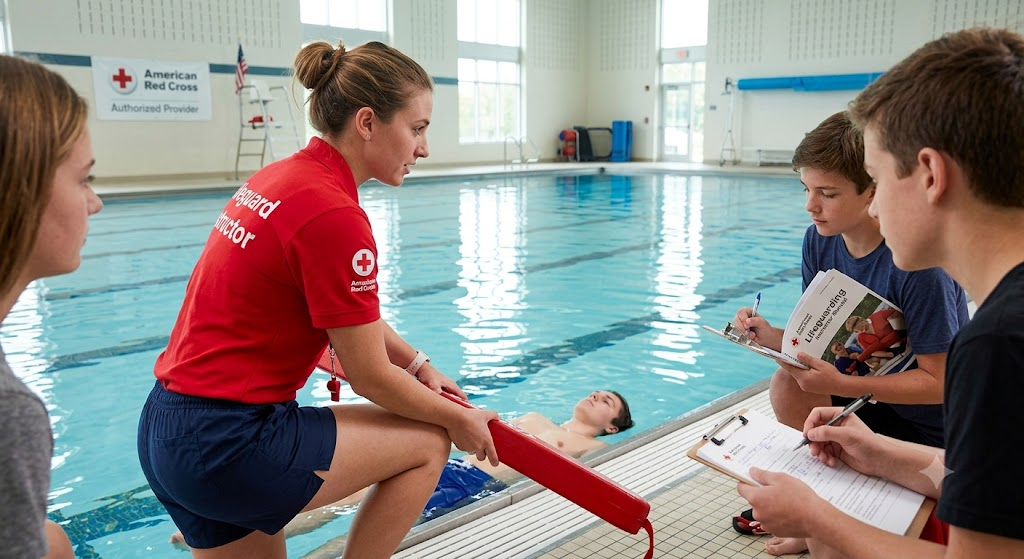
Additional Information
What the Course Entails and Exam Details
The Lifeguarding Instructor course focuses heavily on teaching methodologies, communication techniques, and evaluation strategies. The syllabus typically covers topics such as proper lesson planning, conducting effective skill practice sessions, using visual aids and training materials, administering the written and practical components of the basic Lifeguarding course, and understanding the American Red Cross policies and procedures.
Candidates will be expected to demonstrate proficiency in basic lifeguarding skills (swimming, rescues, CPR/AED, first aid) during the prerequisite phase. The core instructor course then focuses on learning to teach these skills effectively to others through practical teaching assignments and classroom instruction.
What to Expect in the Final Exam
The comprehensive evaluation process for the Lifeguarding Instructor certification involves several components, as it assesses both knowledge and teaching capability:
Prerequisite Skill Polish: Candidates must pass a prerequisite skills test, demonstrating proficiency in all basic lifeguarding skills to the instructor standard before proceeding.
Written Exam: There is a multiple-choice written exam covering the instructor course material, American Red Cross policies, and teaching methodologies. A passing score is typically 80% or higher.
Practice Teaching Sessions: Throughout the course, candidates will be required to prepare and teach several skill sessions. Candidates are evaluated based on their ability to plan lessons, provide constructive feedback, and assess performance accurately.
Final Practical Evaluation: Candidates may undergo a final evaluation of their ability to facilitate and assess critical basic lifeguarding skills, demonstrating they can accurately judge whether a basic lifeguarding candidate has met the required standards.
There may be specific time limits and rules for each component, which will be outlined by the course instructor.
How to Study and Exam Centers
Effective preparation is key to success in the Lifeguarding Instructor program. Strategies include:
Thoroughly Review Manuals: Study the American Red Cross Lifeguarding Instructor’s Manual and the basic Lifeguarding Participant’s Manual. Focus on the teaching points, evaluation criteria, and instructor resources.
Practice Presentation Skills: Prepare lesson plans and practice delivering skill instructions and feedback clearly and concisely. Utilize peer review if possible.
Shadow or Assist with Classes: If available, observe or assist certified instructors to gain firsthand experience with the flow of a basic lifeguarding course.
Form Study Groups: Collaborating with other candidates can help in reviewing material and practicing teaching scenarios.
The Lifeguarding Instructor courses are offered through American Red Cross chapters and authorized providers, such as universities, parks and recreation departments, and community centers. These are typically held at aquatic facilities where practical teaching can take place. Candidates must register for these courses through the American Red Cross website or the local authorized provider.
Job Opportunities from the Course
Upon successfully completing the American Red Cross Lifeguarding Instructor certification, individuals are eligible for various roles in aquatics and safety education, including:
Lifeguard Instructor: Teaching basic Lifeguarding, CPR/AED, and First Aid courses.
Aquatics Supervisor/Manager: Overseeing lifeguarding staff and training programs at pools, waterparks, and waterfronts.
Water Safety Instructor (WSI): Teaching swimming lessons and water safety (often requires a separate WSI certification).
Safety Training Coordinator: Managing safety education programs within organizations or communities.
Red Cross Instructor Trainer: An advanced certification that allows you to train new instructors.
Frequently Asked Questions
Reviews
5.0
Based on 0 reviews
Leave a Review
No reviews yet. Be the first to review!