
American Lifeguard Practice Exam
$69.00
- Buy to unlock unlimited access to all Quiz questions.
- After purchase you can print a PDF of the whole quiz at any point. The PDF will contain the questions and the correct answers.
About this Exam
The American Lifeguard certification is a vital credential for individuals seeking to work as professional lifeguards at swimming pools, waterparks, and other aquatic facilities. This comprehensive certification ensures that candidates possess the necessary skills and knowledge to prevent, recognize, and respond to aquatic emergencies. The course and subsequent exam are designed for strong swimmers who are committed to safety, vigilance, and public service in an aquatic environment.
Ready to test your knowledge?
Buy Now to Access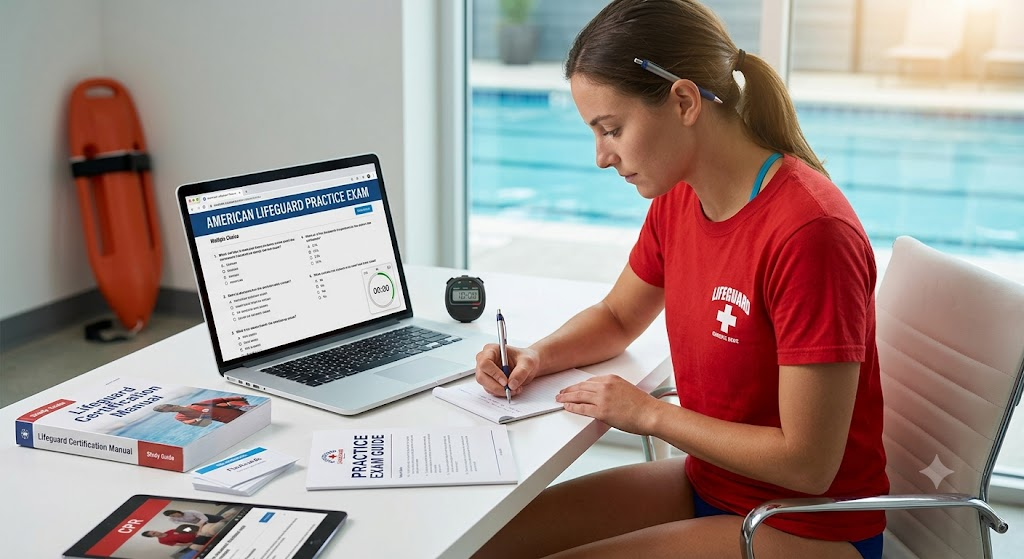
Additional Information
What the Course Entails and Exam Details
The training curriculum for the American Lifeguard certification is rigorous and covers a wide array of critical safety topics. Candidates will undergo extensive training in both theoretical knowledge and hands-on practical skills.
The core areas covered in the course include:
Water Rescue Skills: Techniques for assisting distressed swimmers, active drowning victims, and passive (unconscious) victims in various water depths.
Surveillance and Recognition: Learning how to effectively scan a zone, identify potential hazards, and recognize the signs of a swimmer in trouble.
First Aid and CPR/AED: Comprehensive training in providing immediate care for injuries, sudden illnesses, and performing Cardiopulmonary Resuscitation (CPR) and using an Automated External Defibrillator (AED) for professional rescuers.
Spinal Injury Management: Specialized techniques for handling suspected head, neck, or spinal injuries both in and out of the water.
Professional Responsibilities: Understanding the legal and ethical duties of a lifeguard, including teamwork, communication, and facility safety management.
What to Expect in the Final Exam
The final examination for the American Lifeguard certification is designed to test a candidate's competency in all areas covered during the course. It typically consists of two primary components:
Cognitive (Written) Exam: Candidates must complete a multiple-choice exam that assesses their understanding of lifeguarding theory, safety protocols, first aid knowledge, and emergency response procedures. A passing score (usually 80% or higher) is required.
Practical Skills Test: This is a hands-on evaluation where candidates must demonstrate proficiency in critical skills. This includes performing timed water rescues, demonstrating proper CPR/AED technique on a manikin, and executing spinal injury management protocols. Candidates must successfully pass all practical scenarios to achieve certification.
How to Study and Exam Centers
Preparing for the American Lifeguard Exam requires a combination of studying theoretical materials and practicing physical skills.
Actionable Study Strategies:
Review the Manual: Thoroughly study the official lifeguard candidate manual provided during your course. Pay close attention to key terms, protocols, and step-by-step procedures.
Take Practice Exams: Utilize online resources and practice tests, such as the American Lifeguard Practice Exam, to familiarize yourself with the format and types of questions asked on the written test. This will help identify areas where you need further review.
Practice Practical Skills: Dedicate time to practicing water rescues, CPR, and first aid skills. If possible, practice with a partner or in a study group to simulate real-world scenarios.
Stay Physically Fit: Maintain your swimming strength and endurance, as the practical exam involves physically demanding tasks.
Exam Centers:
The training and examination are typically conducted through authorized providers, such as the American Red Cross, the YMCA, or private aquatic training companies. These organizations hold courses at local community pools, universities, or dedicated training facilities. To take the exam, candidates must usually register for a full certification course through one of these providers' websites or local offices.
Job Opportunities from the Course
Earning the American Lifeguard certification opens the door to various rewarding employment opportunities in the aquatics field.
Potential job titles and career paths include:
Pool Lifeguard: Monitoring community and private swimming pools to ensure patron safety.
Waterpark Lifeguard: Working in dynamic waterpark environments, supervising slides, wave pools, and lazy rivers.
Waterfront Lifeguard: Supervising designated swimming areas at lakes, rivers, or beaches (requires additional waterfront-specific training).
Head Lifeguard: A supervisory role managing a team of lifeguards, scheduling shifts, and ensuring facility compliance.
Lifeguard Instructor: Training new candidates to become certified lifeguards (requires further instructor-level certification).
Aquatics Supervisor/Manager: Overseeing the entire operations of an aquatic facility.
Frequently Asked Questions
Reviews
5.0
Based on 0 reviews
Leave a Review
No reviews yet. Be the first to review!