
American Heart Association First Aid Practice Test
$69.00
- Buy to unlock unlimited access to all Quiz questions.
- After purchase you can print a PDF of the whole quiz at any point. The PDF will contain the questions and the correct answers.
About this Exam
The American Heart Association (AHA) First Aid certification is designed for anyone who wants to learn the critical skills to respond to and manage emergency situations until professional medical help arrives. It is ideal for individuals who are not healthcare professionals—such as teachers, daycare workers, corporate employees, and community members—but who need a certified first aid credential for their workplace, licensure, or personal preparation. Passing the final exam and demonstrating these lifesaving skills earns participants a completion card valid for two years.
Ready to test your knowledge?
Buy Now to Access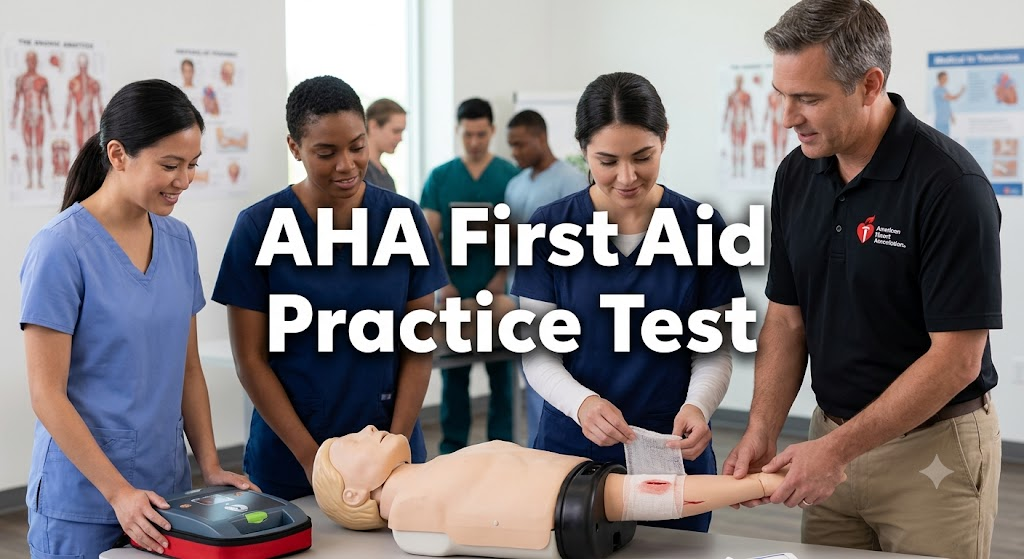
Additional Information
What the Course Entails and Exam Details
The AHA Heartsaver First Aid course focuses on the most common medical emergencies, life-threatening injuries, and environmental accidents. The curriculum ensures that rescuer response is timely, effective, and safe. Key topics covered in the course include:
First Aid Basics: Assessing the scene, finding the problem, calling for help, and proper protective equipment (PPE).
Medical Emergencies: Recognizing and responding to breathing problems, choking, allergic reactions (EpiPen use), heart attack, stroke, fainting, and diabetes-related issues.
Injury Emergencies: Managing bleeding you can see (tourniquets), bleeding you cannot see, shock, and stabilizing wounds.
Environmental Emergencies: Recognizing and treating heat stroke, hypothermia, bites and stings, and poisonings.
Optional Modules: Some courses may include additional modules on CPR and AED use (Cardiopulmonary Resuscitation and Automated External Defibrillator).
What to Expect in the Final Exam
To obtain your certification, you must successfully complete both parts of the assessment:
The Knowledge Exam: This is a multiple-choice written (or digital) test. For the Heartsaver First Aid course, there are usually around 25 questions. This is typically an "open resource" exam, meaning you can reference your AHA student workbook during the test. The passing score required is usually 84% or higher.
The Skills Assessment: This is a mandatory, hands-on component where you must demonstrate your ability to perform first aid techniques correctly in front of an AHA-certified instructor. You will be evaluated on your mastery of key skills, such as properly removing gloves, applying pressure to stop bleeding, and (if applicable) performing effective CPR and using an AED.
How to Study and Exam Centers
Effective Study Strategies:
Use the AHA Workbook: The primary study tool is the Heartsaver First Aid Student Workbook. This workbook contains all the critical information and follows the course flow.
Complete the Practice Test: The best way to prepare for the format and type of questions is to take the authorized AHA First Aid Practice Test. This builds confidence and highlights areas where you need more study.
Hands-on Practice: While studying, practice the psychomotor skills at home (e.g., proper glove removal technique, simulated bleeding control).
Focus on Key Algorithms: Pay attention to the stepped procedures for common emergencies, like choking.
Finding Exam Centers:
AHA certifications are not administered at large centers like Pearson VUE. Instead, they are delivered through a nationwide network of authorized AHA Training Centers (TCs) and Training Sites. To find a testing location:
AHA Class Connector: Use the "Find a Class" tool on the official American Heart Association website.
Local Organizations: Check with local hospitals, community colleges, fire departments, or dedicated safety training companies, as they frequently host AHA-authorized courses.
Job Opportunities from the Course
AHA First Aid certification is a valuable credential that either opens new career paths or satisfies mandatory requirements for many occupations. Common job titles that require or strongly prefer this certification include:
Childcare Worker: Teachers, daycare providers, and nannies.
Educator: School teachers, administrators, and coaches.
Safety Officer: Corporate, industrial, or construction safety personnel.
Fitness Trainer: Personal trainers and gym instructors.
Lifeguard/Recreation Staff: Staff at public pools, beaches, and community centers.
Security Guard: Personnel in commercial, residential, or event security.
Warehouse and Manufacturing Employee: Compliance for workplace safety (OSHA standards).
Event Staff: Stewards and crowd control personnel at public venues.
Office Worker: Designated first aid responders in corporate settings.
Flight Attendant: Airline safety personnel.
This certification proves to employers that you are prepared to handle emergencies, making you a vital asset in any workplace or community environment.
Frequently Asked Questions
Reviews
5.0
Based on 0 reviews
Leave a Review
No reviews yet. Be the first to review!