
American Chiropractic Registry of Radiologic Technologist (ACRRT) Practice Exam
$69.00
- Buy to unlock unlimited access to all Quiz questions.
- After purchase you can print a PDF of the whole quiz at any point. The PDF will contain the questions and the correct answers.
About this Exam
The American Chiropractic Registry of Radiologic Technologists (ACRRT) certification is a vital credential for individuals aiming to specialize in limited radiography within the specific context of a chiropractic practice. This examination is designed to validate the knowledge and clinical competency of chiropractic radiologic technologists (CRTs) or limited x-ray machine operators working under the supervision of a licensed chiropractor. Achieving ACRRT certification demonstrates a commitment to patient safety, proficient imaging techniques, and regulatory compliance, making you a valuable asset to any chiropractic healthcare team. It is ideal for dental assistants, medical assistants, or those looking to pivot into a focused radiologic role in chiropractic.
Ready to test your knowledge?
Buy Now to Access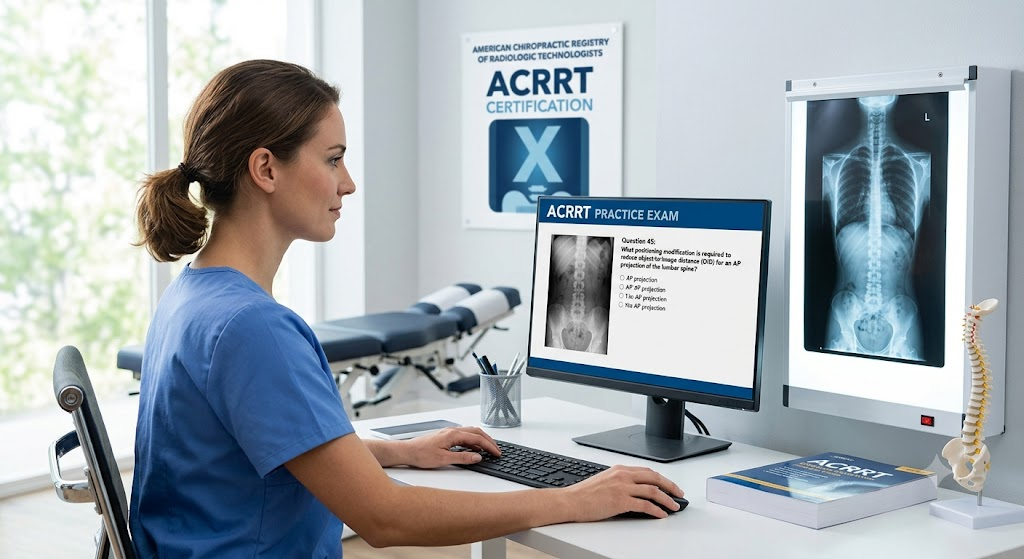
Additional Information
What the Course Entails and Exam Details
Preparing for the ACRRT exam requires a comprehensive understanding of several key domains specific to limited radiologic technology in a chiropractic setting. The core curriculum, often available through an ACRRT-approved study guide and preparatory courses, covers the following essential topics:
Radiation Physics and Equipment: Fundamental concepts of x-ray production, equipment operation, and maintenance.
Anatomy and Physiology: Detailed knowledge of skeletal anatomy, particularly the spine and extremities, relevant to chiropractic diagnostics.
Principles of Radiographic Exposure: Mastering techniques for achieving high-quality images, including kVp, mAs, and image receptor selection.
Radiation Protection: Strict adherence to safety protocols for patients and personnel, including shielding and limiting exposure.
Radiographic Positioning & Procedures: Step-by-step methods for accurately positioning patients for various chiropractic x-ray views, with a heavy emphasis on the spine.
What to Expect in the Final Exam
The official ACRRT Limited Radiographer Examination is a rigorous assessment of your theoretical knowledge and practical understanding. Here is what you can expect on exam day:
Format: The examination consists of 100 multiple-choice questions.
Structure: It is typically divided into two timed sections, each lasting one hour, with an optional 10-minute break between the two. The content breakdown by percentage is as follows:
Part 1 (Section A): Physics and Equipment (~9%), Anatomy and Physiology (~26%), Principles of Radiographic Exposure (~16%).
Part 2 (Section B): Radiation Protection (~19%), Radiographic Positioning & Procedures (~30%).
Passing Score: While specific passing score requirements can vary slightly, a score of 70% or higher is commonly the benchmark for success. Candidates receive their official results via mail, usually within 10 days of the exam date.
Rules: The exam is administered via a secure, live-proctored online platform. You must have a stable high-speed internet connection and a computer equipped with a functional webcam and microphone. The proctoring software locks your browser, preventing access to external materials during the test.
How to Study and Exam Centers
Your success on the ACRRT exam depends on a structured study plan and the right resources.
Actionable Study Strategies:
Obtain the Official ACRRT Study Guide: This is your primary resource. It outlines the core curriculum and provides relevant practice questions. Ensure you have the most current version.
Leverage Practical Experience: Nothing replaces hands-on practice. Work closely with your supervising chiropractor or a certified CRT to master patient positioning and equipment settings.
Use Practice Exams: The ACRRT offers a full-length practice exam on their official website. Take this seriously to get a feel for the question style, time management, and areas where you need further review.
Join a Study Group: Collaborating with peers can provide different perspectives and help reinforce difficult concepts.
Create Flashcards: Use flashcards for key terms, anatomy, positioning protocols, and safety regulations.
Exam Centers and Registration:
The ACRRT Limited Radiographer Examination has transitioned to a secure online, live-proctored and video-recorded format. This allows you to take the exam from a quiet, private location, such as your office or home, eliminating the need to travel to a physical testing center. The exams are administered monthly, typically on the first Saturday of each month. Registration and purchase of the exam and study materials can be done directly through the official ACRRT website.
Job Opportunities from the Course
Obtaining your ACRRT certification can unlock several rewarding career paths, primarily centered on chiropractic care. Here are the specific job titles and environments where you can expect to find opportunities:
Chiropractic Radiologic Technologist (CRT): Working exclusively within chiropractic clinics to perform all necessary x-ray examinations.
Limited X-Ray Machine Operator (LMRT) - Chiropractic Focus: Employed in multidisciplinary offices that include chiropractic services.
Chiropractic Assistant (CA) with Radiography Focus: Many chiropractors look for CAs who can also perform imaging duties.
Radiologic Technologist (in states with specific limited license paths): Serving as a specialist in a limited capacity within broader medical centers.
Achieving this certification places you in high demand within the growing field of chiropractic healthcare, offering a career that combines technical skill with patient interaction.
Frequently Asked Questions
Reviews
5.0
Based on 0 reviews
Leave a Review
No reviews yet. Be the first to review!