
American Airlines (AA) Dispatch Practice Exam
$69.00
- Buy to unlock unlimited access to all Quiz questions.
- After purchase you can print a PDF of the whole quiz at any point. The PDF will contain the questions and the correct answers.
About this Exam
Welcome to our comprehensive study guide for the American Airlines Dispatch Practice Exam! This resource is designed for ambitious individuals aiming for a vital career in the dynamic world of aviation: the role of an Aircraft Dispatcher.
An Aircraft Dispatcher, often called the "captain on the ground," is responsible for planning flight paths, monitoring weather conditions, ensuring regulatory compliance, and maintaining communication with pilots and ground crew to ensure the safe and efficient operation of flights. The journey to becoming a certified dispatcher for a major carrier like American Airlines begins with mastering foundational knowledge and acing the official certification process. This study guide and associated practice materials are your first steps toward that goal, preparing you for the rigorous standards of both regulatory authorities and top-tier airlines. Whether you are already in a dispatch training program or just exploring this career path, this resource is for you.
Ready to test your knowledge?
Buy Now to Access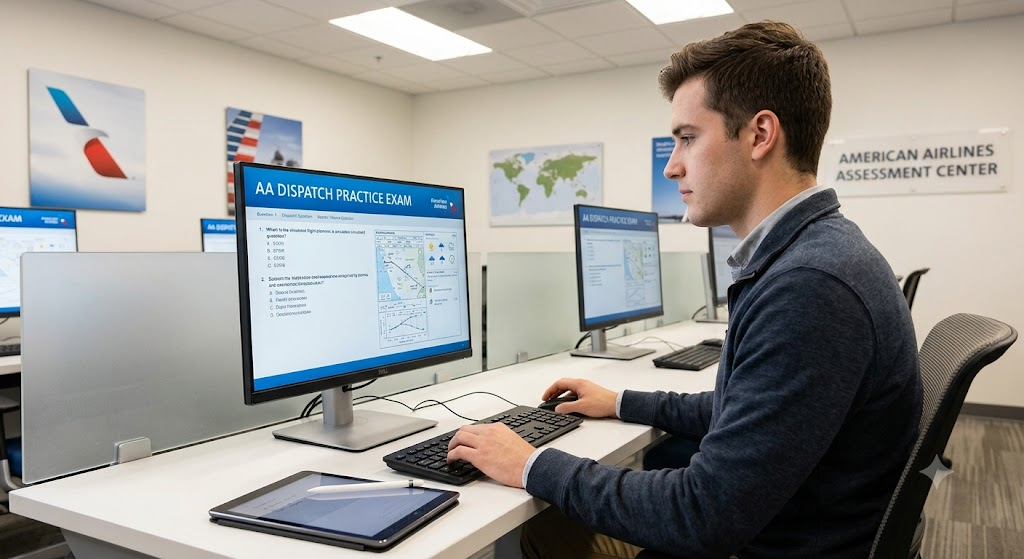
Additional Information
What the Course Entails and Exam Details
This practice exam supports a deep understanding of the core concepts required by the Federal Aviation Administration (FAA) for all Aircraft Dispatchers, which form the prerequisite knowledge for working at major airlines. Key areas covered in this comprehensive guide and practice material typically include:
Aviation Regulations: Thorough knowledge of relevant sections of Title 14 of the Code of Federal Regulations (CFR), including parts related to general operating rules, flight crewmember and dispatcher certifications, and dynamic flight operations. Proper interpretation and application are critical.
Weather (Meteorology): Mastery of weather theory, including understanding air masses, fronts, turbulence, icing, severe weather systems, and the interpretation of various aviation weather reports (METARs), forecasts (TAFs), and weather charts.
Navigation: Understanding basic and advanced navigation principles, including aeronautical charts, radio navigation, GPS, and key concepts in air traffic control procedures.
Aircraft Performance and Systems: Deep comprehension of aircraft weight and balance principles, performance calculations for all phases of flight (takeoff, climb, cruise, descent, landing), and general knowledge of vital aircraft systems.
Flight Planning: The cornerstone of the dispatcher's job – combining all elements to create safe, compliant, and optimized flight plans, including route selection, fuel requirements, and alternative planning.
Emergency Procedures: Knowledge of dispatcher roles and requirements in handling emergency or irregular situations.
What to Expect in the Final Exam
While our practice exam is a critical preparation tool, the actual final goal is the official FAA Aircraft Dispatcher Certification. The path to full certification generally involves two main components:
The written ADX (Aircraft Dispatcher) Exam: This is a comprehensive, multiple-choice computerized test administered at authorized FAA testing centers.
Format: Multiple-choice, often around 80 questions (though it can vary slightly).
Time Limit: Usually a dedicated timeframe (e.g., several hours) to complete.
Passing Score: Typically require a minimum score of 70% to pass.
Content: Questions cover the extensive range of topics outlined in section 2.
The Practical and Oral Exam: After successfully passing the written exam and typically a formal training course, candidates must undergo a thorough practical and oral examination with an FAA-designated examiner or an FAA inspector.
Format: This is a hands-on, scenario-based assessment. You will be expected to demonstrate your ability to create complete and accurate flight plans and answer detailed oral questions on all dispatching topics, regulations, and systems, showing your competence in real-world application.
Specific Rules: Each exam is tailored, but expects candidates to utilize official resources and demonstrate professional decision-making. Passing requirements are based on demonstrating full competence as a dispatcher.
Furthermore, upon joining a major airline like American Airlines, expect internal training, specific qualification programs, and internal checkrides to ensure proficiency with the airline's unique fleet, procedures, and internal systems. These internal tests are also rigorous and demand thorough understanding.
How to Study and Exam Centers
Preparation for both the practice and official certification exams requires dedicated, systematic study. Here are actionable strategies:
Utilize Official Resources: Immerse yourself in official FAA study guides, advisory circulars, and the relevant regulations (14 CFR). Books like the Aeronautical Information Manual (AIM) and pilot's handbooks are invaluable resources.
Enroll in a Comprehensive Training Program: The vast majority of aspiring dispatchers attend an FAA-approved Aircraft Dispatcher course. These provide detailed instruction, practical experience, and often include practice tests. Look for programs with strong reputations and relationships with major airlines.
Aviation Books and Manuals: Supplement training with third-party textbooks and study guides designed specifically for the FAA ADX and dispatcher duties.
Engage with Study Groups: Collaborate with fellow students or peers. Discussing complex topics and scenarios with others enhances understanding.
Practice with Purpose: Actively use practice exams, including those specifically modeled after the American Airlines format or covering required knowledge, to identify weak areas. Mimic exam conditions (timed, quiet space, limited resources) during your practice sessions.
Understand the "Why," Not Just the "What": Go beyond memorizing answers. Focus on understanding the principles behind weather phenomena, aircraft performance charts, and regulatory decisions.
Simulate Practical Scenarios: Practice creating detailed flight plans for various hypothetical scenarios, factoring in realistic variables like changing weather, aircraft limitations, and air traffic delays.
Official Written Exam: This test is taken at an authorized FAA Testing Center. Common providers are PSI and Pearson VUE, which have numerous locations throughout the country and internationally. You must register and pay for the exam through the appropriate channel.
Practical & Oral Exam: This is arranged directly with an FAA-designated Aircraft Dispatcher Examiner (DADE) or through an FAA office and is often the final step of a formal training program.
Practice Exam Resources: Utilize various platforms, including online study tools and training course materials, that offer comprehensive practice exams tailored to the dispatch career path and prepare you for specific airline requirements. The provided image illustrates a professional practice test interface.
Job Opportunities from the Course
Successfully completing the Aircraft Dispatcher certification process opens doors to a rewarding and highly professional career with numerous opportunities:
Primary Job Title: Certified Aircraft Dispatcher
Potential Employer Types:
Major Commercial Airlines (e.g., American Airlines, Delta, United)
Regional & Low-Cost Airlines
Charter Airline Services
Corporate Aviation Departments
Cargo & Freight Air Carriers
Airline Operations Support Services
Career Advancement: With experience, dispatchers can advance to supervisory roles, leadership positions in airline operations control centers (OCCs), or utilize their expertise in safety, regulatory compliance, and training departments within airlines. The detailed understanding of aviation operations and safety protocols is highly valued throughout the industry.
We hope this study guide provides clarity, direction, and inspiration on your journey to becoming a vital part of the aviation industry as a certified Aircraft Dispatcher. Start your studying today and prepare for a rewarding career in airline operations!
Frequently Asked Questions
Reviews
5.0
Based on 0 reviews
Leave a Review
No reviews yet. Be the first to review!