
AMCA Medical Administrative Assistant Practice Test
$69.00
- Buy to unlock unlimited access to all Quiz questions.
- After purchase you can print a PDF of the whole quiz at any point. The PDF will contain the questions and the correct answers.
About this Exam
The American Medical Certification Association (AMCA) Medical Administrative Assistant (MAA) certification is a vital credential for individuals aspiring to excel in the front office of healthcare facilities. This certification is meticulously designed for entry-level professionals. It validates the essential administrative skills required to ensure the smooth operation of medical practices, clinics, and hospitals. By earning this certification, you demonstrate to employers that you possess the practical knowledge and competency to manage critical non-clinical tasks with professionalism and accuracy. This guide provides a detailed overview of the AMCA MAA exam, including the core topics, format, and recommended study strategies to help you succeed.
Ready to test your knowledge?
Buy Now to Access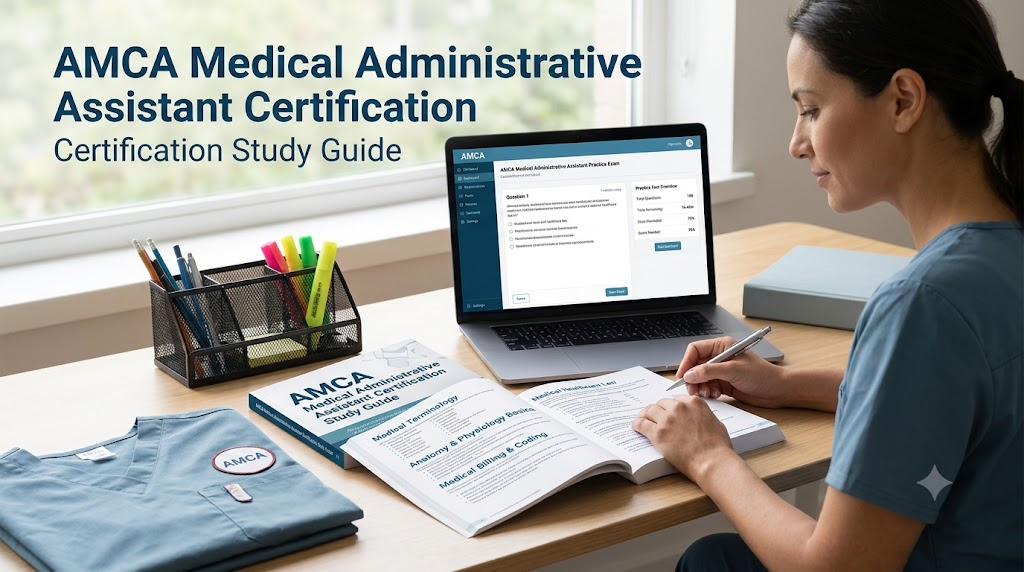
Additional Information
What the Course Entails and Exam Details
A comprehensive AMCA Medical Administrative Assistant course is structured to cover the diverse array of administrative responsibilities in a healthcare setting. The curriculum generally includes a deep dive into medical terminology, ensuring you can accurately interpret complex terms. You will also learn foundational concepts of anatomy and physiology. A significant portion of the coursework is dedicated to medical billing and coding basics, including introductory procedures for ICD and CPT systems. Other critical domains involve medical law and ethics, where you'll explore patient confidentiality and compliance. Additionally, the course emphasizes communication skills, front office operations like scheduling and record management, and the use of practice management systems and electronic health records (EHR). Mastery of these diverse skills is essential for both daily job performance and passing the certification exam.
What to Expect in the Final Exam
The AMCA MAA final exam is a comprehensive assessment that tests your knowledge across the multiple domains covered in your course. It is a computer-based examination that primarily consists of multiple-choice questions designed to evaluate your critical thinking and practical application abilities. You can expect to encounter between 100 and 150 questions. The exam is typically timed, with a duration ranging from 2 to 2.5 hours. To pass, you must achieve a predetermined minimum scaled score, which often translates to a percentage, such as 70%. The exam is proctored to ensure a secure and standardized testing environment. It is crucial to manage your time effectively during the exam, as you will need to read each question carefully and select the single best answer.
How to Study and Exam Centers
Effective preparation for the AMCA MAA exam requires a multi-faceted approach. First, utilize official study guides and manuals provided by AMCA, as they contain a detailed outline of the exam's content. Create a dedicated study schedule that allows for consistent, focused review of each core domain. Flashcards are excellent for memorizing medical terms and key concepts. Engaging in online forums and study groups can provide valuable support and insights from fellow test-takers. One of the most critical study strategies is to utilize practice tests, like the [AMCA Medical Administrative Assistant Practice Test] (or "AMCA Medical Administrative Assistant Practice Exam"), to simulate the actual testing experience. For registration and exam administration, you will need to schedule your test through AMCA's designated channels. AMCA often partners with major testing services, and the exam can be taken at authorized Pearson VUE testing centers. Additionally, many authorized educational institutions and healthcare systems also serve as physical testing centers. Online proctoring options may also be available, providing a flexible alternative for those who meet the technical requirements.
Job Opportunities from the Course
Earning your AMCA Medical Administrative Assistant certification unlocks numerous career opportunities in the fast-growing healthcare sector. This credential validates your readiness for entry-level administrative roles. The specific job titles and career paths this certification can unlock include:
Medical Administrative Assistant
Medical Receptionist
Front Desk Coordinator
Medical Scheduler
Patient Access Representative
Medical Office Assistant
Billing Clerk (entry-level)
Medical Records Clerk
Each of these roles plays a critical part in patient satisfaction and the efficient operation of a healthcare facility. With experience, certified medical administrative assistants can advance into positions like medical office supervisor or health services manager.
Frequently Asked Questions
Reviews
5.0
Based on 0 reviews
Leave a Review
No reviews yet. Be the first to review!