
Amateur Radio Operator Certificate Practice Exam
$69.00
- Buy to unlock unlimited access to all Quiz questions.
- After purchase you can print a PDF of the whole quiz at any point. The PDF will contain the questions and the correct answers.
About this Exam
The Amateur Radio Operator Certificate, often referred to as a "Ham Radio" license, is the gateway into the world of non-commercial radio broadcasting. This certification is designed for hobbyists, electronics enthusiasts, and anyone interested in communicating globally using their own radio equipment. It authorizes individuals to operate radio apparatus for personal recreation, self-training, emergency communications, and experimentation with various radio technologies, fostering a passionate community of radio operators worldwide.
Ready to test your knowledge?
Buy Now to Access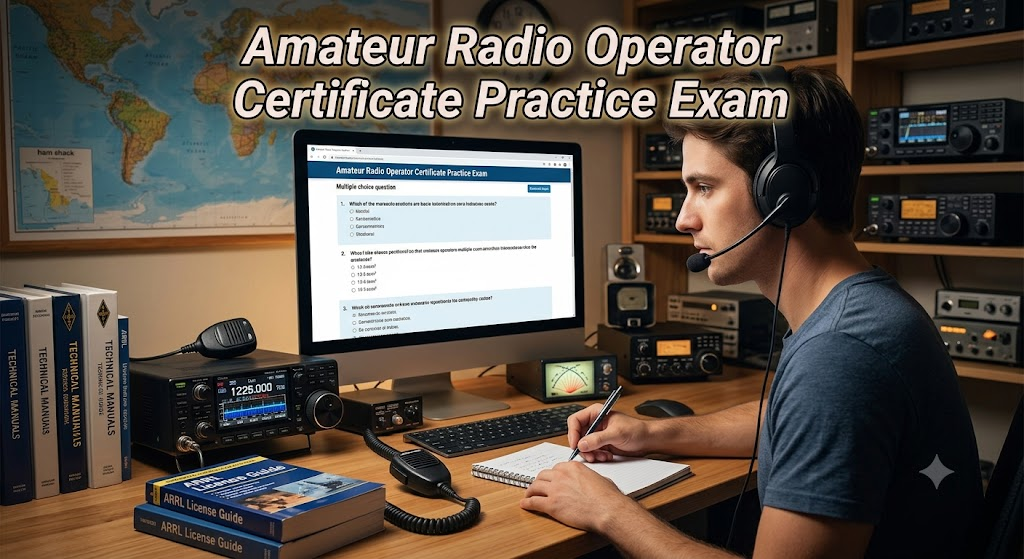
Additional Information
What the Course Entails and Exam Details
Preparing for the Amateur Radio Operator Certificate exam involves mastering a range of topics concerning practical radio operations. The curriculum typically covers basic electronics theory, understanding voltage, current, and resistance principles essential for equipment operation. Candidates will study radio wave propagation, learning how signals travel across different frequency bands and under varying atmospheric conditions. Furthermore, the course emphasizes operating procedures, including proper voice and digital communication protocols, adhering to international regulations, and understanding frequency spectrum allocations designated for amateur use. Safety procedures, such as proper grounding and RF exposure awareness, are also critical components.
What to Expect in the Final Exam
The final exam for the Amateur Radio Operator Certificate generally consists of a multiple-choice written test, covering entry-level regulations and operating practices. Typically, candidates will need to answer approximately 35 questions, with a specific passing score (often around 74%) required to achieve certification. The time limit for the exam is usually generous, allowing applicants ample opportunity to carefully consider each question. In some jurisdictions, a practical Morse Code assessment might be required for higher license classes, but modern entry-level written exams primarily focus on regulatory knowledge and operating theory rather than hands-on assembly or practical signal testing.
How to Study and Exam Centers
Effective preparation is key to success on the Amateur Radio Operator exam, and utilizing dedicated practice tests is highly recommended. To study efficiently, candidates should leverage official study guides provided by organizations like the ARRL (American Radio Relay League) or local equivalents, enroll in online preparation courses, and consistently take practice exams to gauge their understanding of key concepts. Joining a local amateur radio club is also invaluable, offering access to experienced mentors (ELMERs) and practical advice. The exam itself is often administered by local Volunteer Examiners (VEs) affiliated with national amateur radio organizations. While some remote, online-proctored testing options are becoming available, most candidates still take the written exam in person at community centers, local libraries, or authorized testing sites organized by volunteer examiners in their area.
Job Opportunities from the Course
While the Amateur Radio Operator Certificate is strictly for non-commercial use, the knowledge and skills gained during preparation open doors to numerous professional careers in communications and technology. Here are specific job titles and career paths this certification helps unlock:
Telecommunications Technician
Radio Frequency (RF) Engineer
Electronics Technician
Emergency Management Communications Specialist
Avionics Technician
Broadcast Engineer
Field Service Engineer
Satellite Communications Operator
Frequently Asked Questions
Reviews
5.0
Based on 0 reviews
Leave a Review
No reviews yet. Be the first to review!