
All Terrain Vehicle (ATV) Course Practice
$69.00
- Buy to unlock unlimited access to all Quiz questions.
- After purchase you can print a PDF of the whole quiz at any point. The PDF will contain the questions and the correct answers.
About this Exam
The All Terrain Vehicle (ATV) Course Practice Exam is a crucial preparatory tool for riders seeking official safety certification. This course and its final assessment are designed for new riders, as well as experienced operators who need formal certification to comply with state, provincial, or land-management regulations. The certification validates your understanding of safety protocols, proper handling techniques, and environmental responsibilities, which are vital for mitigating risk and ensuring a positive riding experience.
Ready to test your knowledge?
Buy Now to Access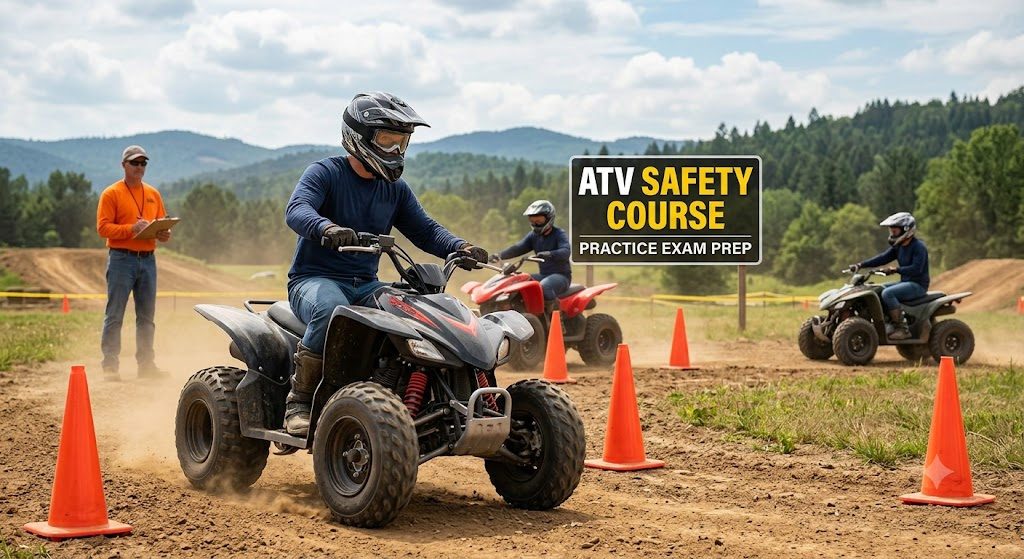
Additional Information
What the Course Entails and Exam Details
This safety course provides a balanced approach to knowledge and skill. It usually includes an interactive educational component (online or in a classroom) followed by hands-on practical training.
The core curriculum covers:
ATV Basics: Identification and function of all controls, proper pre-ride inspections (T-CLOC checklist).
Protective Gear: The necessity of helmets, goggles, gloves, and appropriate clothing.
Riding Fundamentals: Understanding proper posture, starting, shifting, and braking.
Maneuvers and Handling: Practical instruction on turning, traversing hills, navigating obstacles, and managing various terrain.
Responsible Riding: Best practices for interaction with wildlife, minimizing environmental impact, and understanding trail etiquette.
Legal Regulations: State-specific laws and required safety equipment.
What to Expect in the Final Exam
The final certification exam typically consists of two distinct parts:
Knowledge Examination (Written/Online): This component consists of multiple-choice questions that test your theoretical understanding of the course material. Topics include safety gear, pre-ride checks, laws, and correct responses to riding situations. You must achieve a passing score, which is generally 80% or higher.
Practical Skills Evaluation: If you pass the written exam, you will undergo a hands-on skills assessment supervised by a certified instructor. This practical exam requires you to demonstrate that you can safely execute basic maneuvers, such as controlled braking, turning, and traversing challenges, in a controlled environment. Failing to demonstrate safe operation may require retraining.
How to Study and Exam Centers
Effective preparation ensures confidence on test day. Here are proven strategies:
Review Official Materials: Your primary study resource should be the official rider's handbook provided by the course administrator or your state's vehicle department. Read it thoroughly.
Take Practice Quizzes: Utilize the All Terrain Vehicle (ATV) Course Practice Exam repeatedly. These quizzes simulate the final knowledge test, helping you identify knowledge gaps and familiarize yourself with the question formats.
Focus on Key Concepts: Memorize the pre-ride inspection steps (T-CLOC), the importance of matching the ATV size to the rider, and proper procedures for climbing or descending hills.
Visualize Techniques: For the practical exam, mental rehearsal is powerful. Visualize yourself performing checks, initiating safe turns, and practicing controlled stops.
Learn Hand Signals: Understand and memorize the standard hand signals used by off-road riders for communication.
Finding Exam Centers: The final knowledge exam is often integrated into an approved online course. If a physical setting is required, testing typically occurs at authorized safety training locations, local DNR (Department of Natural Resources) offices, or approved outdoor recreation centers. You can locate certified training providers through organizations like the ATV Safety Institute (ASI) or your state's recreational vehicle safety division.
Job Opportunities from the Course
A formal ATV Safety Certification is increasingly valuable and is often a mandatory requirement for various professional roles that involve the use of off-road vehicles.
Ranch Hand or Agricultural Worker: For efficient movement across large properties, accessing remote fence lines, and managing livestock.
Forestry Technician or Conservation Officer: For conducting field surveys, monitoring tree growth, and navigating challenging forest terrain.
Park Ranger or Trail Maintenance Crew: For patrolling recreation areas, inspecting trails, and transporting equipment.
Search and Rescue Team Member: For reaching remote locations and transporting patients in difficult terrain.
Outdoor Adventure Guide: For leading ATV tours and ensuring the safety of recreational riders.
Utility Line Inspector: For accessing and inspecting remote power or pipeline infrastructure not reachable by truck.
Certified ATV Safety Instructor: For leading educational courses and testing future riders (this requires advanced certification).
Frequently Asked Questions
Reviews
5.0
Based on 0 reviews
Leave a Review
No reviews yet. Be the first to review!