
Aircraft Fuel Systems Practice Exam
$69.00
- Buy to unlock unlimited access to all Quiz questions.
- After purchase you can print a PDF of the whole quiz at any point. The PDF will contain the questions and the correct answers.
About this Exam
The Aircraft Fuel Systems Practice Exam is an essential preparatory tool designed for aspiring aviation maintenance technicians, students enrolled in FAA Part 147 programs, and current mechanics seeking to reinforce their knowledge of critical aircraft systems.
This practice exam focuses specifically on the logic, components, maintenance, and safety regulations governing how fuel is stored, managed, and delivered to aircraft engines.
It is designed to simulate the depth and complexity of the fuel system questions found on official certification exams, ensuring candidates are fully prepared for real-world aviation challenges.
Ready to test your knowledge?
Buy Now to Access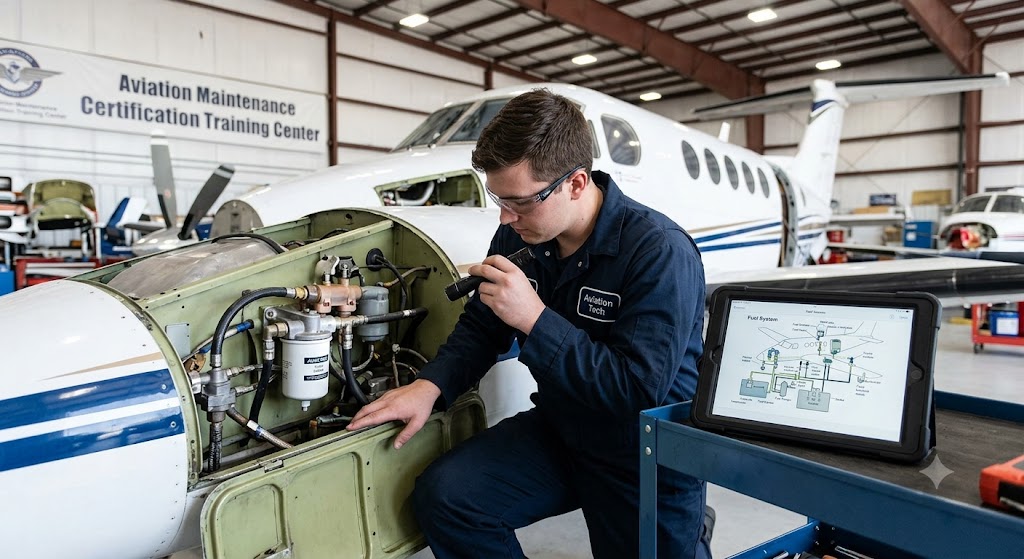
Additional Information
What the Course Entails and Exam Details
This comprehensive review covers all critical aspects of
modern and legacy aircraft fuel systems. Candidates must demonstrate
proficiency in understanding both gravity-feed and pressure-feed systems used
across general aviation and commercial aircraft.
Key syllabus areas include:
- System
Components: In-depth knowledge of fuel tanks (rigid, bladder,
integral), pumps (boost, engine-driven), fuel lines, selectors, strainers,
and filters.
- Fuel
Types and Identification: Characteristics, color coding, and critical
handling properties of Avgas and Jet A/A-1 fuel.
- Maintenance
and Inspection: Procedures for defueling, fueling, locating leaks,
inspecting system integrity, and troubleshooting common malfunctions.
- System
Operations: Understanding fuel jettison systems, cross-feed
operations, fuel ice prevention, and quantity indicating systems.
- Safety
and Regulations: Crucial FAA regulations concerning fuel system
design, fire protection, and safe maintenance practices.
What to Expect in the Final Exam
When sitting for the official certification exam that this
practice test prepares you for, candidates should expect a rigorous,
computer-based assessment.
The final exam typically consists of multiple-choice
questions developed by aviation subject matter experts. The number of questions
specific to fuel systems can vary depending on the specific rating (Airframe or
Powerplant) you are pursuing.
A passing score of 70% or higher is generally required.
While time limits are generous, candidates must work efficiently to complete
the section within the allotted window, which is usually part of a larger
multi-hour testing session.
How to Study and
Exam Centers
Preparation is paramount. Effective study strategies involve
blending theoretical knowledge with practical understanding. We recommend
starting with FAA-approved textbooks (such as the AC 65-15A Airframe &
Powerplant Mechanics Manuals) and attending structured ground school classes.
The most effective method for boosting confidence is the
repeated use of practice exams. Treat each session like the real test:
eliminate distractions, keep track of your time, and carefully review every
incorrect answer to understand the underlying regulation or technical concept.
Official knowledge exams must be taken at FAA-authorized
testing centers. These are typically located at airports, flight schools, or
dedicated testing facilities (like PSI testing centers) across the country.
Practical and Oral exams are administered by Designated Mechanic Examiners
(DMEs).
Job Opportunities
from the Course
Mastering aircraft fuel systems is a core requirement for
licensed mechanics and opens the door to numerous vital roles within the
aerospace industry. Earning your certification unlocks career paths such as:
- Aviation
Maintenance Technician (AMT) – Inspecting, servicing, and repairing
fuel systems on various aircraft types.
- Airframe
and Powerplant (A&P) Mechanic – General mechanic authorized to
work on nearly all components of an aircraft.
- Fuel
System Specialist – Focusing specifically on the complex fuel storage
and distribution networks in large commercial or military aircraft.
- Field
Service Representative (Aerospace) – Providing technical support and
troubleshooting for fuel system manufacturers.
- Quality
Control Inspector – Ensuring all fuel system maintenance aligns with
strict FAA safety standards and documentation requirements.
Frequently Asked Questions
Reviews
5.0
Based on 0 reviews
Leave a Review
No reviews yet. Be the first to review!