
AHA BLS for Healthcare Providers Practice Test
$69.00
- Buy to unlock unlimited access to all Quiz questions.
- After purchase you can print a PDF of the whole quiz at any point. The PDF will contain the questions and the correct answers.
About this Exam
The AHA Basic Life Support (BLS) for Healthcare Providers certification is a foundational credential for medical professionals. This course and subsequent certification exam validate essential life-saving skills. It is designed to equip healthcare providers with the knowledge and practical abilities to recognize life-threatening emergencies, deliver high-quality chest compressions, provide appropriate ventilations, and utilize an Automated External Defibrillator (AED). Who is this designed for? The AHA BLS certification is a critical requirement for physicians, nurses, paramedics, emergency medical technicians, respiratory therapists, and many other direct patient care roles. Successfully passing this exam is crucial for advancing or maintaining a career in healthcare, and this practice guide is your first step toward success.
Ready to test your knowledge?
Buy Now to Access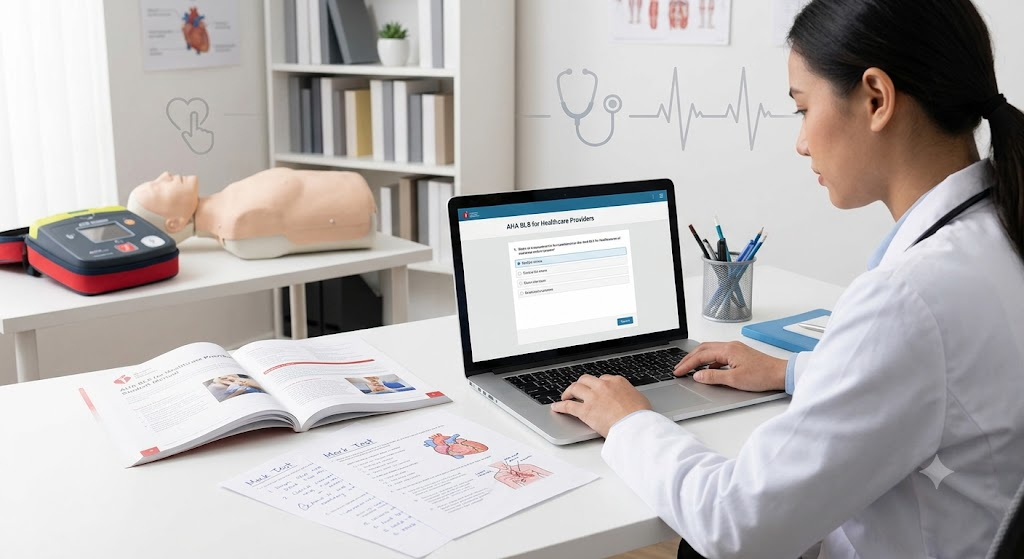
Additional Information
What the Course Entails and Exam Details
The comprehensive BLS for Healthcare Providers course covers a range of critical, evidence-based topics following the latest American Heart Association guidelines. Participants learn how to recognize and respond to cardiac arrest in adults, children, and infants. The curriculum focuses heavily on high-quality Cardiopulmonary Resuscitation (CPR), including proper hand placement and depth of chest compressions. You will also cover effective ventilation techniques and how to use an AED on victims of all ages. Other essential skills include single-rescuer and multi-rescuer coordination and the relief of foreign-body airway obstruction (choking). The details of the course, and what you will be tested on, center entirely on these key performance areas. Following the educational course, you will take a final examination that includes both a written portion and a hands-on practical assessment.
What to Expect in the Final Exam
The final BLS examination has two distinct components that candidates must pass to achieve certification. The first is a written, multiple-choice cognitive exam. This written portion often consists of about 25 questions and tests your understanding of the material covered in the official AHA manual. A typical passing score for the written exam is 84% (e.g., answering at least 21 out of 25 questions correctly). For students using practice tests, this written format mirrors what you will experience. The second and equally critical component is the practical skills assessment. Under the supervision of a certified AHA instructor, you must demonstrate proficiency in adult, child, and infant CPR, rescue breathing, and the proper use of an AED. This practical test isPass/Fail, and all critical steps must be completed correctly and in the proper sequence to pass. There are typically no specific time limits beyond the inherent speed required for effective high-quality compressions and respirations.
How to Study and Exam Centers
To succeed, a hybrid approach combining theoretical study and physical practice is essential. Your primary resource should be the official "AHA BLS for Healthcare Providers Student Manual," which you must review thoroughly. Utilize practice tests extensively to assess your knowledge of the cognitive material, identify weak points, and get comfortable with the types of questions you will see on the written exam. The most important study method for the practical component is attending the instructor-led course. During the in-person or blended learning session, maximize your time on the manikins, focusing on perfect compression depth, rate, and chest recoil. For the official, final examination and certification, you must take it at an authorized AHA Training Center or Training Site. These facilities are located globally and are often hosted by hospitals, fire departments, or dedicated medical training academies. Use the AHA "Find a Course" locator tool to select a nearby, convenient center. While some hybrid options offer online cognitive material, the required physical skills test is always conducted in person at an official center.
Job Opportunities from the Course
Earning your AHA BLS for Healthcare Providers certification opens doors to countless essential roles across the medical and emergency response sectors. This credential is a mandatory prerequisite for nearly every entry-level, skilled, and professional position involved in direct patient care.
Emergency Medical Technician (EMT)
Paramedic
Registered Nurse (RN)
Licensed Practical Nurse (LPN) / Licensed Vocational Nurse (LVN)
Physician
Physician Assistant (PA)
Nurse Practitioner (NP)
Respiratory Therapist
Occupational Therapist
Physical Therapist
Medical Assistant
Dental Assistant
Home Health Aide
Patient Care Technician (PCT)
Surgical Technologist
Phlebotomist
Frequently Asked Questions
Reviews
5.0
Based on 0 reviews
Leave a Review
No reviews yet. Be the first to review!