
AFAA Primary Group Exercise Certification Practice Test
$69.00
- Buy to unlock unlimited access to all Quiz questions.
- After purchase you can print a PDF of the whole quiz at any point. The PDF will contain the questions and the correct answers.
About this Exam
The AFAA Primary Group Exercise Certification is a globally recognized credential for individuals passionate about leading group fitness classes. This certification is designed for aspiring fitness professionals who want to turn their enthusiasm for movement into a structured, impactful career. Whether you aim to lead dynamic cardio, strengthening, or mind-body classes, this guide, along with your dedicated practice and study, will prepare you for success. The journey to becoming an AFAA Certified Group Fitness Instructor is rewarding, and this comprehensive overview ensures you understand the process and the resources at your disposal.
Ready to test your knowledge?
Buy Now to Access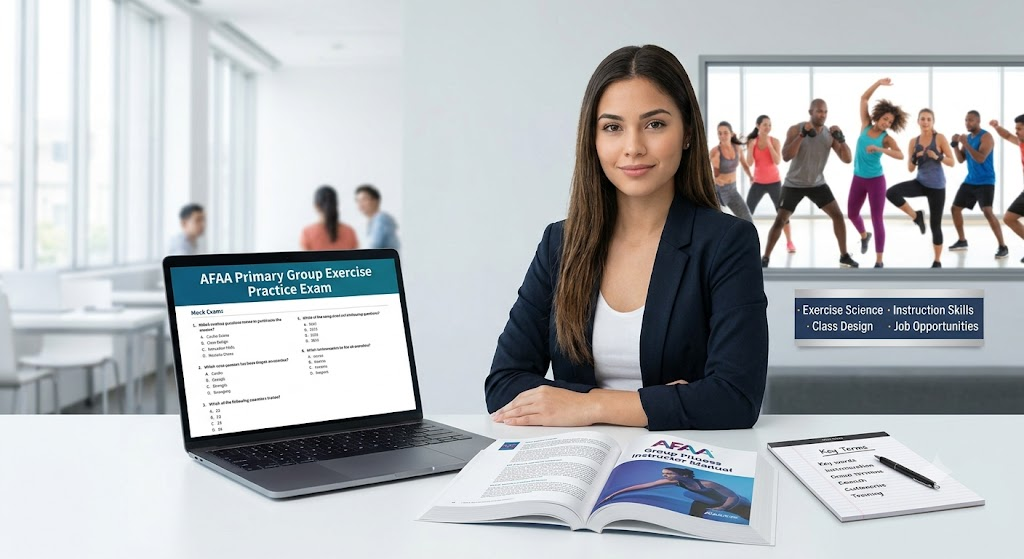
Additional Information
What the Course Entails and Exam Details
The path to certification involves a comprehensive course that covers a diverse range of topics, ensuring you are equipped with the knowledge and skills to lead safe and effective group classes. The core content areas, which both the course and the final exam encompass, typically include:
Fundamentals of Exercise Science: A deep dive into human anatomy, physiology, and kinesiology, providing the scientific foundation for movement. You’ll learn how muscles, joints, and the body’s energy systems function.
Class Design and Planning: Strategies and best practices for creating engaging, well-structured, and safe group fitness classes for various populations and fitness levels. This includes understanding musical rhythm, cueing, and progression.
Class Instruction and Presentation: The art and science of teaching, with emphasis on communication, motivation, leadership, and effective cueing techniques. You’ll learn to guide, safe alignment, and create positive participant experiences.
Special Populations & Considerations: Understanding the unique needs and guidelines for diverse groups, such as older adults, pre/postnatal individuals, and those with common health conditions.
Professionalism and Legal Responsibilities: The code of conduct, scope of practice, and essential legal and safety guidelines that all fitness professionals must adhere to.
The official course material, study guides, and, crucially, practice exams are your primary tools to master these areas and prepare for the required assessments.
What to Expect in the Final Exam
Upon completion of your study, you will face a final certification exam to demonstrate your proficiency. It is important to remember that your final, accredited certification hinges on success in the actual, comprehensive exam, not just practice tests. Here’s what you can typically expect for the final exam format:
Format: Multiple-choice questions.
Number of Questions: The final exam usually contains 120 multiple-choice questions.
Time Limit: You are typically given a 2-hour timeframe to complete the test.
Passing Score: To pass, you generally need a scaled score of 70 or higher.
Rules: The exam is closed-book. For the standard certification, you must take the exam through an approved proctoring method, which is predominantly online live proctoring (e.g., through PSI or similar partners) in a private environment. Physical testing centers may also be an option through authorized locations and schools. You will also be required to maintain current, nationally recognized CPR and AED certifications to be fully accredited.
The content areas mentioned above are the four key performance domains covered by the final exam. Practice exams are an exceptional way to familiarize yourself with the question types and formatting of the real exam and identify areas where you need further review.
How to Study and Exam Centers
Preparation is the cornerstone of certification success. Use these actionable strategies to build your confidence and knowledge:
Comprehensive Review: Dedicate significant time to thoroughly studying your official AFAA course materials. Understand the "why" behind the scientific principles and the "how" of teaching techniques.
Create a Study Schedule: Break down the content into manageable sections and set specific study goals each week. Consistent effort is more effective than last-minute cramming.
Practice, Practice, Practice: Make extensive use of AFAA Primary Group Exercise Certification Practice Exams. These mirror the format and content distribution of the final exam, helping you get accustomed to the timing and question styles and identify your strengths and weaknesses. Treat these as full-length practice sessions.
Hands-on Application: Apply what you learn by attending group fitness classes yourself, observing different instructors, and practicing teaching small segments (if safe and appropriate) to friends or family.
Utilize a Study Partner: If possible, connect with others preparing for the exam. Discussion, quizzing each other, and sharing resources can be highly effective.
Prioritize Well-being: Ensure you get adequate rest, nutrition, and exercise during your study period. A healthy body and mind perform best.
The majority of final, accredited exams for this certification are taken via online live proctoring, allowing you to complete the test from a private, secure location with a stable internet connection. You may also be able to find physical testing centers through AFAA-authorized schools or large-scale testing services (like Pearson VUE or PSI, check the current AFAA guidelines). Be sure to check the specific, up-to-date information on registration, scheduling, and available exam methods provided by AFAA when you enroll in the course.
Job Opportunities from the Course
AFAA Primary Group Exercise Certification opens the door to a wide array of job opportunities in the dynamic and growing fitness industry. This certification is highly respected and signifies you have the foundational skills needed to lead. Possible career paths include:
Group Fitness Instructor (leading formats like cardio, strength, dance, mind-body, etc.)
Corporate Wellness Coordinator
Fitness Director (with experience)
Gym or Health Club Manager (with further education and experience)
Opportunities in Community Centers, YMCAs, and private studios
The potential settings for your work are diverse, from traditional gyms to private practices, hospitals, and even online platforms. With experience, you can choose to specialize in certain formats, types of clients, or further your education into areas like personal training or nutrition, building a truly personalized and rewarding career.
Frequently Asked Questions
Reviews
5.0
Based on 0 reviews
Leave a Review
No reviews yet. Be the first to review!