
Aerial Applicator Generals Practice Test
$69.00
- Buy to unlock unlimited access to all Quiz questions.
- After purchase you can print a PDF of the whole quiz at any point. The PDF will contain the questions and the correct answers.
About this Exam
The aerial applicator field, sometimes called modern crop dusting, requires specialized knowledge to ensure the safe and effective application of fertilizers, pesticides, and other materials via aircraft. The Aerial Applicator Generals certification is the foundational stepping stone for any aviator, agricultural professional, or aspiring ag pilot looking to enter this dynamic industry. This comprehensive certification provides the essential safety protocols, regulatory framework, and operational principles common to all forms of aerial application. Mastering this level is typically required before pursuing more specific endorsements for varying chemicals or aircraft types. Whether you're a commercial pilot seeking a new challenge, or an individual deep in the agricultural sector wanting to transition into aviation operations, this exam ensures you have the necessary base knowledge to operate in a high-stakes environment where precision and safety are paramount.
Ready to test your knowledge?
Buy Now to Access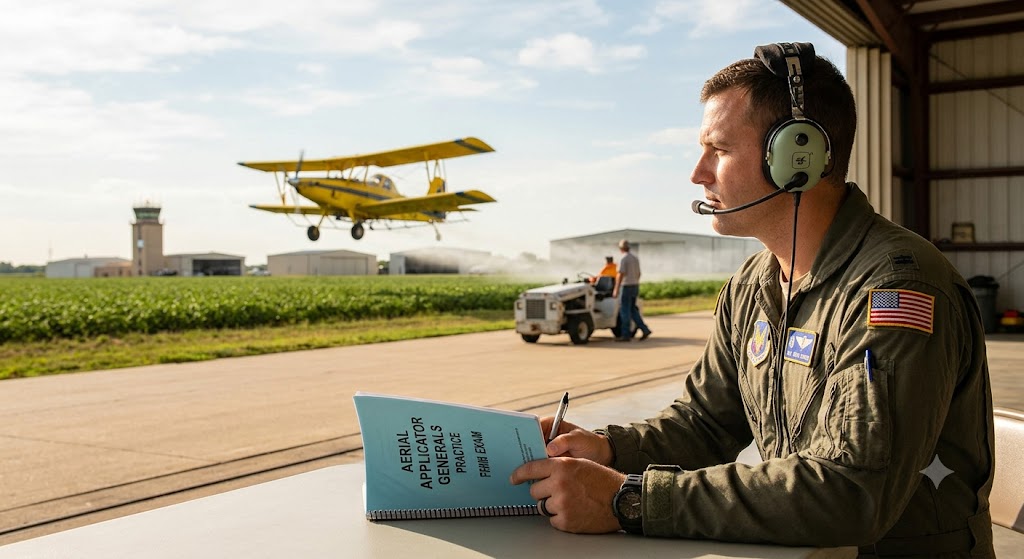
Additional Information
What the Course Entails and Exam Details
This foundational curriculum is comprehensive, covering core
concepts applicable to both fixed-wing and rotary-wing aircraft operations. It
includes in-depth study of relevant Federal Aviation Administration (FAA)
regulations, specifically 14 CFR Part 137 for agricultural aircraft operations.
Environmental Protection Agency (EPA) laws, chemical handling safety, and
comprehensive knowledge of pesticide application regulations are critical
components. You'll master the principles of effective drift management,
protecting water sources, and understanding ecological impact. Operational
strategies focus on efficient aircraft flight planning, swathing patterns,
loading procedures, and communication with ground crews. Furthermore, the
course emphasizes accurate equipment calibration, required for calculating
correct application rates and ensuring precision distribution of materials.
Safety is a fundamental pillar, encompassing risk assessment, emergency
procedures, aircraft inspection before flight, and secure handling of
agricultural products on the ground and in the air.
What to Expect in
the Final Exam
Preparing for the final exam involves understanding its
practical structure. This proctored assessment typically features
multiple-choice questions designed to thoroughly evaluate your understanding of
the foundational knowledge. It is often a closed-book exam, requiring you to
recall specific regulations, safety steps, and procedural methods. Expect a
designated time limit, which frequently falls between 90 to 120 minutes,
challenging your proficiency and efficiency. To pass, candidates usually must
achieve a passing score of at least 70% or higher, although the exact requirement
can vary by jurisdiction. You will need to demonstrate strong comprehension of
regulatory details, chemical safety protocols, application principles, and
decision-making relevant to the dynamic world of agricultural aviation. Reviewing
state and local regulations in addition to federal rules is often crucial, as
specific requirements can differ based on where you plan to operate.
How to Study and
Exam Centers
Effective studying is key to success on the Aerial
Applicator Generals exam. Utilize official publications from the FAA (like the
Agricultural Aircraft Operations Handbook), EPA chemical safety resources, and
manuals provided by your state's department of agriculture or environmental
protection agency. Practice with sample questions and simulated exams, like
this practice test, which allow you to familiarize yourself with the question
style and identify weak areas. Online resources, prep courses, and ground
schools specifically tailored for aerial applicators can provide valuable
structure and expert instruction. Study flashcards for complex regulations,
calculations, and safety protocols to ensure rapid recall during the test. For
exam locations, the official Aerial Applicator Generals exam is generally
administered through state departments of agriculture, FAA-approved knowledge
testing centers (via providers like PSI), or specialized training academies.
Specific universities or vocational flight schools that offer agricultural
aviation programs may also serve as authorized testing sites. Many states also
offer secure online testing platforms, though these often require advanced
scheduling and strict proctoring procedures. Always verify the latest
scheduling options and location details directly with your state's agricultural
licensing body.
Job Opportunities
from the Course
Earning your Aerial Applicator Generals certification opens
doors to a unique and critical sector of agriculture and aviation. This
foundational certification is often combined with commercial pilot licenses and
specific category ratings to unlock a range of exciting career paths:
- Aerial
Applicator Pilot (Crop Duster Pilot)
- Agricultural
Aviator
- Drone
(UAV) Applicator Operator
- Ground
Crew Supervisor
- Agricultural
Business Owner/Operator
- Flight
Instructor for Agricultural Aviation
- Safety
and Compliance Manager for ag operators
- Consultant
for precision agriculture and environmental safety
Frequently Asked Questions
Reviews
5.0
Based on 0 reviews
Leave a Review
No reviews yet. Be the first to review!