
Aerial Application Practice Test
$69.00
- Buy to unlock unlimited access to all Quiz questions.
- After purchase you can print a PDF of the whole quiz at any point. The PDF will contain the questions and the correct answers.
About this Exam
The Aerial Application Certification, often known as the "Crop Duster" license, is a critical credential for pilots operating agricultural aircraft. This specialized certification, typically required by state departments of agriculture, ensures pilots possess the essential knowledge and skills to safely and accurately apply pesticides, fertilizers, and other chemicals via airplane or helicopter. It focuses on regulatory compliance, environmental safety, and efficient application techniques, ensuring operators can manage risk while supporting agricultural production.
Ready to test your knowledge?
Buy Now to Access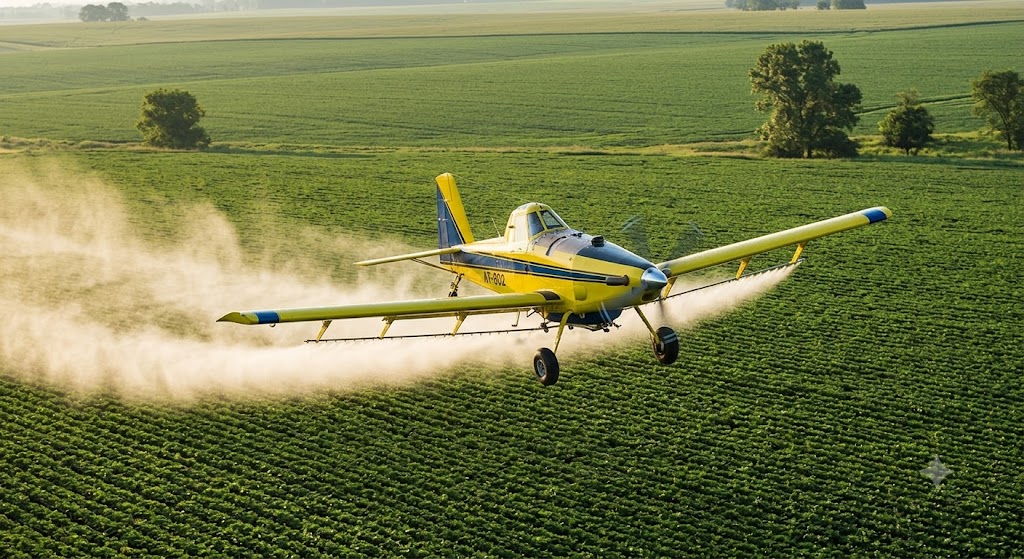
Additional Information
What the Course
Entails and Exam Details Preparation for the Aerial Application exam
involves studying a wide range of agricultural and aviation subjects. The core
curriculum typically covers state and federal regulations concerning
agricultural aircraft operations (such as FAA Part 137), pesticide safety,
handling, and labeling. Additionally, pilots must master subjects like
understanding chemical drift and its prevention, managing environmental
impacts, calculating proper application rates, calibrating spray equipment, and
specific aerial application flight techniques, including swath planning and
safe turnarounds.
What to Expect in the Final Exam The final
qualification exam for aerial application is primarily a comprehensive written
test, usually presented in a multiple-choice format. The exam assesses a
pilot’s theoretical knowledge on all the subjects covered in the training
materials. While specifics vary slightly by state, candidates can generally
expect a timed exam (often two to three hours) administered in a closed-book
setting. A passing score, typically around 70% or higher, is required to
demonstrate proficiency in safe and effective aerial chemical application.
How to Study and
Exam Centers Effective study strategies involve utilizing the official
study manuals and guidance documents provided by your State Department of
Agriculture. Many states also offer preparatory workshops or online resources.
Taking practice exams is crucial for familiarizing yourself with the question
formats and timing.
Testing is generally managed at the state level. Pilots
usually need to register through their specific State Department of
Agriculture's licensing portal. Once registered, they can schedule their exam
at authorized locations, which frequently include state government offices,
designated local testing centers, or sometimes FAA-approved testing facilities.
job Opportunities from the Course Earning an Aerial
Application Certification opens up specialized career paths within the
agricultural aviation industry. Common job titles include:
- Agricultural
Pilot (Crop Duster)
- Aerial
Applicator for Mosquito and Vector Control
- Forestry
Spray Pilot (for pest management or fire suppression support)
- Aerial
Seeding and Fertilization Pilot
- Owner-Operator
of an Agricultural Aviation Business
Frequently Asked Questions
Reviews
5.0
Based on 0 reviews
Leave a Review
No reviews yet. Be the first to review!