
AEA Aquatic Fitness Professional Certification Practice Exam
$69.00
- Buy to unlock unlimited access to all Quiz questions.
- After purchase you can print a PDF of the whole quiz at any point. The PDF will contain the questions and the correct answers.
About this Exam
The AEA Aquatic Fitness Professional Certification is recognized globally as the gold standard for leaders in water-based fitness programming.
This certification validates an instructor's ability to design and deliver safe, effective, and enjoyable aquatic exercise sessions for diverse populations.
Whether you are an aspiring group fitness instructor, a personal trainer looking to expand your offerings, or a healthcare professional seeking dynamic low-impact modalities, earning this credential establishes your expertise in the field.
The AEA Aquatic Fitness Professional Practice Exam is a critical stepping stone, allowing you to gauge your readiness and identify key areas for further study before attempting the final exam.
Ready to test your knowledge?
Buy Now to Access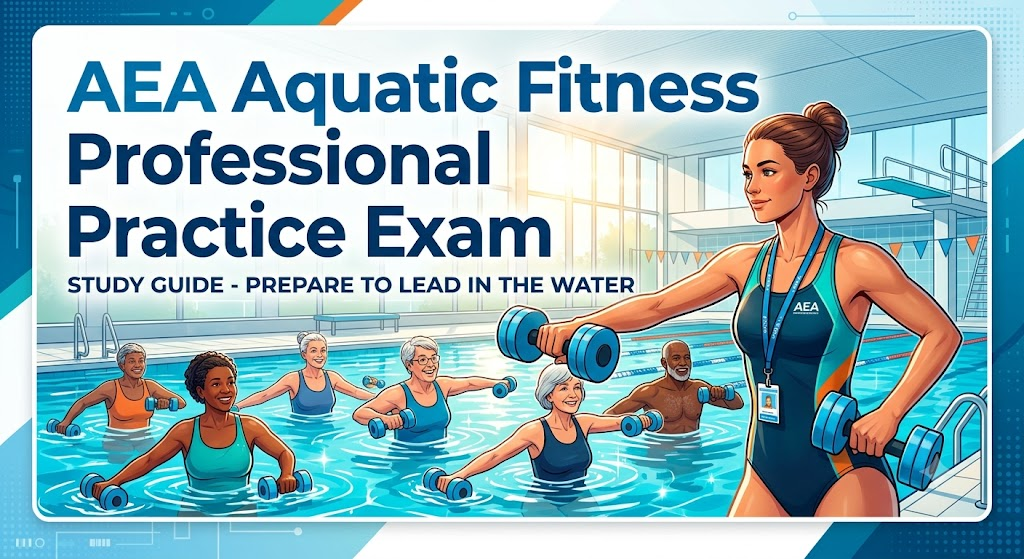
Additional Information
What the Course Entails and Exam Details
The path to certification requires a comprehensive understanding of aquatic science and movement principles.
Key topics covered in the preparation curriculum include:
Aquatic Anatomy and Physiology: How body systems respond and adapt to exercise in a water environment.
Kinesiology and Biomechanics: The mechanics of human movement, focusing on buoyancy, resistance, and levers in water.
Physical Fitness Components: Applying principles of cardiovascular endurance, muscular strength, flexibility, and body composition to aquatic training.
Program Design and Leadership: Creating structured aquatic exercise classes and demonstrating effective instructional techniques.
Safety and Risk Management: Critical protocols for pool safety, participant screening, and emergency response in an aquatic setting.
What to Expect in the Final Exam
While the practice exam is a powerful diagnostic tool, understanding the final AEA Aquatic Fitness Professional Certification Exam is essential.
The final exam typically features:
Format: Multiple-choice questions that assess theoretical knowledge and practical application.
Delivery: Most often administered via a secure online proctoring system.
Time Limit: Candidates are generally allotted around 2 to 3 hours to complete the entire examination session.
Passing Score: Though subject to change by the AEA board, the passing score typically floats around 70-75?curacy.
Rules: The exam is closed-book, and strict proctoring guidelines are enforced to ensure academic integrity.
How to Study and Exam Centers
Effective preparation is the key to successfully navigating the AEA Aquatic Fitness Professional Certification process.
Recommended Study Strategies:
Utilize the Practice Exam Multiple Times: Treat each attempt as a real simulation to get comfortable with the timing and question format.
Deep Dive into the Manual: The AEA Aquatic Fitness Professional Manual is your primary resource. Create detailed notes, flashcards for key terms, and review population-specific exercise guidelines.
Focus on Aquatic Science Principles: Spend extra time mastering the effects of water properties like buoyancy, hydrostatic pressure, and viscosity on the body.
Practice Teaching: If possible, observe or assist with an existing aquatic fitness class to contextualize your theoretical knowledge.
Exam Centers and Delivery: The final AEA certification exam is designed for maximum accessibility and is commonly administered through an approved online proctoring service. This allows candidates to take the test from the comfort and security of their own home, provided they meet the technology and environment requirements. Occasionally, exams might be offered at physical locations in conjunction with official AEA workshops or events. You can find the most current scheduling and delivery options by visiting the official AEA website during your registration process.
Job Opportunities from the Course
Earning your AEA Aquatic Fitness Professional Certification unlocks diverse and rewarding career paths across the fitness and wellness spectrum.
Below are specific job titles and environments where this credential is highly valued:
Specific Job Titles:
Aquatic Fitness Instructor
Water Aerobics Instructor
Senior Fitness Specialist (Aquatic Focus)
Specialized Aquatic Personal Trainer
Wellness Program Coordinator (Aquatic Facility)
Corporate Wellness Coach (Low-Impact Programs)
Rehabilitation Aide (Aquatic Therapy Support)
Resort and Spa Fitness Leader
Common Employment Environments:
Community Centers and YMCAs
Fitness Clubs and Gyms
Senior Living and Retirement Communities
Corporate Wellness Programs
Hospitals and Outpatient Rehabilitation Centers
Resorts, Spas, and Cruise Lines
Municipal Parks and Recreation Departments
Frequently Asked Questions
Reviews
5.0
Based on 0 reviews
Leave a Review
No reviews yet. Be the first to review!