
ADC Diving Safety and Procedures Practice Exam
$69.00
- Buy to unlock unlimited access to all Quiz questions.
- After purchase you can print a PDF of the whole quiz at any point. The PDF will contain the questions and the correct answers.
About this Exam
Welcome to your essential resource for the ADC Diving Safety and Procedures Practice Exam. This examination is a cornerstone of the Association of Diving Contractors International (ADCI) certification program, designed specifically for commercial divers and personnel who must demonstrate a profound understanding of industry-recognized safety protocols. Whether you are an aspiring commercial diver just beginning your career, an experienced veteran seeking a refresher, or a diving supervisor responsible for a team’s welfare, passing this exam is a clear validation of your commitment to working safely under hyperbaric conditions. This qualification certifies that you possess the knowledge required to navigate the inherent risks of the commercial diving industry, from complex underwater construction projects to critical inspection and repair operations.
Ready to test your knowledge?
Buy Now to Access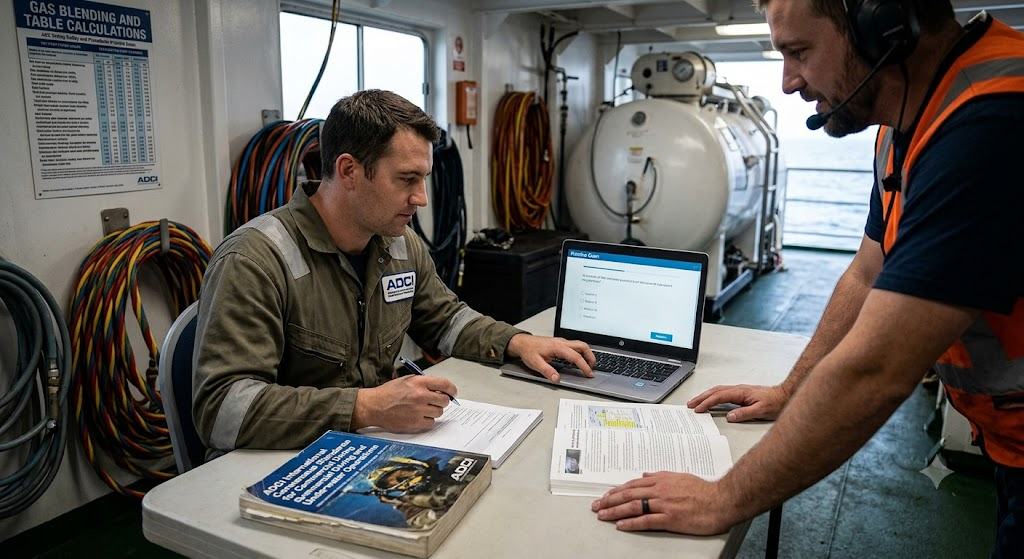
Additional Information
What the Course Entails and Exam Details
The curriculum supporting the ADC Diving Safety and Procedures Exam is derived directly from the comprehensive ADCI International Consensus Standards for Commercial Diving and Underwater Operations. This is not just a test; it is the culmination of rigorous training. Candidates are tested on their theoretical mastery of these industry-wide safety guidelines.
The core areas covered include:
Legislation and Regulations: A thorough understanding of key OSHA (Occupational Safety and Health Administration) and US Coast Guard regulations, as well as relevant international laws.
Diving Physics and Calculations: Applying gas laws, determining buoyancy, and performing critical volume and pressure calculations for various diving scenarios.
Physiology and Medicine: Recognizing and understanding the symptoms and treatments for common diving diseases and injuries, including decompression sickness, arterial gas embolism, and oxygen toxicity.
Operational Procedures: Detailed protocols for air and mixed-gas diving operations, surface-supplied diving techniques, chamber operations, and decompression procedures.
Equipment and Maintenance: Knowledge of essential diving gear, including helmets, harnesses, umbilicals, compressors, and hyperbaric chambers, including proper inspection and maintenance cycles.
Emergency and First Aid: Preparedness for a wide range of underwater and topside emergencies, including first aid, CPR, and oxygen administration.
What to Expect in the Final Exam
The final official ADC examination is a rigorous, closed-book assessment. Here is what candidates can typically expect:
Format: The test consists of multiple-choice questions designed to evaluate both theoretical knowledge and practical application.
Question Count: A standard exam generally features around 50 questions, randomly selected from a vast, comprehensive question bank.
Time Limit: Candidates are usually allocated 60 minutes (1 hour) to complete the examination, requiring efficient time management and a quick recall of information.
Passing Score: The required passing grade is typically 80% or higher.
Rules: The exam is strictly closed-book. For online proctored versions, specific security measures, such as a live webcam invigilator, are implemented to ensure the integrity of the testing process.
How to Study and Exam Centers
How to Study
Achieving success requires a methodical and diligent approach to preparation.
Master the Consensus Standards: The ADCI International Consensus Standards manual is your primary and most valuable study guide. Every candidate should study it thoroughly, with special attention to all tables and named procedures.
Focus on Calculations: Practice gas law formulas and diving-related calculations until they become second nature. A significant portion of the exam may involve these problems.
Utilize Practice Exams: Regularly taking practice exams, like this one, is crucial. This not only reinforces knowledge but also helps to identify weak points and familiarizes you with the phrasing of questions.
Create a Schedule: Develop a dedicated study plan that breaks down the standards into manageable sections, allocating time for reading, calculation practice, and self-testing over a multi-week period.
Exam Centers
The ADC Diving Safety and Procedures Exam is administered through several channels.
ADCI Member Schools: Many accredited commercial diving schools incorporate the exam into their curriculum as a final requirement for certification.
Online Portals: The ADCI utilizes modern digital platforms, such as the Skill N Depth platform, for seamless online examination delivery, including proctored sessions.
Specific Testing Facilities: Physical tests may be scheduled at authorized locations, often at ADCI meetings or via special arrangement through the Association.
Job Opportunities from the Course
Successfully passing the ADC Diving Safety and Procedures Exam is more than an academic milestone; it is a key that unlocks numerous critical and demanding job roles across the global commercial diving industry. These certifications are recognized by leading contractors and regulatory bodies worldwide.
Potential career paths include:
Commercial Air Diver
Commercial Surface-Supplied Diver
Mixed-Gas Diver
Saturation Diver (with advanced training and experience)
Life Support Technician (LST)
Diving Supervisor (after meeting experience requirements)
Dive Technician
ROV (Remotely Operated Vehicle) Pilot/Technician
Hyperbaric Chamber Operator
By validating your knowledge through this rigorous process, you not only enhance your employability but also actively contribute to the overarching mission of the ADCI: to create a safer environment for every commercial diving professional.
Frequently Asked Questions
Reviews
5.0
Based on 0 reviews
Leave a Review
No reviews yet. Be the first to review!