
ABOG Oral Boards Obstetrics Practice Test
$69.00
- Buy to unlock unlimited access to all Quiz questions.
- After purchase you can print a PDF of the whole quiz at any point. The PDF will contain the questions and the correct answers.
About this Exam
The American Board of Obstetrics and Gynecology (ABOG) Oral Board Examination is the final, crucial step to becoming a board-certified OB/GYN. This certifying exam is designed to assess the candidate's clinical competence, decision-making skills, and ability to manage both complex and routine patient care scenarios. While the qualifying (written) exam tests a vast body of knowledge, the oral boards demand the active application of this knowledge under pressure. The Obstetrics section is a primary pillar of this assessment, examining your ability to navigate the spectrum of maternal and fetal care. A dedicated ABOG Oral Boards Obstetrics Practice Test is an indispensable tool for simulating this environment, refining your presentation, and solidifying your status as an expert in the field.
Ready to test your knowledge?
Buy Now to Access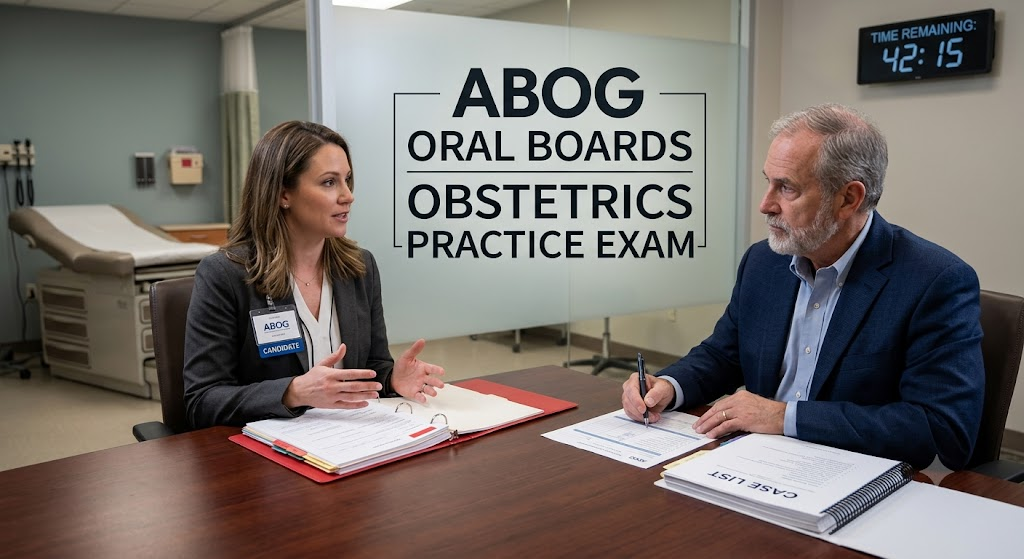
Additional Information
What the Course Entails and Exam Details
This specialized practice test is built around the actual content outline of the ABOG certifying examination. It focuses exclusively on the Obstetrics content area, which traditionally makes up a significant portion of the total exam. Key topics include, but are not limited to: preconception and antenatal care, evaluation and diagnosis of antenatal conditions (such as genetic disorders, fetal growth abnormalities, and medical complications like hypertension and diabetes), intrapartum care, obstetric procedures (including operative vaginal deliveries and cesarean sections), the management of intrapartum complications (preeclampsia, eclampsia, hemorrhage, and shoulder dystocia), and postpartum care. Your ability to integrate basic science knowledge with clinical judgment will be tested across these domains.
What to Expect in the Final Exam
The actual ABOG Oral Board Examination, which this practice test simulates, has a distinct multi-part structure and does not use multiple-choice questions. It is a live, interactive examination. Candidates move between distinct stations, known as "sessions," where they meet different pairs of expert examiners.
Each session typically lasts about one hour and focuses on one of three major areas: Obstetrics, Gynecology, and Office Practice/Cross-Specialty. During the Obstetrics session, examiners will use a combination of "structured cases" (scenarios developed by ABOG to test specific skills) and a review of your own "case list" to ask probes. You can expect to present several of your case summaries and be rigorously questioned on your management, justifying every decision with current guidelines and best practices.
The passing standard is set by the ABOG Board of Directors, based on recommendations from the examiners who assess multiple dimension of a candidate's performance. The final outcome is a single, overall result of Pass or Fail.
How to Study and Exam Centers
Effective preparation is the key to success. Your study plan should revolve around active retrieval and articulation of medical knowledge.
Form Study Groups and Conduct Mock Orals: This is the single most effective study method. Regularly practice presenting and defending cases with colleagues or mentors, replicating the examination's timing and format.
Master Your Case List: Know your collection of cases intimately. Anticipate potential weaknesses, complications, and alternative management strategies for every patient you list.
Review Core Guidelines: Be fluent in current ACOG Practice Bulletins, Committee Opinions, and major consensus guidelines. examiners are looking for standard-of-care adherence.
Use Simulation Tools: Leverage dedicated software, online practice platforms, and specialized review courses that offer structured, realistic oral board practice.
The final ABOG Oral Board Examination is usually held at a physical location, traditionally in Dallas, Texas. The precise site is communicated to candidates upon confirmation. However, for specialized re-entry or continuing certification exams, Pearson VUE computer-based testing centers across the United States are utilized. A practice test is delivered either through dedicated online portals, as part of a review course, or within a local residency or fellowship simulation center.
Job Opportunities from the Course
A Passing Result on the ABOG Oral Board Exam Unlocks:
ABOG Board-Certified Obstetrician-Gynecologist
Private Practice Physician
Hospital-Based OB/GYN Hospitalist
Academic Faculty Member (Assistant, Associate, or Full Professor)
Medical Director (Obstetrics, Labor & Delivery)
Subspecialty Fellowship Training (e.g., Maternal-Fetal Medicine)
Clinical Research Coordinator
Healthcare Administrator (Section Chief, Chair of Department)
International Health or Global Medical Officer
Frequently Asked Questions
Reviews
5.0
Based on 0 reviews
Leave a Review
No reviews yet. Be the first to review!