
ABA Model Rules of Professional Conduct (MRPC) Practice Exam
$69.00
- Buy to unlock unlimited access to all Quiz questions.
- After purchase you can print a PDF of the whole quiz at any point. The PDF will contain the questions and the correct answers.
About this Exam
The ABA Model Rules of Professional Conduct (MRPC) Practice Exam is an essential tool designed for law students and legal professionals striving to achieve a critical milestone in their careers.
This comprehensive exam assesses an individual's deep understanding of the ethical standards and professional responsibilities required of attorneys in the United States.
It is specifically created for students preparing for the Multistate Professional Responsibility Examination (MPRE), as well as practicing lawyers seeking to review or fulfill character and fitness requirements.
Achieving proficiency in the Model Rules is non-negotiable for anyone aspiring to practice law and maintain professional integrity.
Ready to test your knowledge?
Buy Now to Access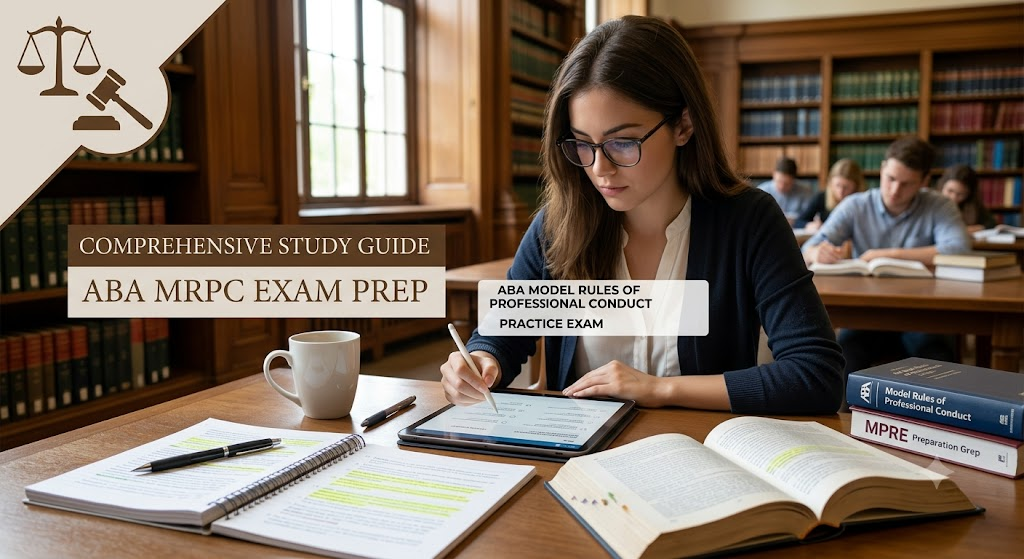
Additional Information
What the Course Entails and Exam Details
The scope of this practice exam mirrors the official requirements for professional responsibility, ensuring comprehensive coverage of legal ethics scenarios.
The key areas and concepts covered within the course content and exam include:
The Client-Lawyer Relationship: Establishing the relationship, competence, diligence, and communication duties.
Conflicts of Interest: Identifying and managing current, former, and prospective client conflicts.
Confidentiality: Understanding the strict obligation to protect client information and permitted disclosures.
Safeguarding Property: Proper handling of client funds and trust accounts.
Duties to the Tribunal: Honesty before a court, avoiding frivolous claims, and impartiality.
Transaction and Fairness: Duties toward third parties, unrepresented persons, and truthfulness in statements.
Public Service: The obligations of pro bono work and accepting appointments.
Information About Legal Services: Rules governing advertising, solicitation of clients, and specialization claims.
Maintaining Integrity: Reporting professional misconduct, avoiding the unauthorized practice of law, and supervisory responsibilities.
What to Expect in the Final Exam
The MRPC Practice Exam is structured similarly to professional licensing examinations, providing a realistic simulation of the final testing environment.
The final official examination is typically composed of multiple-choice questions, challenging examinees to apply the abstract Model Rules to complex, hypothetical legal scenarios.
To pass, candidates must demonstrate competence by achieving a score that meets or exceeds the specific threshold set by the jurisdiction in which they are seeking licensure (e.g., MPRE passing scores vary by state).
Test-takers can expect tight time constraints, requiring quick comprehension and decisive application of ethical rules within a limited period.
Furthermore, any examination session will be subject to strict rules, including prohibitions on unauthorized materials and stringent identification procedures, to ensure academic and professional integrity.
How to Study and Exam Centers
Preparation for the MRPC requires a dedicated and multifaceted approach focused on both rule memorization and practical application.
The most effective study strategies involve:
Thorough Review: Closely reading and analyzing the official text of the ABA Model Rules of Professional Conduct, including all associated comments which provide crucial context and interpretation.
Active Practice: Utilizing numerous practice questions from a variety of reliable sources to become familiar with the different ways ethical dilemmas are presented in multiple-choice format.
Scenario Analysis: Focusing on analyzing "fact patterns" to identify the relevant Model Rule and apply its exceptions accurately.
Time Management: Simulating exam conditions by taking full-length timed practice exams to build stamina and pacing.
Regarding examination locations, this specific practice exam can often be completed through various authorized online educational platforms or institutional portals for self-guided study.
However, the official licensure exams (like the MPRE) are administered in secure, professional testing centers, such as those operated by Pearson VUE, Prometric, or directly at authorized law school facilities across the country.
Job Opportunities from the Course
A strong command of the MRPC, demonstrated by success on this exam, is a prerequisite for licensing in nearly all US jurisdictions.
Possessing this foundation of professional responsibility is the essential "key" that unlocks the following professional pathways and careers in the legal industry:
Associate Attorney (Private Practice)
Public Interest Lawyer
Government Attorney/Prosecutor
Corporate Counsel (In-House)
Judicial Law Clerk
Compliance Officer
Legislative Analyst
Law Professor
Mediator or Arbitrator
Frequently Asked Questions
Reviews
5.0
Based on 0 reviews
Leave a Review
No reviews yet. Be the first to review!