
AAPC Certified Professional Compliance Officer (CPCO) Certification Practice Exam
$69.00
- Buy to unlock unlimited access to all Quiz questions.
- After purchase you can print a PDF of the whole quiz at any point. The PDF will contain the questions and the correct answers.
About this Exam
The AAPC Certified Professional Compliance Officer (CPCO) certification is the gold standard credential for healthcare compliance professionals.
It is specifically designed for individuals who develop, implement, and maintain compliance programs within medical practices and healthcare organizations.
Earning this esteemed credential proves to employers that you possess a deep, expert understanding of the complex legal and regulatory frameworks governing the healthcare industry today.
It is ideal for medical coders, billers, practice managers, and administrators who want to elevate their careers and specialize in healthcare risk management.
Ready to test your knowledge?
Buy Now to Access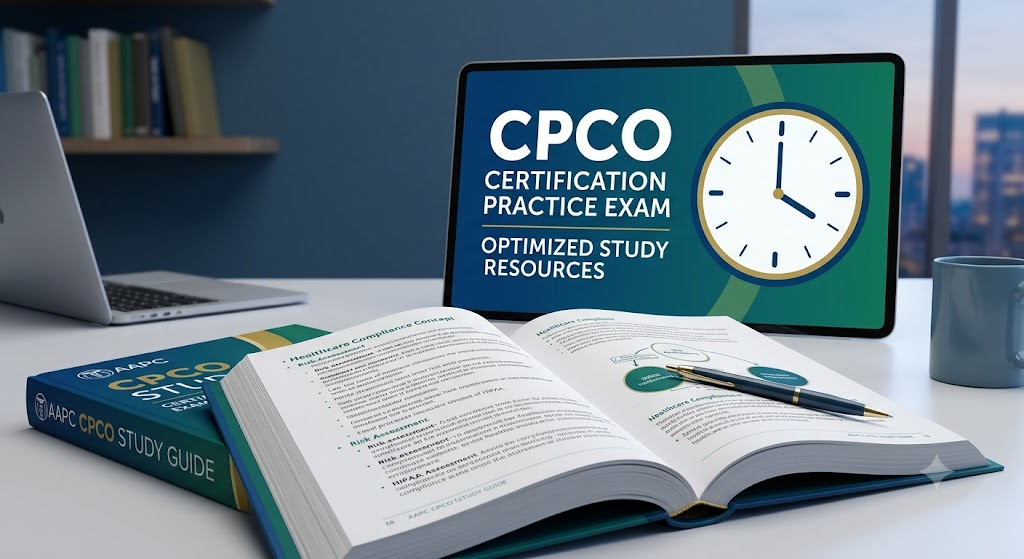
Additional Information
What the Course Entails and Exam Details
The CPCO curriculum is built around the core elements of the Office of Inspector General (OIG) compliance program guidance for healthcare entities.
You will dive deep into crucial healthcare regulations, including the Affordable Care Act (ACA), the Anti-Kickback Statute, the Stark Law, and the False Claims Act.
The syllabus heavily emphasizes HIPAA privacy and security rules, OSHA workplace safety standards, and the Emergency Medical Treatment and Active Labor Act (EMTALA).
Furthermore, you will learn the practical skills necessary to conduct internal audits, manage investigations, and properly utilize government self-disclosure protocols.
What to Expect in the Final Exam
The final CPCO exam is a rigorous assessment designed to test your practical, on-the-job knowledge of healthcare compliance.
The test consists of 100 multiple-choice questions that cover all aspects of the CPCO syllabus.
You will be given a strict time limit of exactly four hours to complete the examination.
To successfully pass and earn your certification, you must achieve a score of 70 percent or higher.
The exam is currently an open-book test, meaning candidates are allowed to use approved resources, such as specific compliance manuals and references, directly during the testing period.
How to Study and Exam Centers
Successfully passing the CPCO exam requires a highly structured and disciplined study strategy.
Your first step should be mastering the official AAPC CPCO study guide and utilizing high-quality practice exams to familiarize yourself with the question formats and build your testing stamina.
Because the exam is timed, you should practice navigating your reference books quickly so you do not waste precious minutes searching for regulatory codes on test day.
When you are ready to test, you have a few highly convenient options for exam centers.
You can choose to take the exam online from the comfort of your own home using AAPC’s live remote proctoring system.
Alternatively, you can schedule an in-person exam at a designated local testing facility or an authorized AAPC chapter location.
Job Opportunities from the Course
Earning your CPCO credential unlocks a highly rewarding and lucrative career path in healthcare administration.
Here are the primary job opportunities and career paths you can pursue after passing the exam:
Healthcare Compliance Officer: You will serve as the primary leader responsible for ensuring a medical facility meets all legal and ethical regulatory standards.
Compliance Auditor: In this role, you will review medical records, billing practices, and internal operations to identify areas of risk or non-compliance.
Medical Practice Manager: With a CPCO, you can oversee the daily operations of a clinic while safeguarding the practice against costly legal violations and audits.
Risk Management Specialist: You will proactively identify potential liabilities within a healthcare organization and develop strategic policies to mitigate them.
Independent Healthcare Consultant: You can leverage your expertise to advise multiple healthcare clinics, hospitals, and private practices on compliance program implementation.
Frequently Asked Questions
Reviews
5.0
Based on 0 reviews
Leave a Review
No reviews yet. Be the first to review!