
AAPC Anesthesia Practice Test
$69.00
- Buy to unlock unlimited access to all Quiz questions.
- After purchase you can print a PDF of the whole quiz at any point. The PDF will contain the questions and the correct answers.
About this Exam
Welcome to your essential resource for mastering the AAPC Certified Anesthesia and Pain Management Coder (CANPC)™ exam. This specialty certification is designed for experienced medical coders who want to validate their expert proficiency in the complex world of anesthesia and pain management services. Achieving the CANPC credential demonstrates your ability to accurately assign ICD-10-CM, CPT®, HCPCS Level II, and modifier codes for a wide array of anesthesia procedures and pain management cases. This includes reporting for surgical services, Monitored Anesthesia Care (MAC), and interventional pain techniques.
Ready to test your knowledge?
Buy Now to Access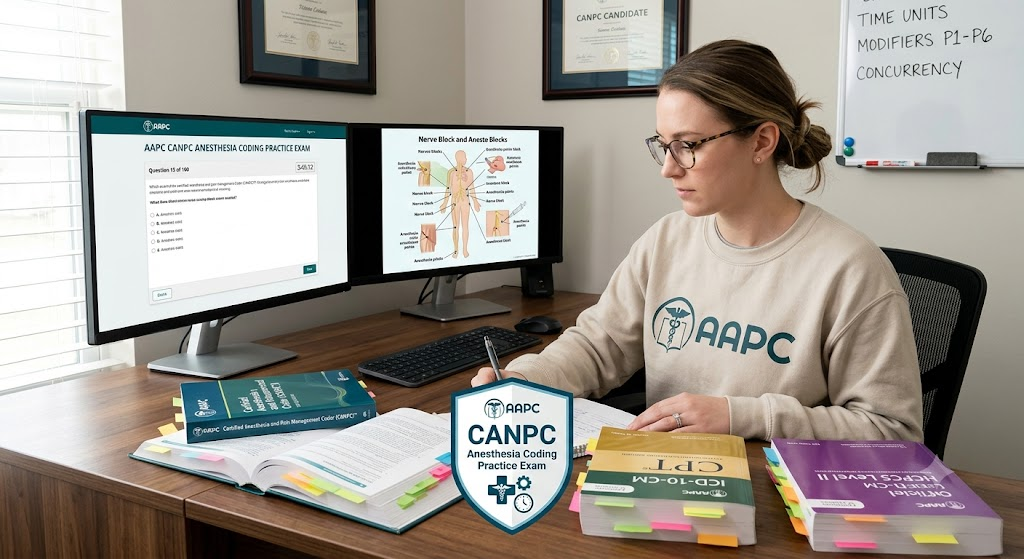
Additional Information
What the Course Entails and Exam Details
Preparing for the CANPC exam means mastering a specific set of critical skills. The study materials and practice tests focus heavily on key concepts, including understanding the nuances of medical direction and medical supervision for anesthesiologists and CRNAs. You must know how to correctly calculate anesthesia time units and apply relevant anesthesia-specific modifiers, such as P1-P6 and various HCPCS Level II modifiers. The content covers the full spectrum of anesthesia services, from head procedures and intrathoracic cases to specific codes for the musculoskeletal, digestive, and nervous systems (10000–60000 series as they relate to anesthesia). In-depth knowledge of physical status modifiers and qualifying circumstances is paramount.
What to Expect in the Final Exam
The actual CANPC final exam is a comprehensive assessment. It consists of 100 multiple-choice questions, challenging your knowledge across all major anesthesia coding domains. Candidates are allotted a 4-hour time limit to complete the test. Like many AAPC exams, the CANPC is open-book, meaning you are required to use official coding manuals (CPT®, ICD-10-CM, and HCPCS Level II). Passing requires a strong performance, with the passing score typically being 70%. The exam validates your ability to extract relevant information from medical documentation to ensure accurate code selection and regulatory compliance.
How to Study and Exam Centers
Effective preparation is the key to success. Utilize high-quality practice tests, which are essential for building speed and familiarity with the exam format. Treat these practice sessions as real tests to refine your time management. Analyze your performance to identify weak areas, then use official study guides and coding manuals to master those specific concepts. You should read your code books, paying extra attention to the official coding guidelines. For the final exam, you can choose between two primary testing options. You can take the exam in the comfort of your own home via live remote proctoring, or at one of the approved physical testing centers located globally. Always verify the allowed materials and rules for your specific testing method.
Job Opportunities from the Course
Earning your CANPC certification unlocks focused career opportunities within the healthcare sector. Potential job titles and roles include:
Certified Anesthesia Coder
Certified Anesthesia and Pain Management Coder
Specialty Coder II - Anesthesia
Anesthesia Coding Auditor
Pain Management Coding Specialist
Anesthesia Compliance Officer
Medical Coding Educator, with an emphasis on anesthesia specialties
Frequently Asked Questions
Reviews
5.0
Based on 0 reviews
Leave a Review
No reviews yet. Be the first to review!