
AAOS Emergency Care and Transport of the Sick and Injured Practice Exam
$69.00
- Buy to unlock unlimited access to all Quiz questions.
- After purchase you can print a PDF of the whole quiz at any point. The PDF will contain the questions and the correct answers.
About this Exam
The AAOS Emergency Care and Transport of the Sick and Injured, often referred to as the "Orange Book," is the foundational textbook for Emergency Medical Services (EMS) education in the United States. This practice exam is specifically designed for students who are completing their EMT training and preparing to take the National Registry of Emergency Medical Technicians (NREMT) cognitive exam. It serves as a vital tool to assess your readiness and reinforce the critical knowledge and life-saving skills required of an entry-level EMT. By simulating the exam experience, this practice test helps identify your strengths and weaknesses before you sit for the actual certification exam.
Ready to test your knowledge?
Buy Now to Access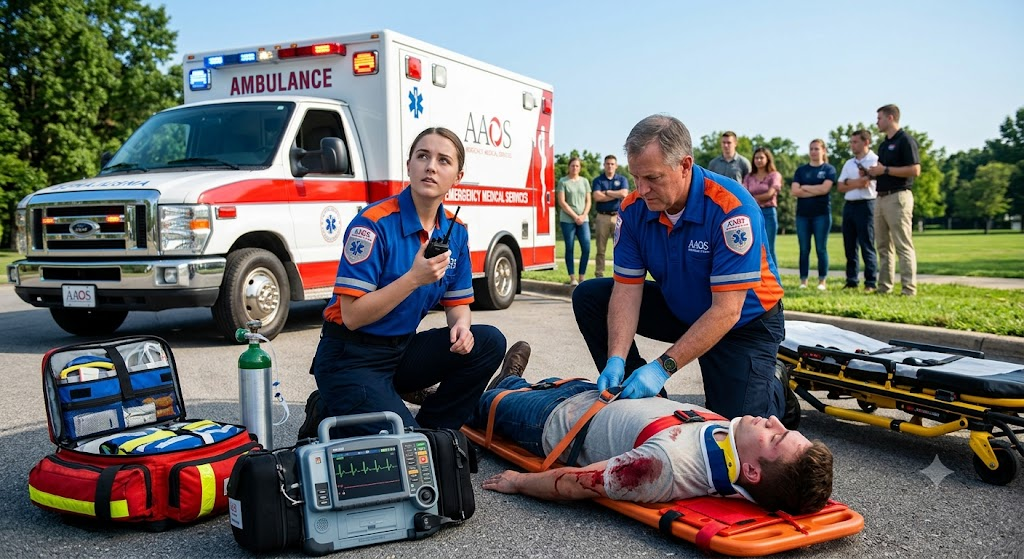
Additional Information
What the Course Entails and Exam Details
The course and accompanying practice exam cover the complete scope of practice for an EMT-Basic. The syllabus is exhaustive and details crucial knowledge areas:
Airway Management, Respiration, and Artificial Ventilation: Assessment and management of the airway, oxygen therapy, and ventilation techniques.
Patient Assessment: The systematic process of evaluating a medical or trauma patient, including primary and secondary surveys and vital signs.
Medical Emergencies: Recognition and management of common medical crises, including cardiac, respiratory, neurological (stroke, seizures), endocrine (diabetes), and allergic reactions.
Trauma: Assessment and management of soft tissue injuries, bleeding, shock, fractures, spinal injuries, and multi-system trauma.
Pharmacology: An introduction to the medications an EMT may administer or assist a patient with.
Special Patient Populations: Considerations for pediatric, geriatric, and special needs patients.
EMS Operations: Ambulance operations, incident command, rescue awareness, and hazardous materials response.
What to Expect in the Final Exam
It is important to understand that the AAOS Practice Exam itself is a preparatory tool, not the final certification exam. It is designed to mimic the format and content difficulty of the computer-based NREMT Cognitive Exam.
The Actual NREMT Cognitive Exam that this practice prepares you for has the following characteristics:
Format: The NREMT uses Computer Adaptive Testing (CAT). This means the exam adapts to your ability level; the difficulty of the next question is determined by your answer to the previous one. The exam is not linear and does not have a set number of questions.
Number of Questions: The number of items can range from 70 to 120, depending on the CAT algorithms determining you have met the competency standard.
Time Limit: You will typically have approximately 2 hours and 30 minutes to complete the exam.
Passing Score: The exam is pass/fail based on reaching the established standard of competency. A passing score indicates that you have demonstrated the minimum knowledge necessary for safe and effective entry-level practice.
How to Study and Exam Centers
Preparation is key to success on the NREMT, and this practice exam is a powerful component of that process.
Actionable Study Strategies
Read the Textbook: Do not rely solely on practice tests. Thoroughly read the AAOS "Orange Book" multiple times.
Take Multiple Practice Tests: Use the AAOS online portal (such as Navigate 2 or similar learning management systems provided with your textbook) to access official practice exams.
Understand the 'Why': After taking a practice test, analyze both correct and incorrect answers. Read the rationales provided to understand the medical reasoning behind the best choice.
Focus on Patient Assessment: Mastery of the systematic patient assessment process (medical and trauma) is crucial, as many questions are scenario-based.
Use Flashcards: Create flashcards for medical terminology, drug dosages (for medications in the EMT scope), and vital sign ranges across different age groups.
How to Take the Exam
The final NREMT Cognitive Exam is administered by Pearson VUE, a professional testing organization. To take the exam:
Complete Your Course: Verify that you have successfully completed your state-approved EMT course.
Create an NREMT Account: Register on the NREMT website and apply for your certification.
Get Authorization: Once approved, you will receive an Authorization to Test (ATT) letter.
Schedule at Pearson VUE: Use your ATT to schedule your exam appointment at a Pearson VUE professional testing center. These are secure, physical facilities located throughout the country. Some levels may also have online proctoring options.
Take the Practice Exams: Access the AAOS Practice Exam through the online access code that came with your AAOS textbook or via the learning platform specified by your EMS instructor. These can be taken remotely on any computer with internet access.
Job Opportunities from the Course
Successfully utilizing the AAOS curriculum and passing the resulting NREMT certification exam opens the door to numerous vital career paths in public safety and healthcare:
Emergency Medical Technician (EMT) (with private ambulance services)
Firefighter (EMT certification is a prerequisite for most career fire departments)
Ambulance Driver / Attendant
Hospital Emergency Room Technician (ED Tech)
Event Medic (providing medical coverage at concerts, sports events, and festivals)
Industrial Medic / Occupational Health Technician
Security Officer with Emergency Medical Response duties
Ski Patrol / Wilderness First Responder
By utilizing this AAOS Emergency Care and Transport of the Sick and Injured Practice Exam effectively, you are taking a crucial step toward competency, certification, and a rewarding career in Emergency Medical Services.
Frequently Asked Questions
Reviews
5.0
Based on 0 reviews
Leave a Review
No reviews yet. Be the first to review!