
WELD 101 C Practice Test
About this Exam
The WELD 101 C Practice Exam is a foundational step designed for individuals aspiring to enter the welding industry or for those seeking to validate their entry-level welding skills and knowledge. WELD 101 C is often one of the first courses in a comprehensive welding program, focusing on core principles and initial practical application. This guide and practice material are intended for students enrolled in or preparing for this initial certification. It confirms an individual's grasp of basic theory and hands-on competence in essential welding procedures, making them ready for entry-level positions or further specialized training in advanced welding techniques.
Ready to test your knowledge?
Start now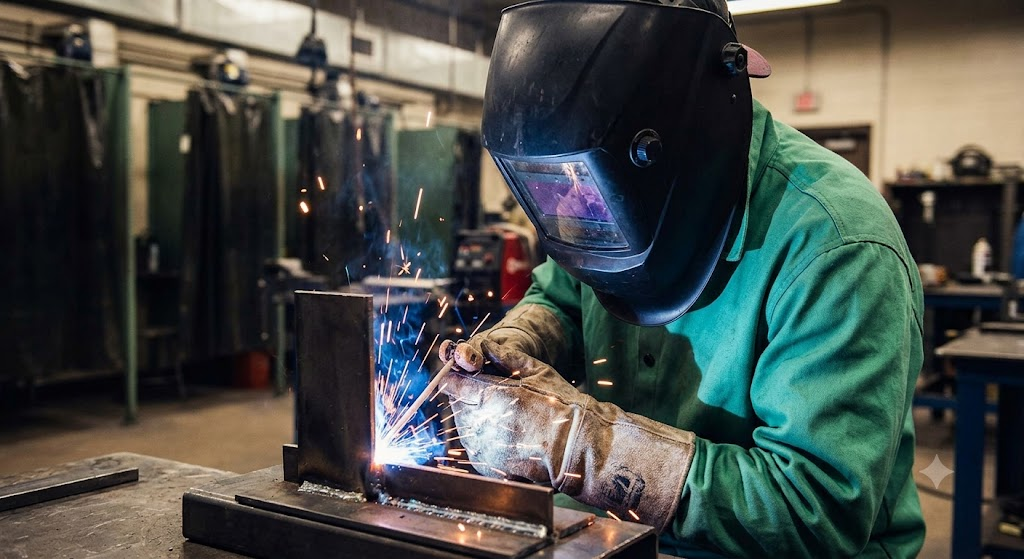
Additional Information
What the Course Entails and Exam Details
This comprehensive course and the associated exam cover fundamental areas critical to becoming a proficient welder. The syllabus typically explores both theoretical knowledge and practical application. Core topics include rigorous welding safety practices, understanding material properties and metallurgy basics, reading welding symbols and blueprints, and recognizing different types of joints and common weld defects.
Students gain foundational skills in common welding processes, such as Shielded Metal Arc Welding (SMAW), often known as "stick" welding, and potentially basic Gas Metal Arc Welding (GMAW or "MIG"). You'll learn to set up equipment correctly, select proper electrodes or wire, control the welding puddle, and produce sound welds in common positions like flat and horizontal. The training prepares you for entry into the field by ensuring you have a solid understanding of the rules, tools, and visual inspection criteria used in the welding industry. The curriculum builds the practical abilities and theoretical understanding required for consistent and high-quality results.
What to Expect in the Final Exam
The final WELD 101 C exam is usually structured to assess both what you know and what you can do. Expect it to be divided into two main components: a theoretical section and a practical skills assessment.
The written or digital part often consists of multiple-choice questions designed to test your knowledge of welding principles, safety regulations, equipment operation, blueprint reading, welding symbols, and metallurgy fundamentals. You may have a specific time limit (e.g., 1-3 hours) to complete this section, with a required passing score, often around 70-80% or higher, depending on the certifying body or institution.
The practical component requires you to demonstrate your proficiency in performing specific weld procedures in a controlled lab setting. You will be asked to complete several test weldments or "coupons" using the defined welding process(es) and to specific standards. This might involve creating butt welds, fillet welds, or groove welds in the flat (1G/1F) and horizontal (2G/2F) positions. Your completed welds will then be subjected to careful visual inspection by qualified examiners, who will assess quality based on factors like fusion, penetration, bead appearance, and lack of defects. Passing the practical portion hinges on meeting the predetermined acceptance criteria without any significant flaws. Strict adherence to all safety protocols is always mandatory during this assessment.
How to Study and Exam Centers
Effective preparation for the WELD 101 C exam combines rigorous study of the course material with extensive practical application. Here are actionable strategies:
First, thoroughly review all provided course materials, textbooks, safety manuals, and class notes. Focus on understanding key definitions, welding terminology, symbols, basic blueprint reading, material properties, equipment setup, and critically, all safety guidelines. Create flashcards for important terms, symbols, and concepts to aid in memorization.
Take advantage of practice quizzes and mock exams, like this guide, to familiarize yourself with the type of questions asked and to identify any knowledge gaps. Use instructional videos and online resources to reinforce different techniques and procedures. However, the most critical part is consistent, focused practice in the welding lab. Spend ample time perfecting your technique for each of the required weld positions and joints, seeking feedback from your instructor or experienced welders. Learn to visually identify and correct common issues. Mock practical exams under timed conditions can also help manage test anxiety and build confidence in your hands-on abilities. Maintain a positive attitude and focus on building sound fundamental skills.
Regarding exam centers, WELD 101 C exams are typically conducted through the educational institution (like a community college, technical school, or private training facility) offering the course. The theoretical portion might be taken in a classroom setting or computer lab, while the practical assessment is held within the school’s welding workshop or laboratory. You should confirm the exact time, location, and any specific requirements with your instructor or the institution's testing center. In some cases, a regional certifying body or organization may oversee the final assessment at designated, authorized testing facilities. Always check the official guidelines for your specific program or region.
Job Opportunities from the Course
Successfully completing the WELD 101 C course and exam demonstrates readiness for entry into the welding workforce and can unlock various job opportunities. While some roles may require further training or experience, this certification provides a solid foundation for beginning a career. Specific job titles that might become available include:
Entry-Level Welder
Assistant Welder
Welder Helper
Welder Apprentice
Production Welder
Manufacturing Welder
Shipbuilding Welder Trainee
Structural Steel Fitter's Helper (with welding skill)
Construction Welder Helper
Pipe Welder Apprentice (starting point)
Fabrication Shop Laborer (using basic welding)
Maintenance Worker (with welding duties)
Metal Fabricator Assistant
These positions exist across a wide range of industries, from construction and manufacturing to shipbuilding and industrial maintenance, providing diverse pathways for growth and development within the welding trade. Each can serve as a stepping stone toward advanced specializations and journey-level certifications in the future.
Frequently Asked Questions
Reviews
5.0
Based on 0 reviews
Leave a Review
No reviews yet. Be the first to review!