
Clinical Skills ENT and Neck Practice Test
About this Exam
The Clinical Skills ENT and Neck Practice Test is an essential preparatory tool designed for medical students, physician assistants, and nursing students specializing in Otolaryngology. This rigorous examination simulates the real-world scenarios that clinicians encounter when diagnosing and managing conditions of the ear, nose, throat, and neck. It is a benchmark of competency for those seeking to validate their practical, diagnostic, and communication skills in this crucial field. This test is the perfect resource for candidates looking to build confidence before their final, decisive examinations.
Ready to test your knowledge?
Start now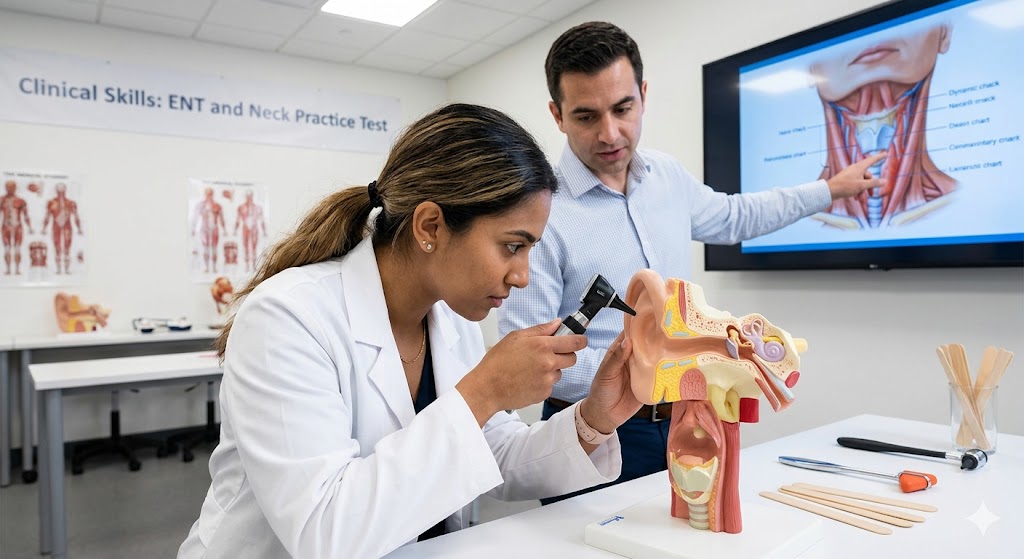
Additional Information
What the Course Entails and Exam Details
This comprehensive course and practice test provide a thorough evaluation of critical ENT and neck assessment skills. The curriculum is divided into core clinical domains, including:
Detailed History Taking: Learning to elicit relevant patient narratives for symptoms like hearing loss, vertigo, chronic sinusitis, dysphagia, and neck lumps.
Physical Examination Techniques: Mastering the use of the otoscope, tuning forks, nasal speculum, and indirect laryngoscopy.
Head and Neck Palpation: Identifying anatomical landmarks and abnormalities in the lymph nodes, thyroid, and salivary glands.
Diagnostic Interpretation: Understanding how to order and interpret audiograms, tympanometry, and common imaging modalities.
Patient Management and Communication: Developing clear explanations of diagnoses and treatment plans.
The specific exam details vary by institution, but this guide prepares you for the standard formats used globally.
What to Expect in the Final Exam
The actual certification or final examination often uses the Objective Structured Clinical Examination (OSCE) format. In an OSCE, you will navigate multiple, timed stations, each presenting a different clinical scenario. At these stations, you may interact with a simulated patient (an actor) or an anatomical model. You will have a defined number of minutes—often 7 to 10 minutes per station—to complete the requested task, which might be focusing solely on a specific physical exam or a focused history.
Evaluators observe your performance live or via video feed, marking a checklist based on your demonstrated competence. The passing score is determined by the specific governing body or academic institution, typically requiring you to demonstrate safety and proficiency across the majority of the stations.
How to Study and Exam Centers
Preparation is paramount for a practical examination. Follow these strategies for success:
Practice, Practice, Practice: Form study groups and take turns acting as the patient and the clinician. Use the provided practice scenarios to simulate exam conditions with a timer.
Review Standard Checklists: The best way to know what examiners are looking for is to study the assessment criteria. Ensure you never omit critical safety steps, like hand hygiene and explaining procedures.
Utilize High-Quality Visuals: Watch reputable instructional videos on ENT exam techniques to ensure your hand placement and instrument usage are flawless.
Take Our Practice Test: This practice test is specifically designed to expose your weak points, allowing you to focus your study time where it is needed most.
For the location of your exam: The final clinical exam is usually held at physical testing centers, specifically equipped medical simulation labs within universities or authorized teaching hospitals. You will typically register through your academic portal or an authorized professional body. Online options are rare for practical clinical skills exams.
Job Opportunities from the Course
Validating your ENT and neck clinical skills through this practice process and the subsequent examination opens the door to numerous rewarding career paths in specialized healthcare. Mastery of these skills is crucial for roles such as:
Otolaryngology Physician Assistant
ENT Nurse Practitioner
Otolaryngology Resident Physician
Primary Care Physician (with a specialty focus)
Clinical Skills Instructor
Head and Neck Surgical Assistant
Frequently Asked Questions
Reviews
5.0
Based on 0 reviews
Leave a Review
No reviews yet. Be the first to review!