
Certified Wildlife Rehabilitator Practice Test
Looking for More?
Check out our comprehensive package plans for ultimate prep materials and exams!
View All PackagesDescription
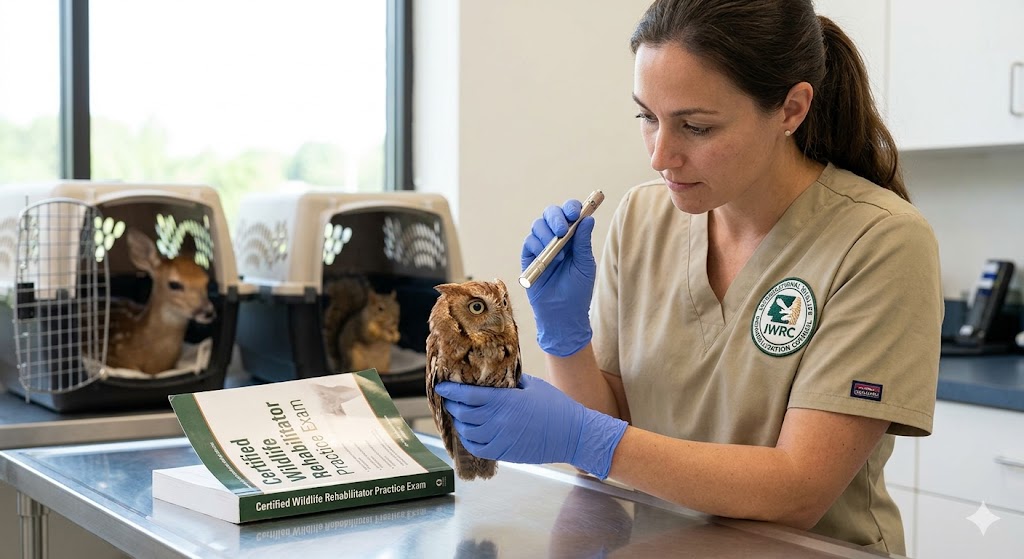
The Certified Wildlife Rehabilitator (CWR) designation is
the premier professional credential for individuals dedicated to the care,
treatment, and release of sick, injured, or orphaned native wildlife. This
certification validates a rehabilitator's commitment to high ethical standards,
specialized medical knowledge, and operational best practices. It is designed
for active wildlife rehabilitators, veterinary technicians specializing in
exotic or wild species, and volunteers at authorized wildlife centers looking
to formalize their expertise. Achieving CWR status demonstrates to the public,
state agencies, and peers that you possess the necessary competency and
professional ethics required for this challenging field.
Ready to test your knowledge?
Start nowAbout this Quiz
What the Course Entails and Exam Details
This examination covers a broad, interdisciplinary
spectrum of knowledge essential for successful wildlife care. Candidates must
master a diverse syllabus. Key course domains include wildlife biology, basic
physiology, and species-specific husbandry for mammals, birds, and reptiles. A
heavy emphasis is placed on medical management, requiring knowledge of fluid
therapy, nutrition, disease transmission (including zoonosis), and basic
pharmacology. Furthermore, candidates are tested on pre-release conditioning
requirements and the environmental factors critical for a successful return to
the wild. Ethical considerations, euthanasia protocols, and state/federal
regulations governing wildlife possession are also critical components of the
curriculum.
What to Expect in
the Final Exam
The CWR final exam is a comprehensive assessment of your
theoretical knowledge. It typically utilizes a standardized multiple-choice
format to evaluate a wide array of scenarios and technical facts. The exam
often contains 100 questions that must be completed within a strict two-hour
time limit. To successfully earn the designation, candidates are generally
required to achieve a passing score of 80% or higher. There is no practical
hands-on component during the written exam. Specific requirements may vary slightly
by licensing body, so it is crucial to review the current candidate handbook
provided by your specific certifying organization.
How to Study and
Exam Centers
Effective preparation requires a structured study plan.
We highly recommend utilizing a combination of the official comprehensive CWR
study guide and reputable practice exams to familiarize yourself with the
question formatting and difficulty level. Create flashcards for critical
information, such as drug dosages, hydration calculations, species-specific
nutritional requirements, and zoonotic diseases. Form study groups with peers
to discuss complex ethical scenarios. The exam itself is administered by specialized
test providers. It is often taken online through an authorized portal utilizing
remote proctoring technology to ensure security. Alternatively, physical
testing centers or authorized schools may host proctored exam sessions during
larger wildlife rehabilitation conferences or workshops.
Job Opportunities
from the Course
Obtaining CWR certification can significantly enhance
your career trajectory within the animal care and conservation sectors. Here
are specific job titles and career paths this certification unlocks:
- Wildlife
Rehabilitator (Permitted/Senior)
- Wildlife
Center Director
- Animal
Care Supervisor at Sanctuary
- Zookeeper
(Native Species Specialist)
- Exotic
Vet Technician
- Animal
Control Officer
- Field
Biologist/Technician
- Park
Naturalist
- Conservation
Educator
Frequently Asked Questions
Reviews
5.0
Based on 0 reviews
Leave a Review
No reviews yet. Be the first to review!
Looking for More?
Check out our comprehensive package plans for ultimate prep materials and exams!
View All Packages